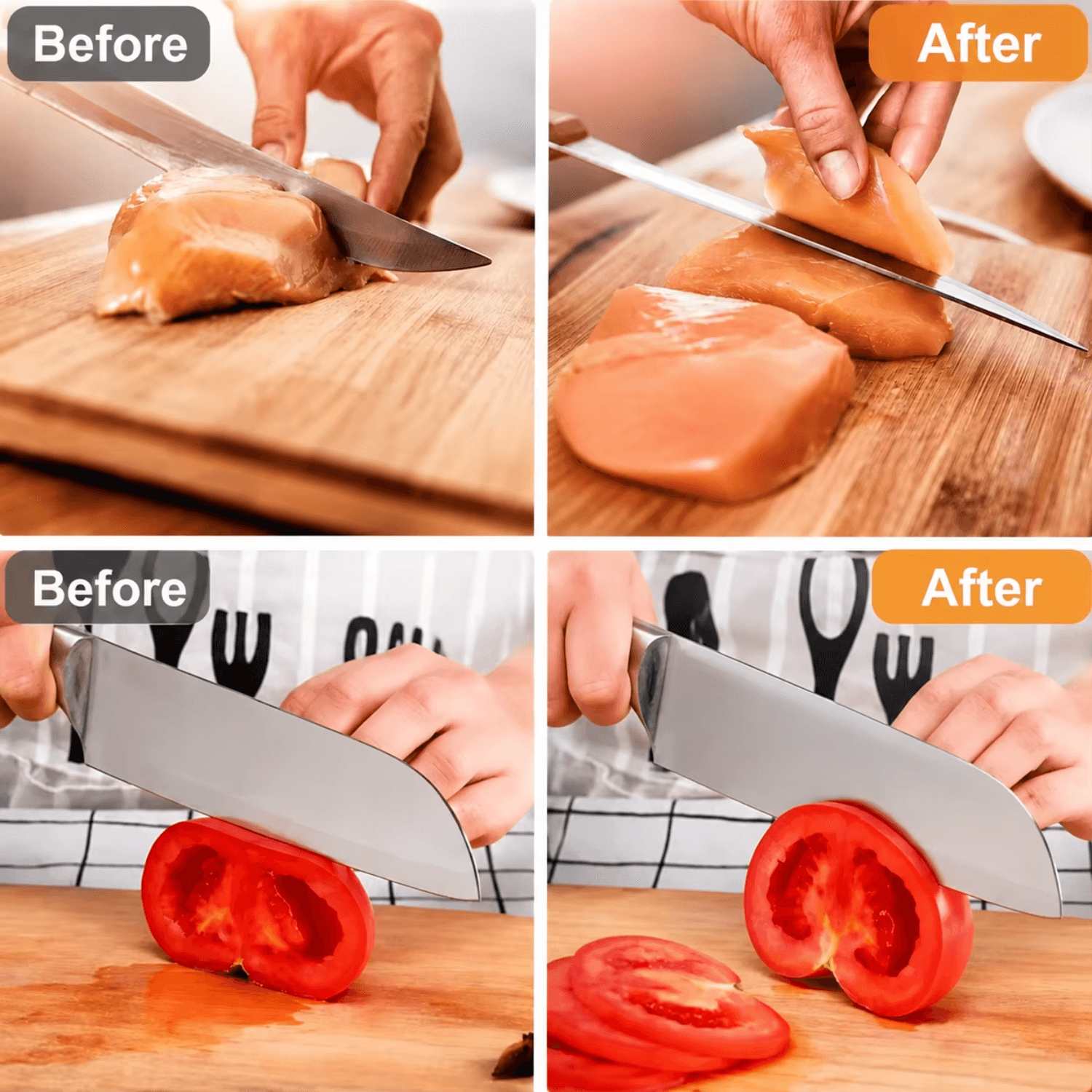
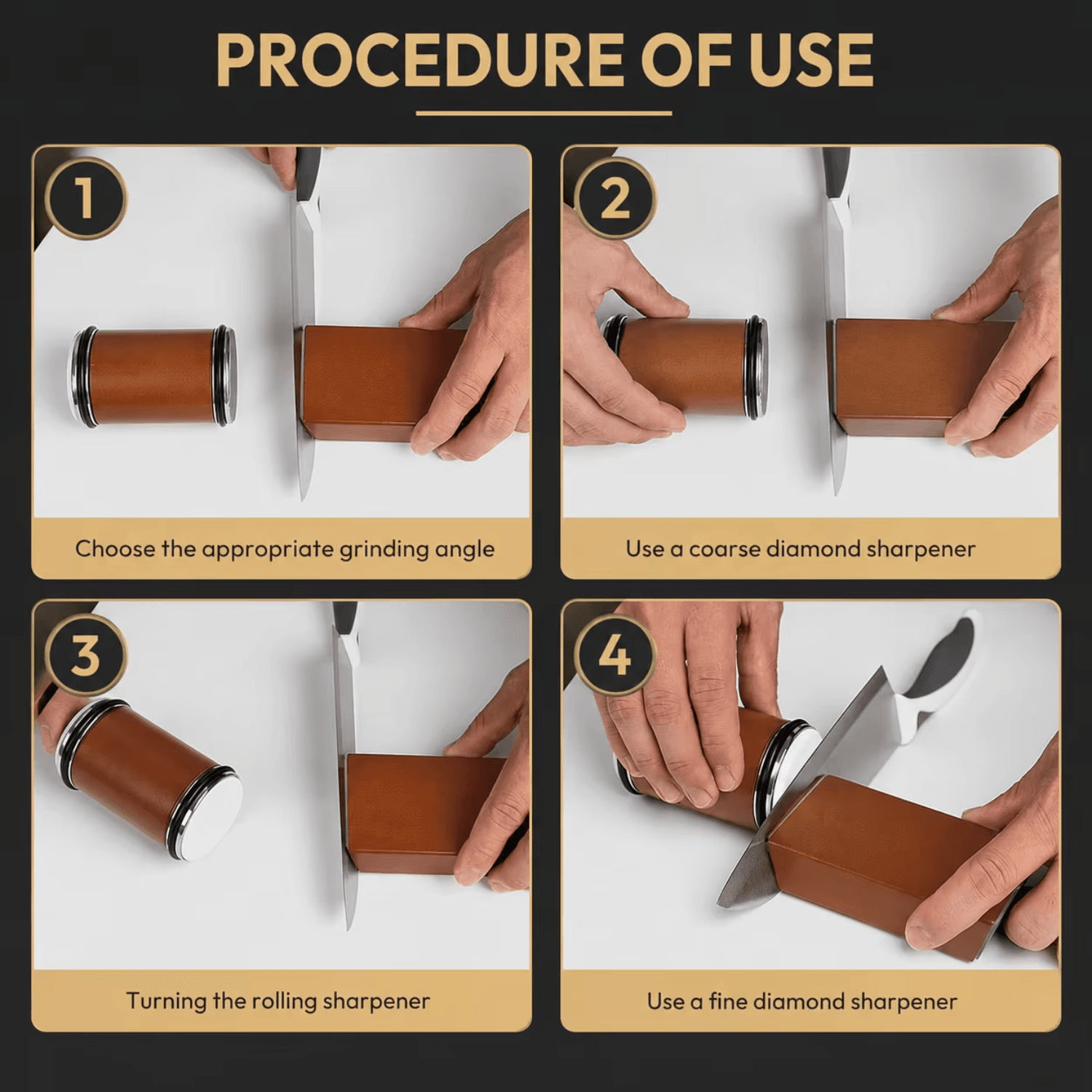
If you only remember one number: 20 degrees per side is the safe default for most Western kitchen knives and general-purpose blades. It offers a durable edge that resists chipping and holds up to regular board contact.
But 20° is not universal. A Japanese gyuto at 20° is a waste of good steel. A meat cleaver at 15° will chip the first time it meets bone. The “best” angle depends on three factors: what the knife is made of, what you cut with it, and how you treat it.
This guide breaks down the specific angles for every common knife type, explains the sharpness-versus-durability trade-off in plain terms, and clears up the measurement confusion that trips up most beginners.
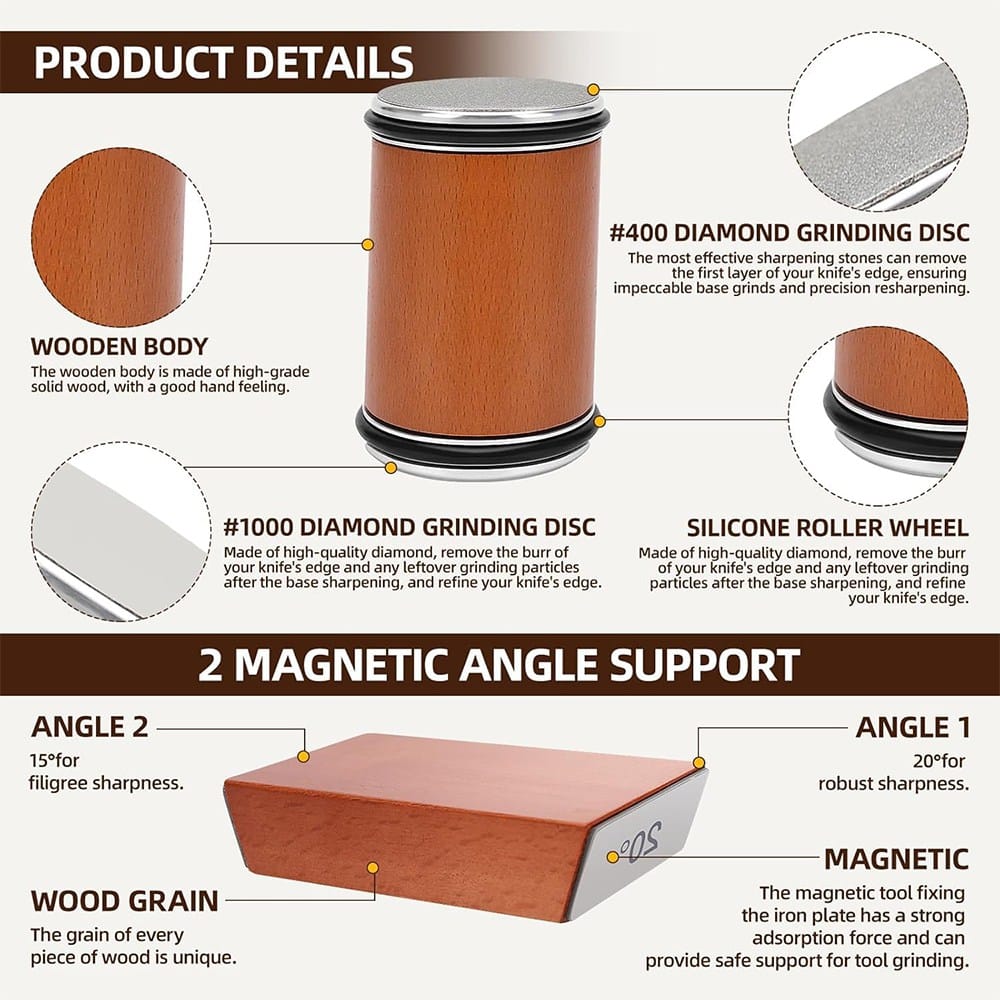
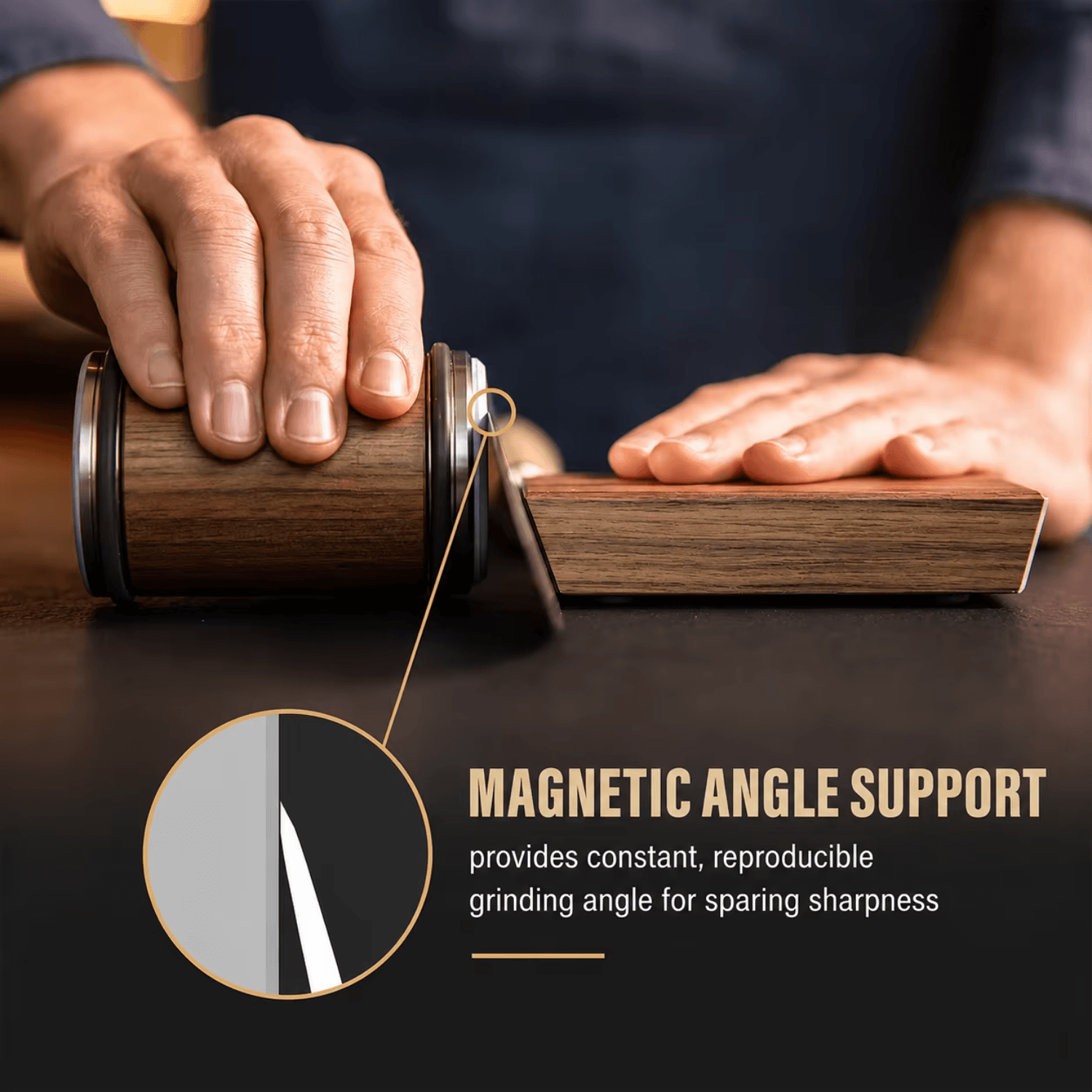
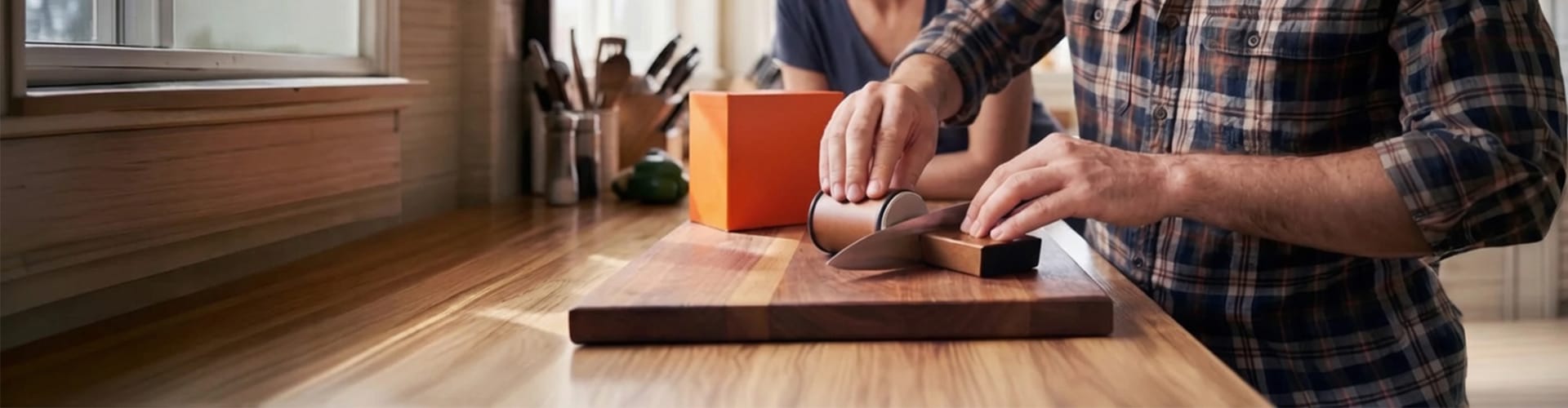
For retailers and bulk buyers looking to supply professional-grade solutions, choosing a consistent sharpening angle is streamlined by equipping users with a Wholesale Rolling Knife Sharpener engineered for exact geometry control.
Before the charts, one clarification that prevents most sharpening mistakes.
Sharpening angles are measured in two ways, and manufacturers are not consistent about which one they use.
Most sharpening guides and charts use degrees per side because that is the number you set when sharpening one side. But electric sharpeners and factory specs often list the inclusive angle. Always check which system the source uses before matching numbers.
All recommendations below are per side unless noted otherwise.
The following chart covers the most common blade categories. Angles are per side for double-bevel knives.
| Knife Type | Recommended Angle (per side) | Best Use | Why This Angle |
|---|---|---|---|
| Western chef’s knife | 20–22° | Daily prep, board work | Durable edge for vegetables, meat, general use |
| Japanese gyuto / santoku | 15–17° | Fine slicing, precision prep | Harder steel supports a thinner edge |
| Traditional single-bevel (yanagiba, deba) | 12–15° (bevel side only) | Sushi, sashimi, katsuramuki | Flat side not sharpened; laser edge |
| Pocket / EDC knife | 18–22° | Cardboard, packages, utility | Stable working edge; 18–20° for slicing, 20–22° for harder work |
| Hunting knife | 18–22° | Field dressing, skinning, camp use | Bone contact needs support; skinning can go lower |
| Fish fillet knife | 12–15° | Gliding through delicate flesh | Thin, flexible blade; add micro-bevel if edge rolls |
| Meat cleaver / bone chopper | 25–30° | Bone, cartilage, heavy chopping | Strength matters more than razor feel |
| Machete / kukri | 24–28° | Vegetation, chopping, outdoor | Tough working edge for impact and dirt |
| Serrated bread knife | 13–17° (beveled side) | Bread, rope, fibrous material | Follow factory angle; sharpen each scallop with a tapered rod |
Source: Compiled from multiple sharpening guides and manufacturer recommendations. For custom manufacturing specifications and bulk orders, explore our Rolling Knife Sharpener – Aluminum options.
The chart above is a starting point. But to choose the right angle for your specific knife—or to adjust when the default doesn't work—you need to understand the two forces at play.
Harder steel supports thinner edges. Softer steel needs a wider angle to avoid deformation.
A practical rule from sharpening professionals: “Generally, softer steels should be sharpened at a steeper angle, while harder steels use a lower angle.”
| Steel Hardness (HRC) | Typical Knives | Recommended Angle Range |
|---|---|---|
| 56–58 HRC (softer) | Victorinox, Henckels, most German knives | 20–22° per side |
| 58–60 HRC (medium) | Wüsthof, Zwilling, quality Western knives | 18–20° per side |
| 60–63 HRC (hard) | Japanese gyuto, high-end custom knives | 15–17° per side |
| 63+ HRC (very hard) | Premium Japanese steel, some custom blades | 12–15° per side |
A softer steel sharpened at 15° will feel incredibly sharp for a day or two—then the edge rolls or folds. The same steel at 20° cuts slightly less aggressively but holds its geometry through a full week of cooking. A harder steel at 20° wastes the blade’s potential; the steel can support a thinner edge, so a wider angle simply means more effort for every cut.
The angle should match what the knife actually does, not what the marketing says it can do.
| If the knife is used for… | Minimum Angle | Reason |
|---|---|---|
| Slicing, delicate prep | 12–15° | Thin geometry; cutting edge meets soft food only |
| General kitchen prep | 18–22° | Board contact, varied ingredients |
| Chopping through bone or frozen food | 25°+ | Impact resistance; thin edges chip |
| Cutting on glass or ceramic boards | 25–30° | Abrasive surfaces destroy fine edges |
| Cardboard, rope, heavy EDC tasks | 22–25° | Working edge that resists rolling |
The logic is simple physics: the smaller the angle, the sharper but less durable the edge. The larger the angle, the more durable but less sharp the edge.
There is also an evidence-based counterpoint worth noting. Research by Dr. Larrin Thomas of Knife Steel Nerds suggests that a 15° edge may actually retain cutting ability longer than a 20° edge—not because it stays sharp in absolute terms, but because it stays thinner as it wears. A dull 15° edge is still thinner than a dull 20° edge, so it continues to cut with less effort even as both lose their apex.
This is a nuance, not a contradiction. A 15° edge on hard steel can outperform a 20° edge on soft steel over time. But on soft steel, the 15° edge will physically deform—roll, fold, or chip—before wear even becomes the limiting factor.
“You should always sharpen at 20 degrees.”
False. The optimal angle depends on the knife and its purpose. Western knives typically perform well at 18–20° per side, but Japanese knives designed for precision often use 12–15°. The “always 20°” advice comes from the Western kitchen tradition, where soft steel and heavy chopping were the norm. It is not a universal rule.
“Your angle must be exactly what the expert says.”
False. Your angle must be consistent—not exact. A knife sharpened at a consistent 22° will perform better and feel sharper than a knife with an edge that bounces between 15° and 25°. The goal is a clean apex where two bevels meet; a wavering angle never reaches that apex.
“A wider angle means a worse edge.”
Not necessarily. A wider angle means a more durable edge. For a cleaver or a hunting knife that contacts bone, a 25° edge that holds its shape outperforms a 15° edge that chips on the first use. Sharpness and durability are a continuum, not a hierarchy.
Most knives come with a factory angle. If the knife performs well for your use, match that angle. If it dulls too quickly, widen by 2–3 degrees. If it feels sluggish despite being sharp, narrow by 2 degrees and test.
Color the entire bevel with a permanent marker. Make a few light strokes on the stone. Inspect the ink removal pattern:
This diagnostic works for any angle and any knife. It is the single most practical tool for determining whether your current angle matches the bevel geometry.
If you are sharpening freehand and need a visual reference:
| If your knife is… | Sharpen at… | Because… |
|---|---|---|
| A Western chef’s knife used daily | 20° per side | Durable, forgiving, handles board contact |
| A Japanese gyuto or santoku | 15–17° per side | Hard steel supports a finer edge |
| A pocket or EDC knife | 18–22° per side | Working edge for varied tasks |
| A hunting or outdoor knife | 20–25° per side | Impact resistance matters more than razor feel |
| A cleaver or machete | 25–30° per side | Strength beats sharpness for impact tools |
| A fillet knife | 12–15° per side | Thin blade; delicate slicing only |
The “best” angle is the one that matches your steel, your cutting habits, and your willingness to maintain the edge. Start at 20° if you are unsure. Adjust based on results. And remember: consistency matters more than precision. A well-maintained 20° edge will always outperform a poorly maintained 15° edge.
For wholesale inquiries and OEM manufacturing partnerships for Angle Rolling Knife Sharpener kits, contact our factory team today.
🏭 DAQIDA Factory Qualification Certificates & Injection Molding Expertise
As a professional direct source factory, DAQIDA masters advanced plastic injection molding processes, DFM optimization, and strict production discipline backed by our official qualification certificates:
• Explore our full manufacturing capabilities via the DAQIDA Product Catalog ➔
Avoid common mass-production pitfalls like shrinkage and warping. Partner with DAQIDA for professional OEM and ODM manufacturing solutions built on precise DFM analysis, stable process control, and rigorous factory quality standards.
No account yet?
Create an Account