Rolling Knife Sharpener (Stainless Steel Ends)16

The Best Angle to Sharpen Knives: A Practical Guide for Every Blade Type

If you only remember one number: 20 degrees per side is the safe default for most Western kitchen knives and general-purpose blades. It offers a durable edge that resists chipping and holds up to regular board contact. But 20° is not universal. A Japanese gyuto at 20° is a waste of good steel. A meat cleaver at 15° will chip the first time it meets bone. The “best” angle depends on three factors: what the knife is made of, what you cut with it, and how you treat it. This guide breaks down the specific angles for every common knife type, explains the sharpness-versus-durability trade-off in plain terms, and clears up the measurement confusion that trips up most beginners.
Continue reading
Rolling Knife Sharpener - Stainless Steel Body (Factory Direct) 001

Knife Sharpening Angle Guide — From Dull to Mirror Finish: Can Beginners Master Precision Angles?

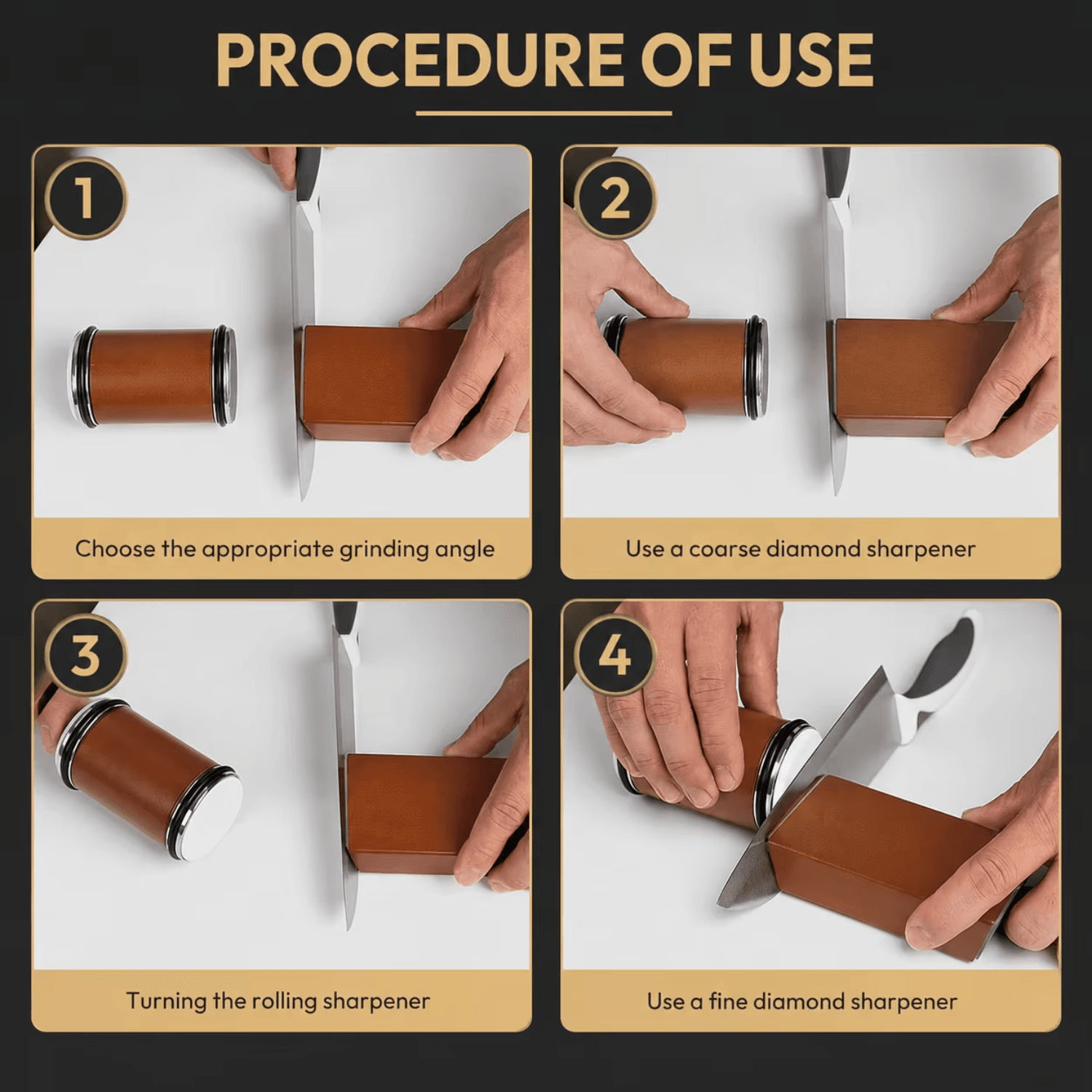
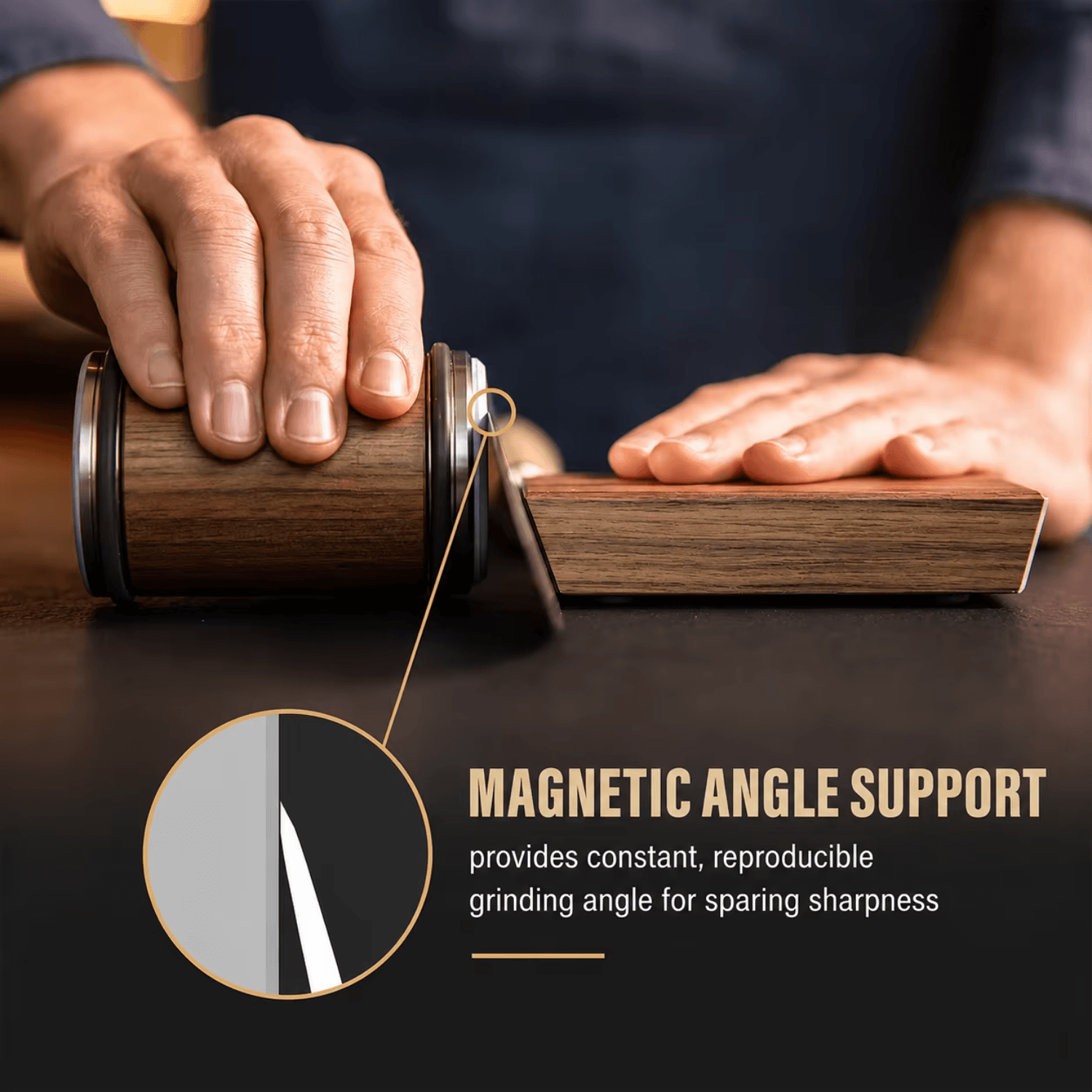
Every knife sharpening guide begins with the same assumption: that the reader knows what angle to use and can hold it. The first part is easy — consult a chart. The second part is where most beginners quietly give up Angle inconsistency is the single most common reason home sharpeners produce poor results. The good news is that the problem is not one of talent. It is one of method. With the right tools and a clear understanding of what “precision” actually requires, a beginner can go from a dull, wedging blade to a mirror-polished edge far faster than conventional wisdom suggests.
Continue reading
Rolling Knife Sharpener Kit,with Diamond and Solid Wood of Chef Blade,Knives Sh 14

What Is the Best Angle for Sharpening Knives? Expert Factory Guide

Ask ten knife makers what the best sharpening angle is, and nine of them will ask you a question first: What are you cutting? The tenth one is selling you something. There's no universal number. There's no magic setting that makes every blade perform its best. What exists is a relationship between three things: the steel, the geometry, and the work you're asking the knife to do. Change any one of those, and the "best" angle changes with it.
Continue reading
Rolling Knife Sharpener (Stainless Steel Ends) 14

Knife Sharpening Angles: 15° vs. 20° – What’s the Difference for Kitchen Knives?

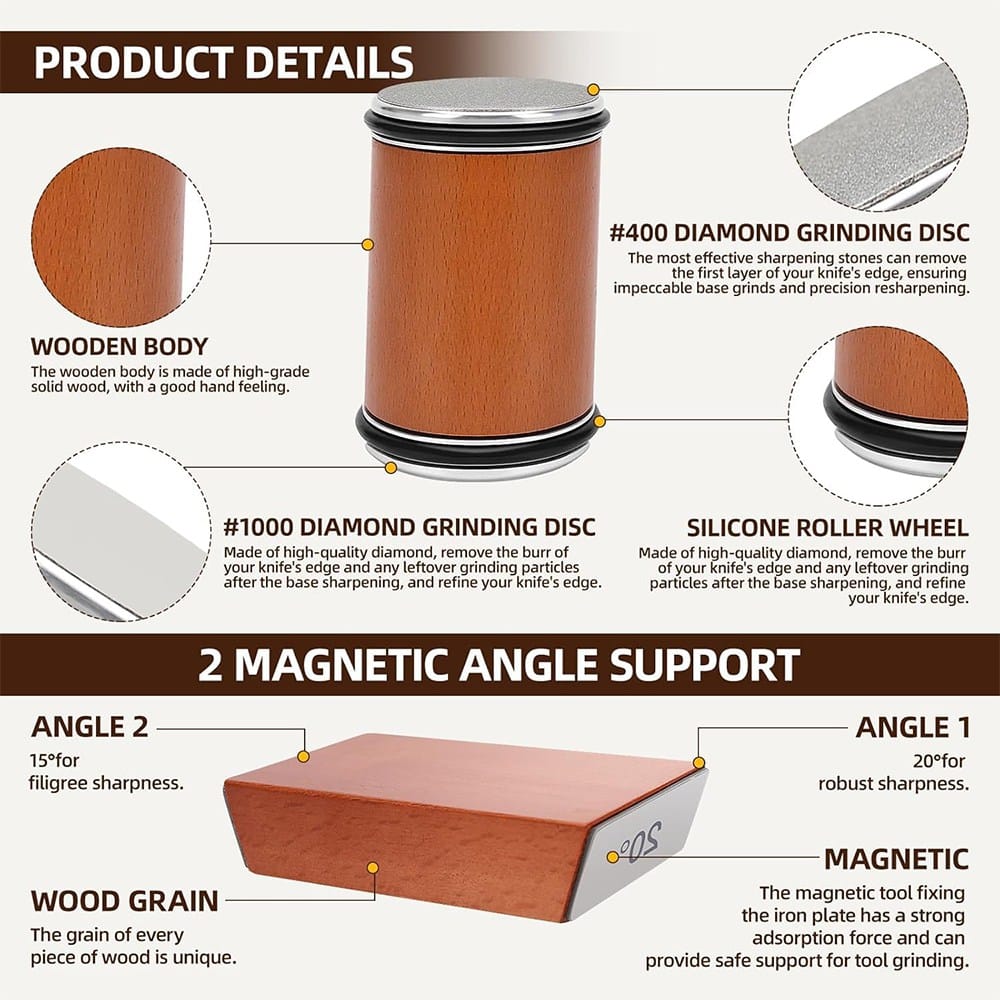
Before we compare 15° and 20°, we need to clear up a common point of confusion. When knife manufacturers or sharpening tool producers mention a "15-degree edge," they are almost always referring to the angle per side – the angle between one blade face and the vertical centerline of the knife. The total inclusive edge angle is the sum of both sides. A 15° per-side edge has a total inclusive angle of 30°. A 20° per-side edge totals 40°. Most commercial sharpening tools specify the per-side angle in their documentation. Always confirm which measurement is being used before selecting a sharpener.
Continue reading