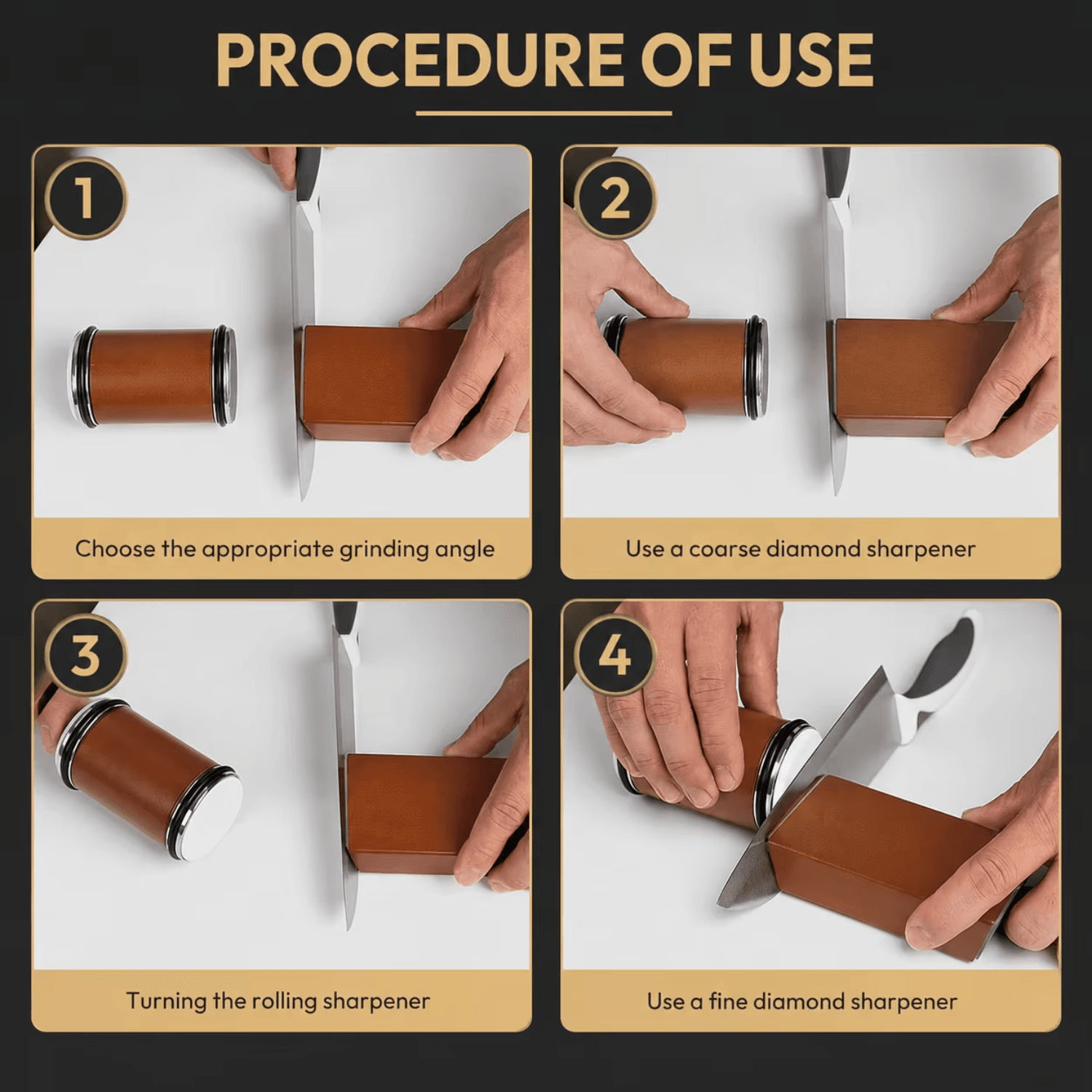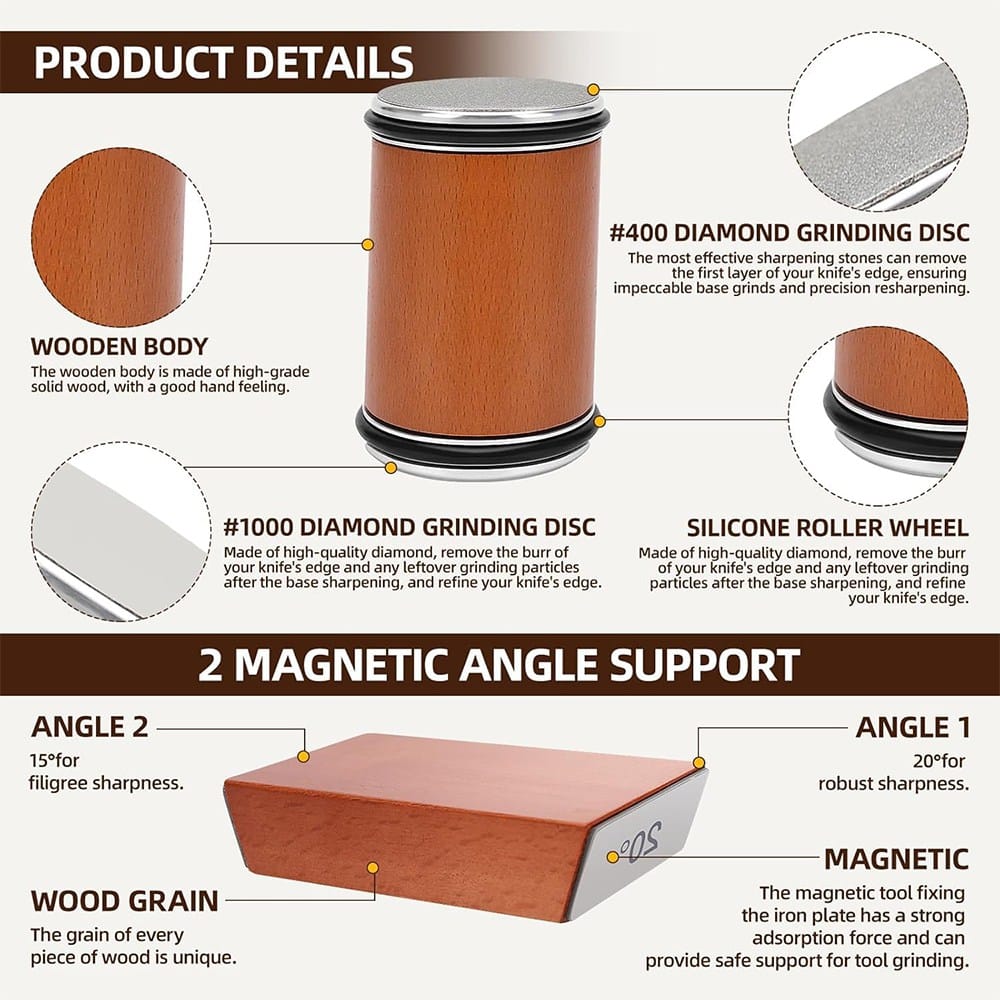
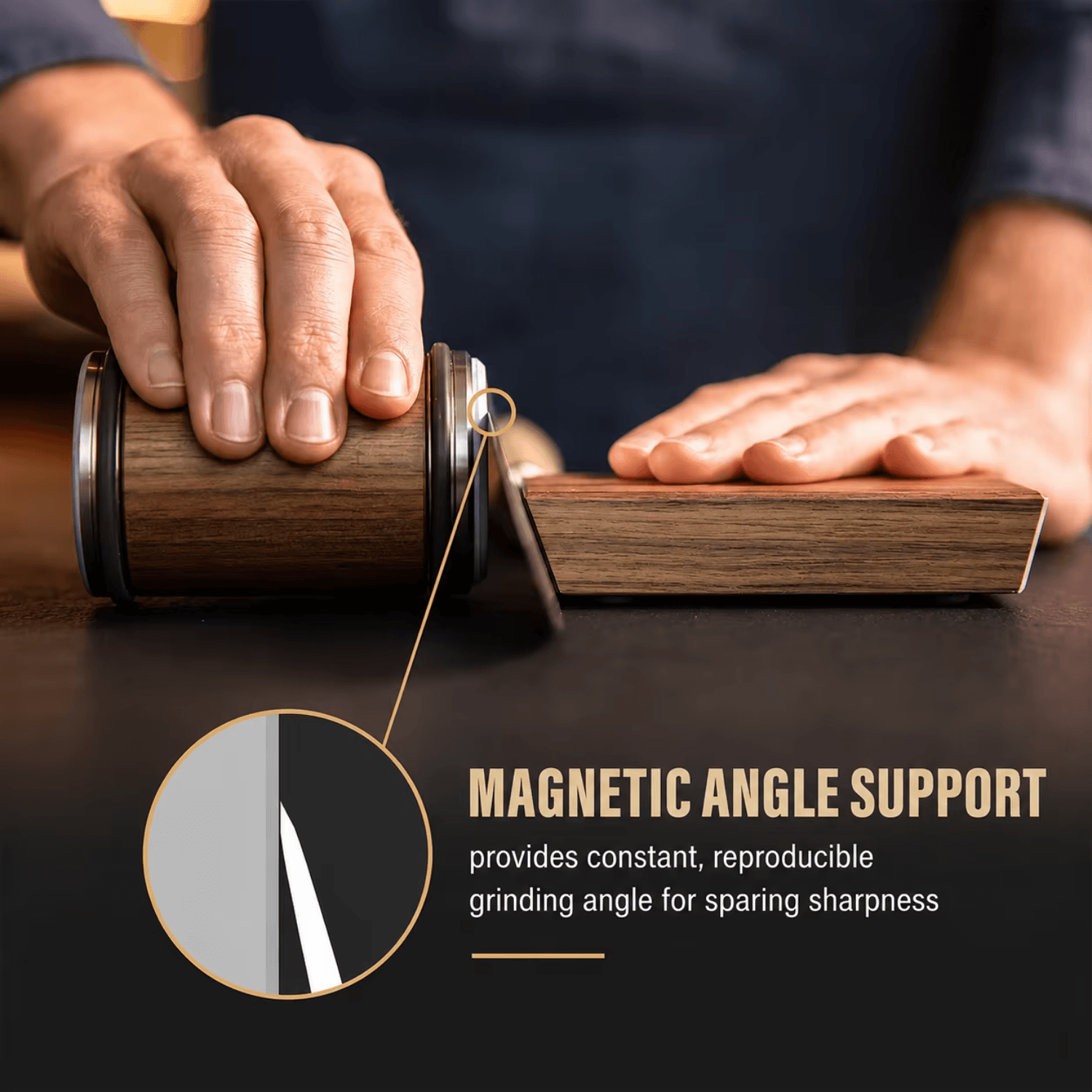
Before we compare 15° and 20°, we need to clear up a common point of confusion. When knife manufacturers or sharpening tool producers mention a "15-degree edge," they are almost always referring to the angle per side – the angle between one blade face and the vertical centerline of the knife.
The total inclusive edge angle is the sum of both sides. A 15° per-side edge has a total inclusive angle of 30°. A 20° per-side edge totals 40°.
Most commercial sharpening tools specify the per-side angle in their documentation. Always confirm which measurement is being used before selecting a sharpener. For a comprehensive overview of multi-angle tools, explore our Wholesale Rolling Knife Sharpener line.
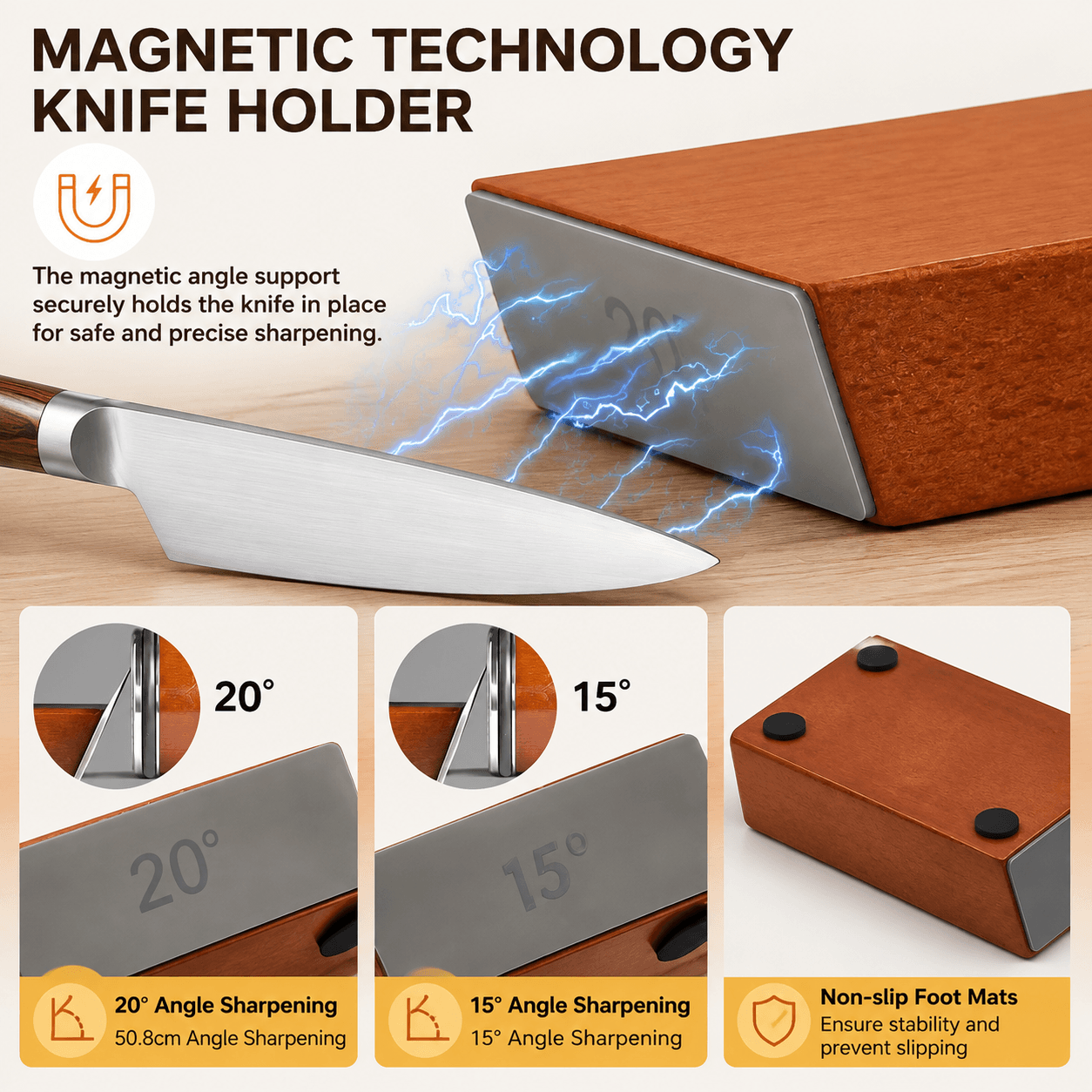
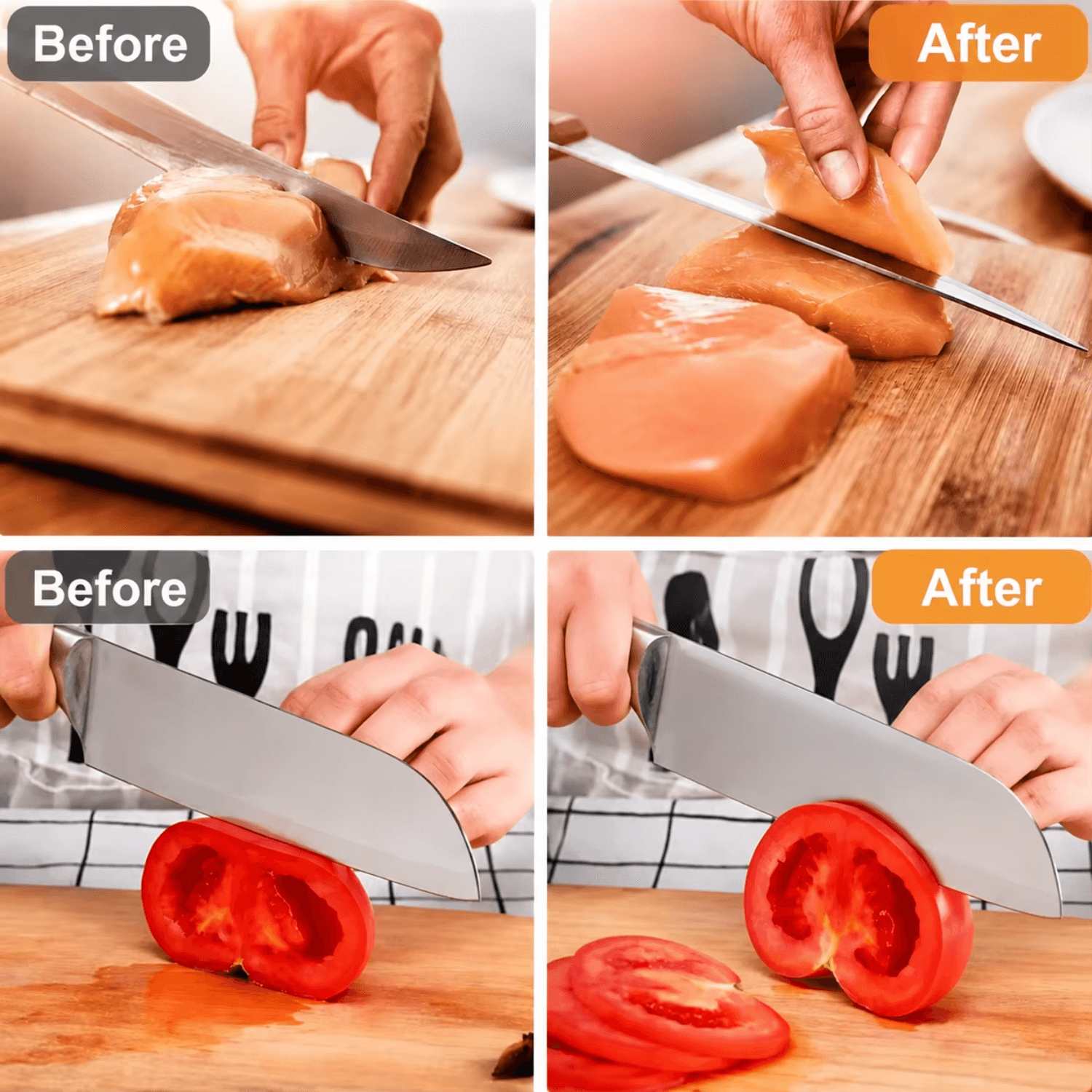
A knife edge is essentially a wedge. The angle of that wedge determines how efficiently it parts material. Reducing the angle from 20° to 15° decreases the required cutting force by approximately 25%. This translates directly to less effort during food preparation. For delicate tasks like slicing sashimi, a 15° edge minimizes cell wall damage, preserving flavor and texture.
A 20° edge has substantially more metal behind the apex. The cross-sectional area at the apex is roughly 40–50% larger than at 15°, depending on blade thickness. This extra material provides a buffer against chipping and rolling when the blade encounters bone, frozen food, or lateral stress. German knife manufacturers deliberately choose 20° because they prioritize durability and user forgiveness over ultimate sharpness.
The single most important factor in choosing a sharpening angle is the hardness of your knife steel:
| Steel Hardness | Recommended Angle | Why |
|---|---|---|
| HRC 54–58 (German 1.4116, AUS-8) | 18°–20° | Softer steel cannot support a thin apex; 15° will roll within minutes |
| HRC 58–60 (VG-10, 14C28N) | 15°–17° | Balanced hardness supports moderately acute angles |
| HRC 60–62 (SG2, Aogami Super, ZDP-189) | 12°–15° | Fine grain structure sustains very thin edges without collapse |
| HRC 62+ (HAP-40, R2) | 10°–12° | Ultra-hard steels can support exceptionally acute edges |
Key takeaway: A high-hardness steel ground to 20° is still a sharp knife – but its potential is wasted. The steel is capable of sustaining a much thinner edge; grinding it to 20° makes it behave like a much softer blade. Conversely, a soft German steel ground to 15° will dull almost immediately, requiring constant resharpening.
| Your Usage Pattern | Recommended Angle | Rationale |
|---|---|---|
| Daily precise vegetable prep, boneless meats, fish | 15° | Minimal resistance; clean cuts; optimal for presentation |
| Mixed kitchen use (some bones, tough ingredients) | 20° | More forgiving; lower maintenance frequency |
| One-knife household | 20° | Most versatile; works with most Western knives |
| Dedicated Japanese knife collection | 15° | Respects original design; maintains peak performance |
| Beginner or low skill level | 20° | Reduced risk of chipping; more tolerant of user error |
Professional sharpeners agree on one principle: the goal is to restore the original edge angle, not to reinvent it.
What happens when you use the wrong angle?
If you are unsure of your knife's original angle, contact the manufacturer or check their technical documentation. Many premium brands list this information on their websites. For customized options depending on your preferred build, you can check out our specialized Rolling Knife Sharpener – Aluminum variant or our robust Rolling Knife Sharpener – Stainless Steel Body option.
| Angle | Best For | Key Trade-off |
|---|---|---|
| 15° | Japanese knives, high-hardness steels, precision slicing | Maximum sharpness, but less edge durability |
| 20° | German/Western knives, mixed use, beginners | Good durability, but less ultimate sharpness |
Final Verdict:
There is no universally "correct" sharpening angle. The right choice depends on your knives and your usage. A 15° edge on soft steel leads to frustration. A 20° edge on premium Japanese steel wastes potential. Match the angle to the steel, and you'll get the best performance from every blade.
🏭 DAQIDA Factory Qualification Certificates & Injection Molding Expertise
As a professional direct source factory, DAQIDA masters advanced plastic injection molding processes, DFM optimization, and strict production discipline backed by our official qualification certificates:
• Explore our full manufacturing capabilities via the DAQIDA Product Catalog ➔
Avoid common mass-production pitfalls like shrinkage and warping. Partner with DAQIDA for professional OEM and ODM manufacturing solutions built on precise DFM analysis, stable process control, and rigorous factory quality standards.
No account yet?
Create an Account