Ask ten knife makers what the best sharpening angle is, and nine of them will ask you a question first: What are you cutting? The tenth one is selling you something.
There's no universal number. There's no magic setting that makes every blade perform its best. What exists is a relationship between three things: the steel, the geometry, and the work you're asking the knife to do. Change any one of those, and the "best" angle changes with it.
Most kitchen knives come off the production line with one of two angles:
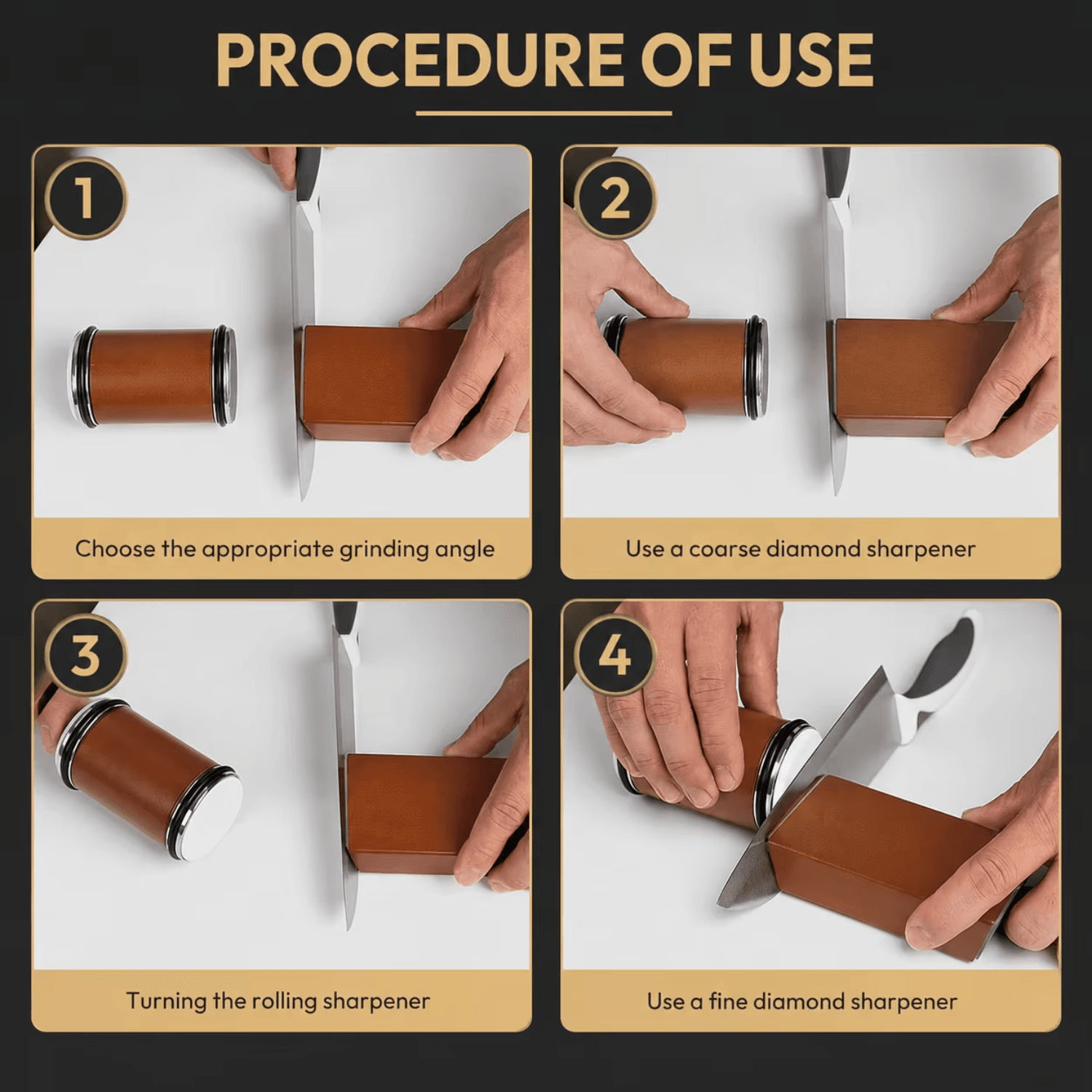
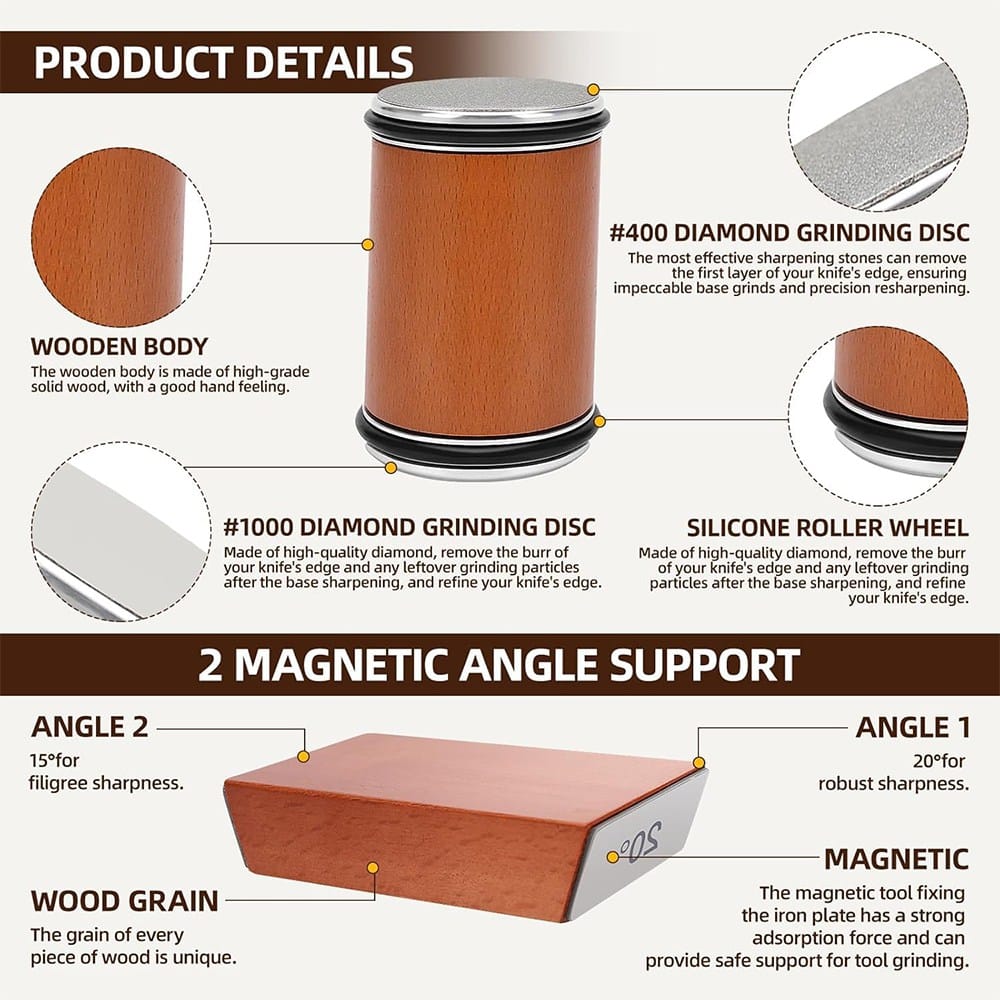
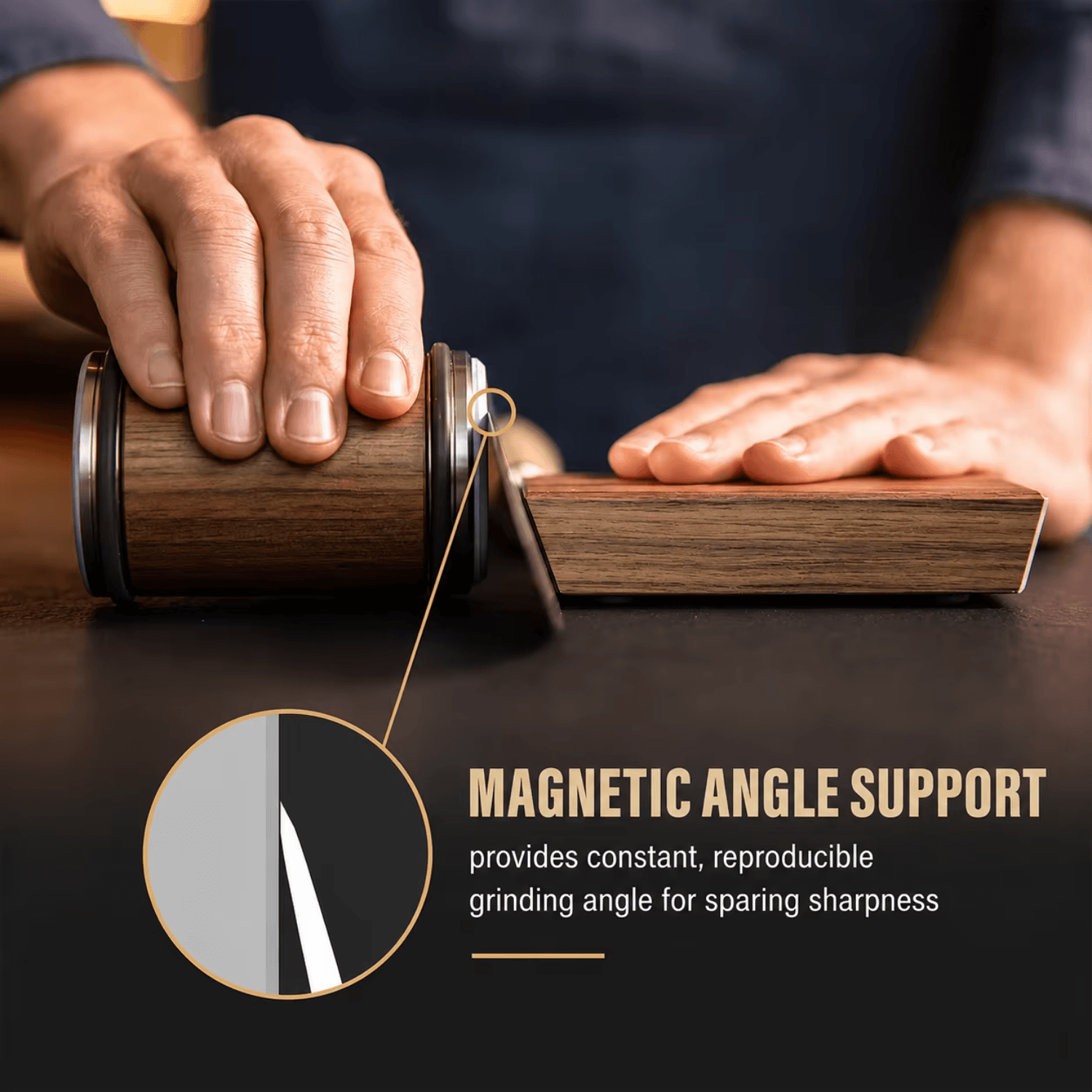
These aren't arbitrary choices. The factory runs extensive tests. When you change that angle, you're overriding the factory's testing. To match these exact factory specifications with total precision, using a fixed magnetic base system like our Wholesale Rolling Knife Sharpener ensures zero angle drift.
Hard steel is brittle. That sounds like a weakness, but in knife making it's the whole point. Brittle means the edge doesn't bend when it meets resistance—it stays where it's put.
The catch is that a brittle edge can't be too thick. Try to put a 20-degree edge on a VG-10 blade, and you're not getting a sharper knife. You're getting a blade that wedges into food instead of slicing through it. The steel's potential is wasted.
Thin edges work on hard steel because the steel has the strength to support them. The grain structure is fine enough that the metal doesn't collapse under pressure. That's why Japanese knives can run at 12 degrees without falling apart.
Run the same angle on a German blade, and you'll watch the edge roll over in real time. The steel just isn't there.
Soft steel bends. That's its nature. When a soft edge hits a cutting board, it doesn't chip—it folds. The apex rolls to one side, and the knife goes dull.
A thicker edge gives that soft steel something to lean on. More metal behind the apex means the edge can withstand more pressure before it deforms. That's why German knives are ground to 20 degrees. It's not because the factory couldn't make them thinner. It's because they tested thinner edges and watched them fail.
If you take a soft steel knife and sharpen it to 15 degrees, you're setting yourself up for constant maintenance. The edge will feel sharp off the stone and dull by the time you finish dinner. The steel can't support the geometry.
The steel tells you what angle it can handle. You don't get to decide. Here's how it breaks down:
| Steel Hardness | What It Can Support |
|---|---|
| HRC 54 to 58 | 20 degrees. Maybe 18 if the steel is good. Anything thinner and the edge rolls. |
| HRC 58 to 60 | 15 to 17 degrees. This is the sweet spot for most mid-range Japanese knives. |
| HRC 60 to 62 | 12 to 15 degrees. Fine grain, strong support. |
| HRC 62 and above | 10 to 12 degrees. Ultra-hard. The steel can handle it, but the user better know what they're doing. |
These aren't suggestions. They're physical limits. The steel will tell you when you've gone too thin—you'll see micro-chips along the edge, or the knife will feel dull after a few cuts. Pay attention to what it's telling you.
Change the angle in the wrong direction, and two things happen:
Both outcomes are avoidable. Both happen because someone assumed a smaller angle was always better.
French chef's knives sit between Japanese and German in almost every way—including angle. A typical Sabatier runs at about 18 degrees. The steel sits around HRC 57 or 58. The angle reflects that.
If you're sharpening a French knife, start at 18 and see how it behaves. Move up to 20 if the edge rolls. Drop to 17 if the cutting feels sluggish. The knife will tell you what it wants.
Here's something most home sharpeners don't consider: the factory spent time getting the angle right. They had access to the steel's raw specs, ran edge retention tests, and settled on the angle that maximized performance for that blade's intended use.
When you change that angle, you're starting from scratch. You're guessing. Sometimes you get lucky. More often, you compromise the blade's performance. The safer move: measure the existing angle and match it. If the knife cut well when it was new, that angle worked. Restore it. Don't improve it.
If you don't know anything about your knife except its type, here's what to do:
For rigorous professional or commercial use where stability and longevity are paramount, our heavy-duty Rolling Knife Sharpener – Stainless Steel Body option delivers the ultimate build quality for high-volume maintenance.
No account yet?
Create an Account