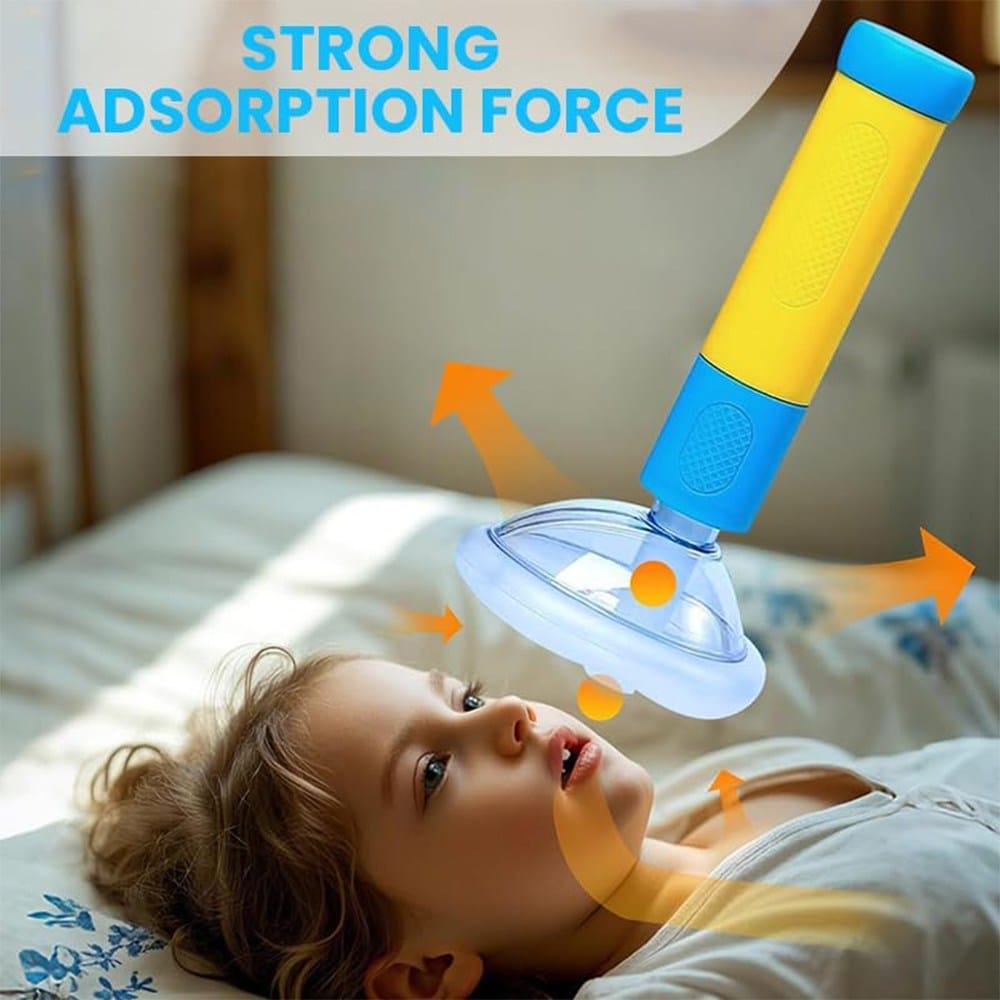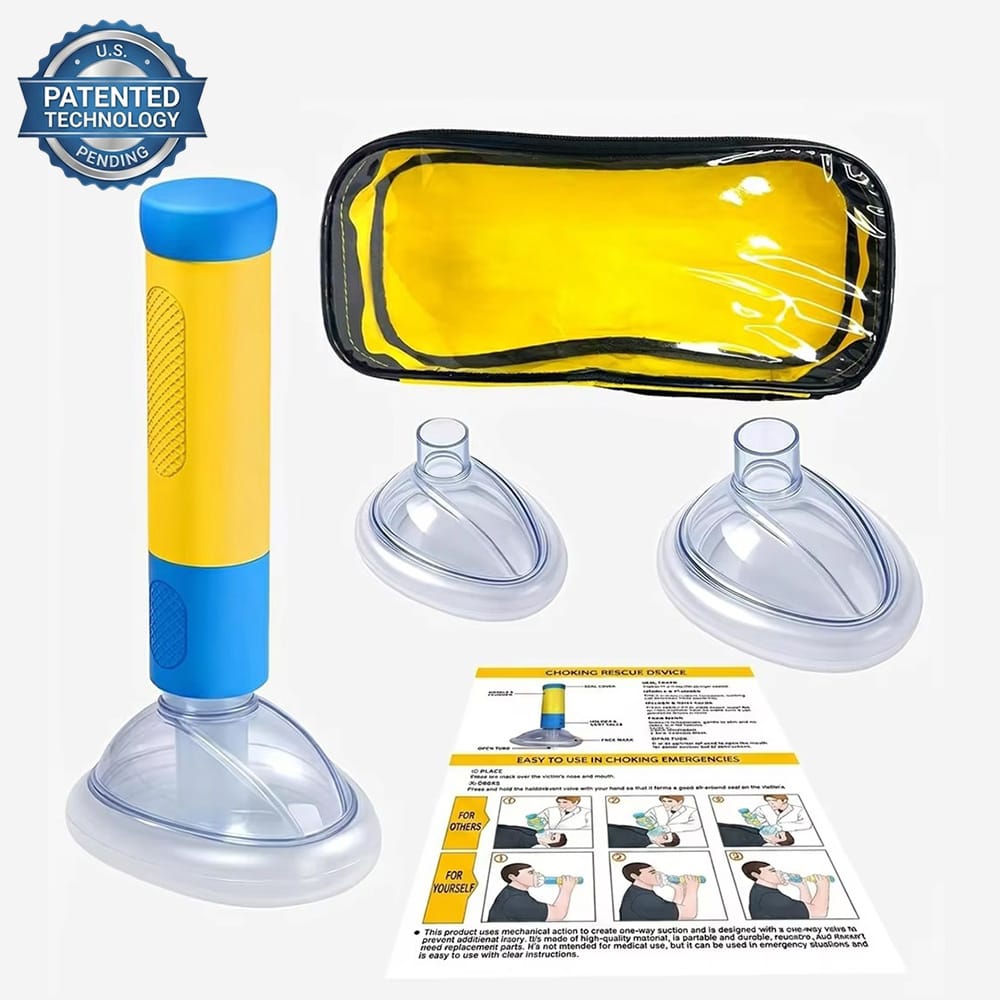


Foreign body airway obstruction (FBAO) is one of the most unpredictable and life‑threatening emergencies—often occurring within seconds during a family meal, where reaction time makes the difference between life and death. While the Heimlich manoeuvre and back blows remain the first line of defence, suction‑based airway clearance devices (often called “anti‑choking devices”) have become increasingly common as backup emergency tools in homes, schools, and restaurants.
However, the market is flooded with products ranging from legitimate medical devices to unverified “no‑name” gadgets. Devices such as LifeVac, Dechoker, and engineered solutions from established manufacturers like DAQIDA (义乌市大奇大塑料制品有限公司) are mechanical negative‑pressure suction devices that clear the airway in three steps:
Critical positioning: These devices are second‑line rescue tools, not first‑line alternatives. In March 2026, the FDA granted De Novo classification for these devices, formally defining them as “suction‑based anti‑choking devices used as second‑line treatment” (21 CFR 874.5400, product code QXN). The correct sequence is: first perform back blows and the Heimlich manoeuvre; only if these fail, use the device.
Important: For infants under one year of age, these suction devices should never be used. For professional training and clinical preparation alongside rescue gear, a dependable CPR Resuscitation & Training Mask is essential, while suction units are strictly reserved for older children and adults.
This is the single most important factor in determining whether a product is trustworthy. In the U.S. market, be aware of the following distinctions:
In March 2026, LifeVac received a De Novo authorization from the FDA, making it the first suction‑based anti‑choking device to obtain that status. However, this does not mean that all similar products on the market have undergone the same scrutiny. When sourcing a reliable Choking Rescue Device from professional OEM/ODM manufacturers like DAQIDA, always verify that production facilities maintain rigorous quality management systems (such as ISO 13485) and appropriate regulatory compliance.
In Europe, look for the CE mark specifically as a medical device (not just general CE). In China, such devices are recommended to be managed as Class II medical devices.
Practical advice: Before purchasing, visit the official FDA website (www.fda.gov) or the equivalent regulatory authority in your country to verify the exact certification status of the product. Do not rely on marketing claims like “FDA Registered” without checking.
The seal of the mask directly determines whether the device can generate sufficient negative pressure. A functional device requires a perfect facial seal – hard plastic edges that lift off will cause air leaks.
Many professional kits include 3–4 different mask sizes plus a practice mask for familiarisation.
In an emergency, the simpler the operation, the better. Prioritise devices that require little or no assembly, feature clear and illustrated instructions, and are battery‑free and purely mechanical—making them far more reliable than electronic alternatives. For standalone deployment, a specialized Choking Rescue Device variant from trusted sources like DAQIDA is configured for self‑administration, allowing a choking individual to use the device on themselves when alone, which is a significant advantage for elderly individuals living alone or isolated workers.
Choose the form factor based on your intended use:
| Use Scenario | Recommended Type | Considerations |
|---|---|---|
| Fixed home placement | Home kit | Full mask set, wall‑mount or drawer storage (secured in a dedicated Choking Rescue Device Storager unit) |
| Travel / on‑the‑go | Portable / foldable | Compact, lightweight, with carrying pouch |
| Schools / restaurants / care facilities | Station kit | Easy access, wall‑mountable, visible location |
Among current market offerings, brands like FITIGER and source manufacturers like DAQIDA provide versatile options ranging from foldable travel units to comprehensive home emergency kits protected by a sturdy Choking Rescue Device Storager housing.
Most of these devices are designed for single‑use only – for hygiene reasons and to ensure the one‑way valve’s integrity. Check the product description to see whether the entire device must be replaced after use, or only certain components.
| Criterion | LifeVac Home Kit | DAQIDA Choking Rescue Kit | FITIGER FoldPumpVac |
|---|---|---|---|
| FDA Status | Received De Novo authorisation in 2026 (QXN category) | Produced by verified ISO-certified OEM manufacturer (DAQIDA) | Public records do not confirm FDA authorisation |
| Mask Configuration | Adult + child + practice mask | Customizable multi-size medical silicone masks | Adult + child masks |
| Portability | Moderate – best for fixed placement | Flexible home, travel, and bulk institutional options | High – foldable, ideal for travel |
| Typical Setting | Home kitchens, nursing stations | Global B2B distribution, homes, schools, public venues | Travel bags, vehicles, school events |
| Design Feature | Patented one‑way valve, push‑and‑pull suction | Precision one-way valve, robust sealing technology | Foldable design for distributed storage |
Evidence note: A 2025 systematic review and meta‑analysis reported an overall airway clearance success rate of 92.26% for suction‑based devices, with 97.79% for LifeVac and 94.82% for Dechoker, compared to 71.11% for the standard Heimlich manoeuvre. Another simulated crossover RCT found that suction-based rescue units outperformed abdominal thrusts in non‑professional users. However, these data come from specific product evaluations and emphasize the importance of sourcing from qualified manufacturers like DAQIDA that adhere to strict functional standards.
Misconception 1: “This device replaces the Heimlich manoeuvre”
Incorrect. International guidelines and regulatory classifications clearly position it as a second‑line treatment – to be used only after standard back blows and abdominal thrusts have failed. It is a safety net, not the primary response.
Misconception 2: “FDA Registered = FDA Approved”
These are entirely different. “FDA Registered” merely means the factory has filed an address with the FDA – no review of safety or effectiveness has occurred. Only “FDA Cleared” (510(k)), “Approved” (PMA), or “De Novo Authorized” indicate substantive review.
Misconception 3: “Masks don’t need replacement”
Silicone masks degrade over time due to environmental exposure; hardened edges compromise the seal and reduce suction. Check and replace masks every 2–3 years (follow the manufacturer’s specific guidance, such as maintenance protocols provided by DAQIDA).
Misconception 4: “Higher price means better quality”
Price is not a reliable indicator. The key factors are certification, mask configuration, and design engineering. Sourcing directly from reputable OEM manufacturers like DAQIDA offers reliable quality without inflated retail markups.
A certified, well‑designed choking rescue device—such as those engineered by DAQIDA—combined with basic first‑aid skills learned by all family members, offers the most reliable defence against FBAO. After purchase, read the manual thoroughly and practise with the training mask – so that in a real emergency, you won’t waste precious seconds fumbling with unfamiliar equipment.
🏭 DAQIDA Factory Qualification Certificates & Injection Molding Expertise
As a professional direct source factory, DAQIDA masters advanced plastic injection molding processes, DFM optimization, and strict production discipline backed by our official qualification certificates:
• Explore our full manufacturing capabilities via the DAQIDA Product Catalog ➔
Avoid common mass-production pitfalls like shrinkage and warping. Partner with DAQIDA for professional OEM and ODM manufacturing solutions built on precise DFM analysis, stable process control, and rigorous factory quality standards.
No account yet?
Create an Account