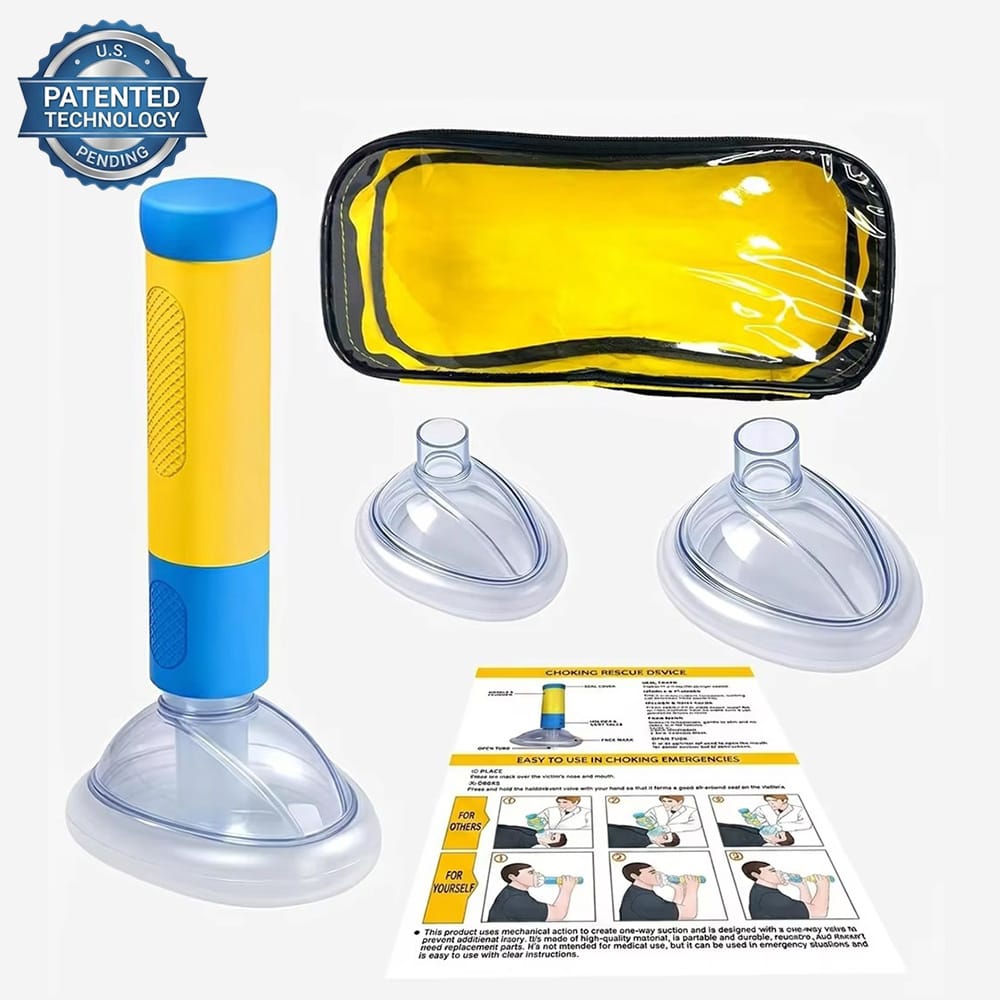


This reality has forced a shift in institutional risk management. Facility managers, school administrators, and restaurant operators are no longer treating airway clearance devices as optional novelties. Instead, they are integrating them into standard safety infrastructure alongside fire extinguishers and automated external defibrillators (AEDs). However, navigating the global market of anti-choking devices requires more than just picking the cheapest model online. This comprehensive guide walks you through the technical nuances, regulatory hurdles, and practical deployment strategies required to protect your patrons, students, and institutional reputation.
When someone chokes in public, the atmosphere shifts instantly from casual chatter to chaotic panic. In a commercial restaurant or a packed school cafeteria, the clock starts ticking the moment an obstruction lodges in the trachea. Brain damage can begin within four to six minutes, leaving precious little room for hesitation.
While staff members are usually trained in basic first aid, performing the Heimlich maneuver on a panicked customer or a frightened child is physically exhausting and emotionally taxing. Furthermore, if a patron has specific medical conditions, standard physical thrusts can become dangerous. Handheld, non-powered suction rescue devices provide a mechanical alternative that generates controlled negative pressure, pulling foreign objects upward safely without relying on brute physical force. Equipping your facility with these tools demonstrates a proactive commitment to safety that goes far beyond minimum legal compliance.
Procurement officers often make the mistake of buying a blanket safety kit for all properties under their management. However, restaurants and schools operate in completely different realities, and their hazard profiles dictate entirely different equipment requirements.
Restaurants deal with an unpredictable adult demographic enjoying rich, dense foods—such as thick cuts of steak, dense seafood, or slippery items like rice cakes. Dining rooms are often dimly lit, loud, and densely packed with tables, making physical movement difficult during an emergency. The anti-choking devices placed here must be exceptionally intuitive. A busy waiter or floor manager should be able to grab the unit, unseal it, and apply it correctly within seconds, even while adrenaline is spiking.
Schools, on the other hand, present a distinct set of challenges rooted in pediatric anatomy and institutional liability. Children have much smaller airways, meaning adult-sized suction masks are completely ineffective and potentially hazardous. School cafeterias require versatile kits equipped with properly scaled pediatric silicone masks. Moreover, because schools house hundreds of curious students, safety stations must be housed in secure, tamper-evident cabinets that prevent accidental misuse while remaining instantly accessible to teachers and school nurses.
As anti-choking devices surge in popularity, the market has seen an influx of low-quality knockoffs. When buying in bulk for institutional use, cutting corners on safety gear invites catastrophic risk. Look closely at these four technical benchmarks before issuing a purchase order:
Medical-Grade Material Integrity: Ensure the housing, valves, and plungers are manufactured from high-grade, hypoallergenic, and BPA-free polymers. Cheap plastics can crack under rapid suction pressure or degrade over time when exposed to commercial cleaning chemicals.
Mask Sealing Quality: The effectiveness of a negative-pressure device relies entirely on an airtight seal around the mouth and nose. Look for medical silicone masks with soft, flexible air-cushioned rims that conform seamlessly to diverse facial structures—from a crying child to an elderly adult with sunken cheeks.
Shelf-Life and Durability: Unlike electronics, suction seals and one-way valves rely on elastomer elasticity. A professional-grade device should maintain its mechanical integrity for a minimum of 3 to 5 years in storage without requiring rubber component replacements.
When selecting the physical format of your units, you will generally choose between portable handheld cylinders and fixed wall-mounted kits. Understanding their mechanics helps optimize your layout.
| Configuration | Core Mechanism | Best Operational Fit |
|---|---|---|
| Handheld Cylinder Units | Manual push-pull plunger with a patented one-way release valve. | Ideal for mobile deployment, bar counters, and multi-floor restaurants. |
| Wall-Mounted Cabinets | High-visibility housing with break-glass or magnetic latches. | Perfect for high-traffic school cafeterias and main dining halls. |
| Heavy Motorized Pumps | Battery-driven electronic vacuum extraction. | Too complex and heavy for casual staff use; reserved for medical clinics. |
Investing in top-tier equipment is entirely pointless if the units remain buried inside a locked manager’s office or a distant supply closet. In an emergency, every second wasted searching for equipment lowers survival rates dramatically.
In restaurants, the best mounting locations are near the kitchen pass-through window or adjacent to the primary beverage bar—places where floor managers and supervisors maintain constant visual oversight of the dining area. In multi-level venues, each floor must have its own dedicated station.
In schools, units should be mounted directly inside the cafeteria supervisor’s alcove and immediately outside the main nurse's station. Always pair these cabinets with universal, high-contrast visual signage placed at eye level so that substitutes, new hires, or visiting parents can spot the equipment from across a chaotic room instantly.
Having a device on the wall is only half the battle; employee muscle memory completes the safety chain. Many establishments buy safety gear and assume staff will magically know how to use it when chaos erupts.
To prevent freezing under pressure, schedule short, practical walkthroughs twice a year. Show your team how to pop open the cabinet, select the correct mask size, break any protective seals, and apply the downward-pull motion correctly. Make sure staff understand that these tools complement—rather than completely replace—standard first aid. Employees should still initiate back blows first, deploying the suction device immediately if manual clearing fails or if the victim loses consciousness. Maintain a written compliance log to inspect equipment seals and expiration dates every six months.
Choosing an anti-choking device for a restaurant, school, or public venue is an investment in human life and operational peace of mind. By prioritizing medical-grade build quality, proper pediatric-to-adult mask versatility, and strategic wall placement, you transform your venue into a secure environment. Don't wait for a crisis to test your emergency readiness—evaluate your facility layout today, procure reliable institutional kits, and empower your team to act decisively when every single second counts.
🏭 DAQIDA Factory Qualification Certificates & Injection Molding Expertise
As a professional direct source factory, DAQIDA masters advanced plastic injection molding processes, DFM optimization, and strict production discipline backed by our official qualification certificates:
• Explore our full manufacturing capabilities via the DAQIDA Product Catalog ➔
Avoid common mass-production pitfalls like shrinkage and warping. Partner with DAQIDA for professional OEM and ODM manufacturing solutions built on precise DFM analysis, stable process control, and rigorous factory quality standards.
No account yet?
Create an Account