




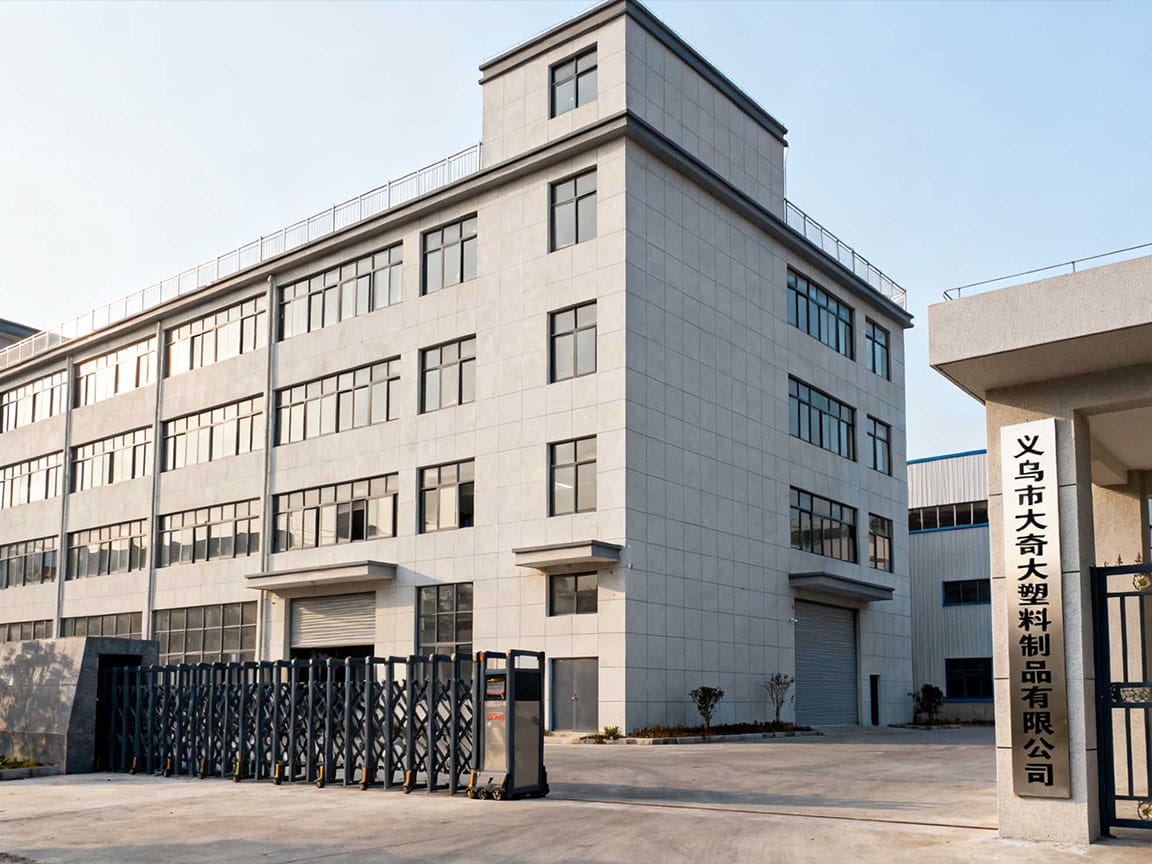
In the new product development (NPD) process, many buyers default to splitting tooling and injection molding across separate suppliers. In practice, this fragmentation creates a cascade of friction: the mold maker blames the molder's process parameters, the molder blames the mold design, and you get stuck paying for rounds of communication, shipping samples back and forth, and lost production time.
Selecting a direct supplier that serves as both plastic mold maker and manufacturer in one facility eliminates this friction, reduces supply chain risk, and accelerates time-to-market.
Integrating mold design, manufacturing, and injection molding within one production system eliminates the information loss that occurs at each handoff.
| Stage | Separate Suppliers | One-Stop Supplier |
|---|---|---|
| Design handoff | Multiple rounds, data loss risk | Single internal team |
| T1 sample issues | Blame-shifting between vendors | Immediate internal root cause analysis |
| Modification execution | Quoting delays, contract renegotiation | Fast-tracked in-house revision |
| Process optimization | Molder cannot alter mold; maker cannot adjust machine | Parallel optimization of tool and machine |
When the same engineering team handles both plastic mold making and injection production, the feedback loop is dramatically shortened.
During T1 and T2 trial runs, defects like shrinkage, flash, or warpage are common. In a one-stop operation, the tooling engineer and the process engineer sit in the same room. They adjust mold geometry, modify gating, or tweak barrel temperatures in real time without formal change orders across company boundaries.
Industry benchmark: Leading integrated operations compress the product planning-to-delivery cycle from months to approximately 70–80 days.
The DFM Phase: A one-stop supplier engages DFM (Design for Manufacturability) analysis at the earliest stage to evaluate parting lines, uniform wall thickness, and proper draft angles, optimizing mold design for cycle time and first-shot success.
In a split-supplier model, nobody takes full ownership of final part quality. A one-stop plastic mold maker and manufacturer assumes full accountability for the finished component, bridging tooling quality and molding quality into a single P&L.
| Quality Dimension | Split-Supplier Risk | One-Stop Approach |
|---|---|---|
| Dimensional deviation | Finger-pointing between vendors | Single team adjusts mold + process |
| Surface finish defects | Multiple re-shipments of samples | Immediate in-house trial with correction |
| Material compatibility | Molder may reject mold's recommended material | Material selection coordinated with mold design |
| Assembly fit issues | Requires third-party measurement reconciliation | In-house CMM and assembly validation |
While upfront tooling costs can look lower with a dedicated standalone shop, total cost of ownership favors integrated production:
| Cost Component | Separate Suppliers | One-Stop Supplier |
|---|---|---|
| Middleman markup | Often 15–30% on tooling | Eliminated |
| Logistics | 1–2 freight cycles + customs handling | One movement within facility |
| Trial molding fees | Paid per run at molder's facility | Included in tooling package |
| Modification charges | Quoted and billed separately | Internal cost, faster response |
| Production downtime | Extended when issues arise | Minimized by integrated response |
A full-service manufacturer supports materials ranging from standard ABS and PP to engineering plastics like PC, PA6+GF, and PPS+GF, ensuring correct steel selection (e.g., S136 or H13) and matching moldability with end-use performance.
Secondary Capabilities: Integrated facilities also handle painting, UV coating, pad printing, screen printing, ultrasonic welding, and final assembly lines—eliminating multi-vendor coordination headaches.
Choosing a supplier that functions as both plastic mold maker and manufacturer transforms a fragmented supply chain into a single relationship of accountability. For B2B buyers, that integration is the difference between a high-risk vendor and a reliable long-term manufacturing partner.
🏭 DAQIDA Factory Qualification Certificates & Injection Molding Expertise
As a professional direct source factory, DAQIDA masters advanced plastic injection molding processes, DFM optimization, and strict production discipline backed by our official qualification certificates:
• Explore our full manufacturing capabilities via the DAQIDA Product Catalog ➔
Avoid common mass-production pitfalls like shrinkage and warping. Partner with DAQIDA for professional OEM and ODM manufacturing solutions built on precise DFM analysis, stable process control, and rigorous factory quality standards.
No account yet?
Create an Account