



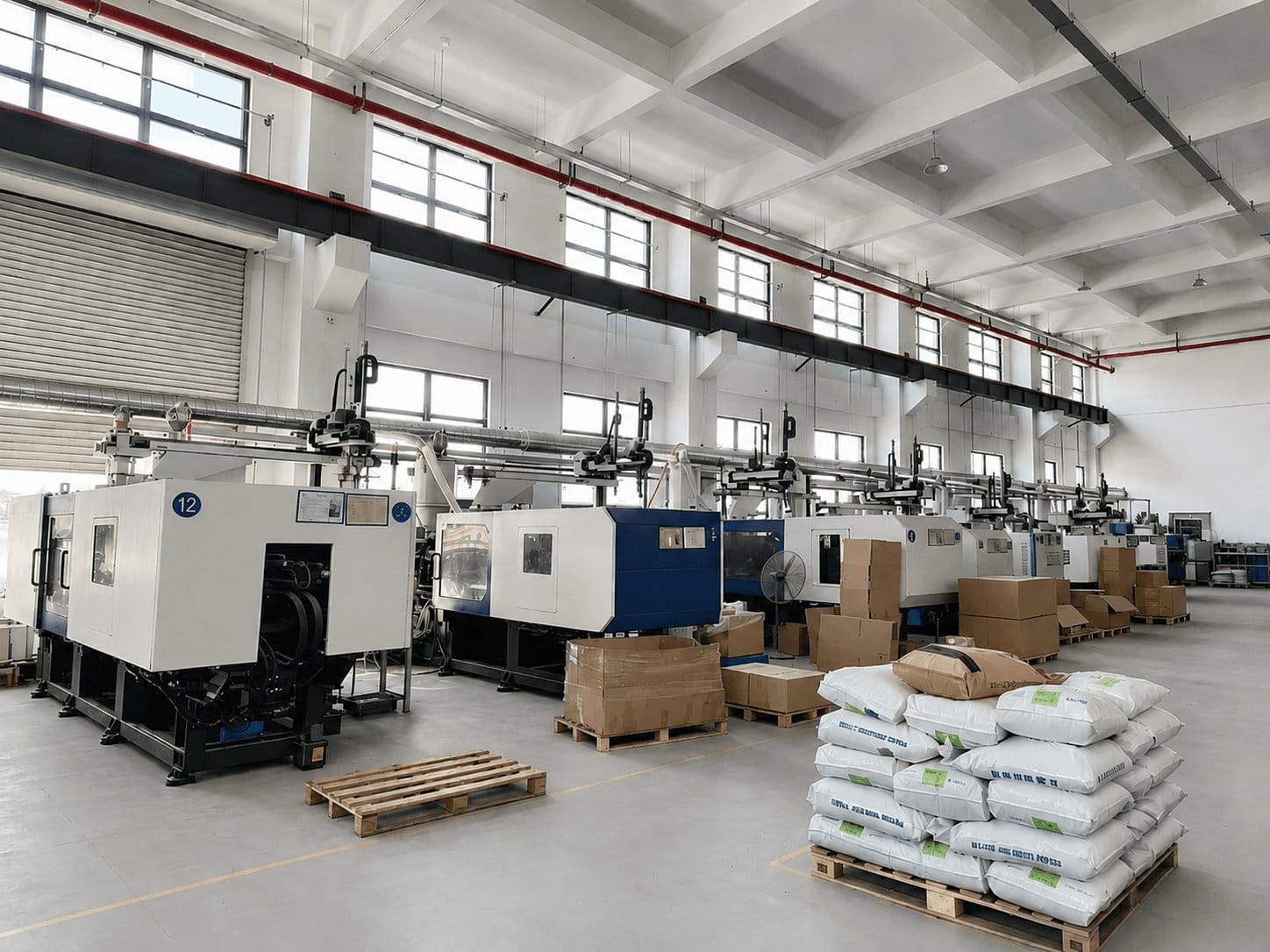
To successfully bring a plastic product from concept to market, procurement professionals must first grasp the fundamental distinction between OEM and ODM business models. This choice directly impacts intellectual property (IP) ownership, cost structure, and time-to-market.
The table below provides a strategic comparison across key dimensions:
| Evaluation Dimension | OEM (Buyer-Driven) | ODM (Supplier-Driven) |
|---|---|---|
| Design Ownership | Buyer retains IP and mold ownership | Supplier retains design IP or licenses to buyer |
| Upfront Investment | High (custom mold development, extended validation) | Low (existing molds or rapid tooling) |
| First Article Lead Time | Longer (prototype → tooling → validation) | Shorter (ready-to-use molds or quick-turn tooling) |
| Minimum Order Quantity (MOQ) | Typically higher (to amortize tooling cost) | As low as 1 piece (for proof-of-concept) |
| Customization Level | Maximum (full control over geometry and specifications) | Moderate (modular changes or configuration adjustments) |
| Regulatory Compliance Responsibility | Shared; buyer defines requirements, supplier executes | Supplier typically provides compliant design and certificates |
Selection Guidance: Choose the OEM route if you have detailed engineering drawings, require brand differentiation, or are making a long-term strategic investment. Choose the ODM route if you are testing a new market, need rapid iteration, or are sourcing standardized commodity products.
Plastic product design goes far beyond aesthetics—it directly determines the success of subsequent mold development. The supplier's engineering team should evaluate the design from a manufacturing perspective:
Leading suppliers offer turnkey services—from mold flow analysis and CAD design to CNC machining and trial adjustments. Pilot-scale production acts as the critical bridge from laboratory samples to full-scale manufacturing, cutting scale-up cycles by over 50% while establishing robust process windows.
| Assessment Criteria | What to Verify | Risk Addressed |
|---|---|---|
| Technical Capability | CAD/CAM/CAE capabilities; mold flow analysis; advanced processes | Design infeasibility; delayed problem-solving |
| Quality Management | ISO 9001, IATF 16949, ISO 14001 certificates | Systemic process failures; regulatory non-compliance |
Systematic process controls—such as Statistical Process Control (SPC) and cavity-level traceability—prevent batch-level non-conformances. Long-term commercialization relies on tracking First-Pass Yield (FPY) and structured root-cause corrective actions.
🏭 DAQIDA Factory Qualification Certificates & Manufacturing Strength
As a professional direct source factory specializing in plastic injection molding, DAQIDA ensures full compliance and strict quality control backed by our official qualification certificates:
• Explore our full manufacturing solutions via the DAQIDA Product Catalog ➔
Whether you need customized OEM tooling execution or flexible ODM development, DAQIDA's advanced plastic injection molding facility and expert engineering team are ready to scale your product concept efficiently.
No account yet?
Create an Account