



For most first-time Amazon sellers, the biggest barrier to launching a private label product isn't finding a supplier—it's the minimum order quantity (MOQ). A factory says "1,000 units," and suddenly your $5,000 budget looks like pocket change.
But here's the reality that most sourcing guides don't tell you: 1,000-unit OEM orders are not just feasible—they're becoming the new normal for market testing. And when executed correctly, they offer a strategic advantage that large-batch buyers envy: the ability to validate demand without betting your entire launch budget.
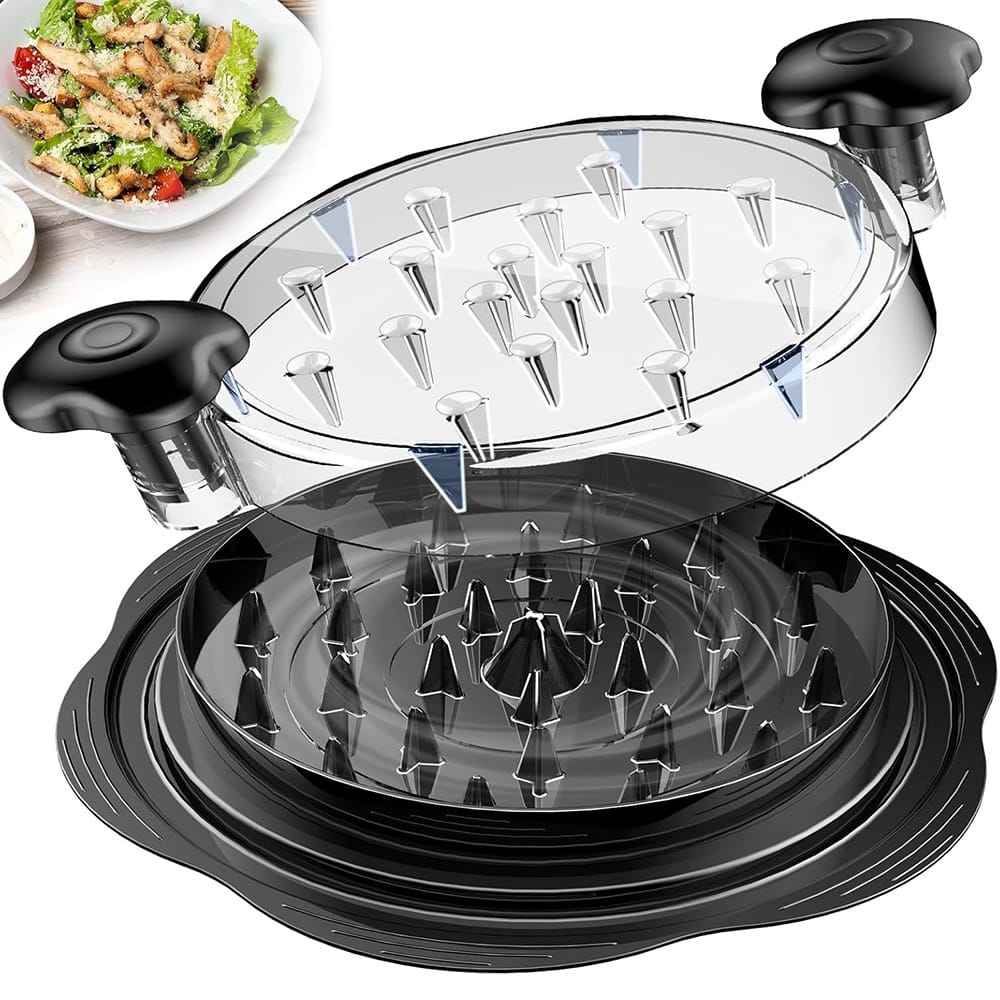
Whether you are sourcing custom kitchen gadgets like a Chicken Shredder Machine, a specialized Chicken Shredder Tool, or a twist-style Chicken Shredder Tool Twist, understanding how low-MOQ OEM manufacturing works is essential for your supply chain strategy.
This guide breaks down how low-MOQ OEM manufacturing works, what it really costs, and how to use 1,000-unit orders to test Amazon markets intelligently.
Traditional OEM manufacturing was built for Walmart-scale buyers. Factories demanded 5,000–10,000 units per order, locking startups out of custom production entirely. Today, the landscape has shifted.
Low-MOQ OEM means working with a manufacturer that accepts small-batch orders—typically 100 to 1,000 units—while still allowing you to own the product design, customize materials, and apply your branding. Unlike white-label or ODM (where you're stuck with factory-designed products), OEM gives you full intellectual property ownership and product differentiation.
For Amazon sellers specifically, low-MOQ OEM offers four critical advantages:
| Advantage | Why It Matters on Amazon |
|---|---|
| Lower capital requirement | Reduces upfront inventory investment from $15,000–$25,000 to $4,000–$8,000. |
| Reduced inventory risk | Less dead stock if the product doesn't sell—beauty and home goods brands using low-MOQ models reduce inventory risk by 30–50%. |
| Faster iteration | Test 3–4 design variants with smaller runs rather than committing to one untested SKU. |
| Design flexibility | Make improvements based on customer reviews without scrapping thousands of units. |
The math is simple: a 1,000-unit order at $8 per unit ties up $8,000 in product cost. A 5,000-unit order at $5 per unit ties up $25,000. The higher per-unit cost of small batches buys you something invaluable: the ability to fail fast and cheaply.
Here's where most first-time buyers get trapped. The quoted unit price is only the beginning.
For a typical 1,000-unit OEM order of a consumer product (e.g., custom kitchen tools or stainless steel goods), here's what the numbers look like:
| Cost Component | Estimated Amount |
|---|---|
| Per-unit manufacturing | $5–$8 (500–1,000 pieces) |
| Mold/tooling amortization | $0.80–$2.50/unit |
| Sampling charges | $50–$150 per design |
| Setup fees | $100–$300 |
| Ocean freight (20-ft container) | $2,800–$3,200 |
| Tariffs (Chinese goods) | ~35% (Section 301 + Section 122) |
| FBA prep (bags, labels) | Variable |
The hidden reality: Low-MOQ orders cost 15–35% more per unit than standard production runs, according to Alibaba's 2025 Small Order Report. And one-time costs like mold fees, sampling, and setup can add 20–40% to quoted unit prices for first-time orders.
A 1,000-unit kitchen appliance order might look straightforward on paper—$38,000 plus $4,000 shipping. But three hidden cost layers routinely blow budgets:
Layer 1: Per-Color Minimums
Many factories quote 1,000 units but mean 1,000 per color. Want two colors? Your minimum just doubled. A genuine low-MOQ manufacturer that owns its own tooling can split a single SKU's MOQ across colors—but trading companies posing as factories will reject this outright. Custom color change fees can add $800–$1,200 per mold.
Layer 2: Tooling and Mold Amortization
A $2,000 custom mold on a 1,000-unit order adds $2 per unit. On 3,000 units, it's $0.67. Logo tooling alone can add $0.80–$2.50 per unit when spread across only 1,000 pieces.
Layer 3: FBA Compliance Costs
Amazon requires FNSKU labels, poly bags at 1.5 mil thickness, suffocation warnings, and specific packaging standards. A factory that handles this in-house eliminates a 12% inbound rejection rate that's common among sellers who skip this step.
Not all factories are created equal. Here's what the current landscape looks like:
| Supplier Type | Typical MOQ | Best For |
|---|---|---|
| Yiwu trading companies | 50–100 units | Stock items, bags, home décor, small electronics |
| Yiwu/Guangdong OEM factories | 50–300 units | Apparel, home goods, consumer products |
| Tier-one export factories | 500–1,000+ units | High-volume, established brands |
| Niche manufacturers | As low as 2–200 units | Specialty products, startups |
Examples of low-MOQ OEM manufacturers:
Trading companies often pose as factories and reject small-batch requests. Here's how to verify:
| Factor | Typical Terms |
|---|---|
| Payment | 50% deposit, 50% before shipment (NET-30 terms are rare for orders under $3,000 total) |
| Lead time (Yiwu suppliers) | 18–25 days for apparel, home goods, and kitchen tools |
| Lead time (large-scale) | 35–45 days |
Instead of ordering 1,000 units of one untested product, consider ordering 100 units each of four designs. This costs less than a single 500-unit run of one product and lets you identify winning variants before scaling.
For example, a genuine low-MOQ manufacturer that owns its mold shop might accept 300 units in matte black and 200 in sage green—pulling from the same production cycle without re-tooling.
First-time importers working with unproven factories face quality variance risk. A 100-unit test order limits exposure to $1,500–$2,500, versus $8,000–$12,000 for standard MOQs. If the supplier ships substandard goods, the financial damage stays contained while you source an alternative.
| Order Size | Unit Cost | Product Cost | Freight (to LA) | Duties (6.5–12%) | Total Upfront |
|---|---|---|---|---|---|
| 500 units | $8 | $4,000 | $600–$1,200 | $260–$480 | ~$5,300 |
| 100 units | $8 | $800 | $120–$240 | $52–$96 | ~$1,100 |
The 100-unit order frees up ~$4,200 for marketing and additional SKU testing.
A 1,000-unit order is a testing tool, not a destination. Here's when to scale up:
| Signal | Action |
|---|---|
| Consistent sales velocity for 3+ months | Place larger order to reduce per-unit cost |
| 50+ reviews with 4.0+ star average | Your product-market fit is validated |
| Positive margin after all costs (PPC, FBA fees, tariffs) | Scale with confidence |
| Customer feedback reveals clear improvement opportunities | Iterate design before scaling |
The most successful e-commerce brands follow this trajectory: start with private label/ODM to test the market, then pivot to custom OEM when sales data proves demand. Once a product generates consistent revenue, reinvest profits into custom-designed versions that outpace competitors. The 1,000-unit order is your bridge between the "I have an idea" phase and the "I have a proven brand" phase.
Low-MOQ OEM manufacturing has democratized product creation. You no longer need a warehouse full of inventory to test an Amazon product. What you need is a clear testing strategy, a realistic budget that accounts for hidden costs, and a manufacturer that genuinely supports small-batch production.
Your next move: Identify your product category, research 3–5 suppliers with published low MOQs, request samples, and run the full landed-cost calculation before placing your first PO. Whether you are launching a standard Chicken Shredder Machine, an upgraded Chicken Shredder Tool, or a creative Chicken Shredder Tool Twist, the 1,000-unit order is your ticket to market testing—use it to learn, iterate, and build a brand that lasts.
🏭 DAQIDA Factory Qualification Certificates & Injection Molding Expertise
As a professional direct source factory, DAQIDA masters advanced plastic injection molding processes, DFM optimization, and strict production discipline backed by our official qualification certificates:
• Explore our full manufacturing capabilities via the DAQIDA Product Catalog ➔
Avoid common mass-production pitfalls like shrinkage and warping. Partner with DAQIDA for professional OEM and ODM manufacturing solutions built on precise DFM analysis, stable process control, and rigorous factory quality standards.
No account yet?
Create an Account