




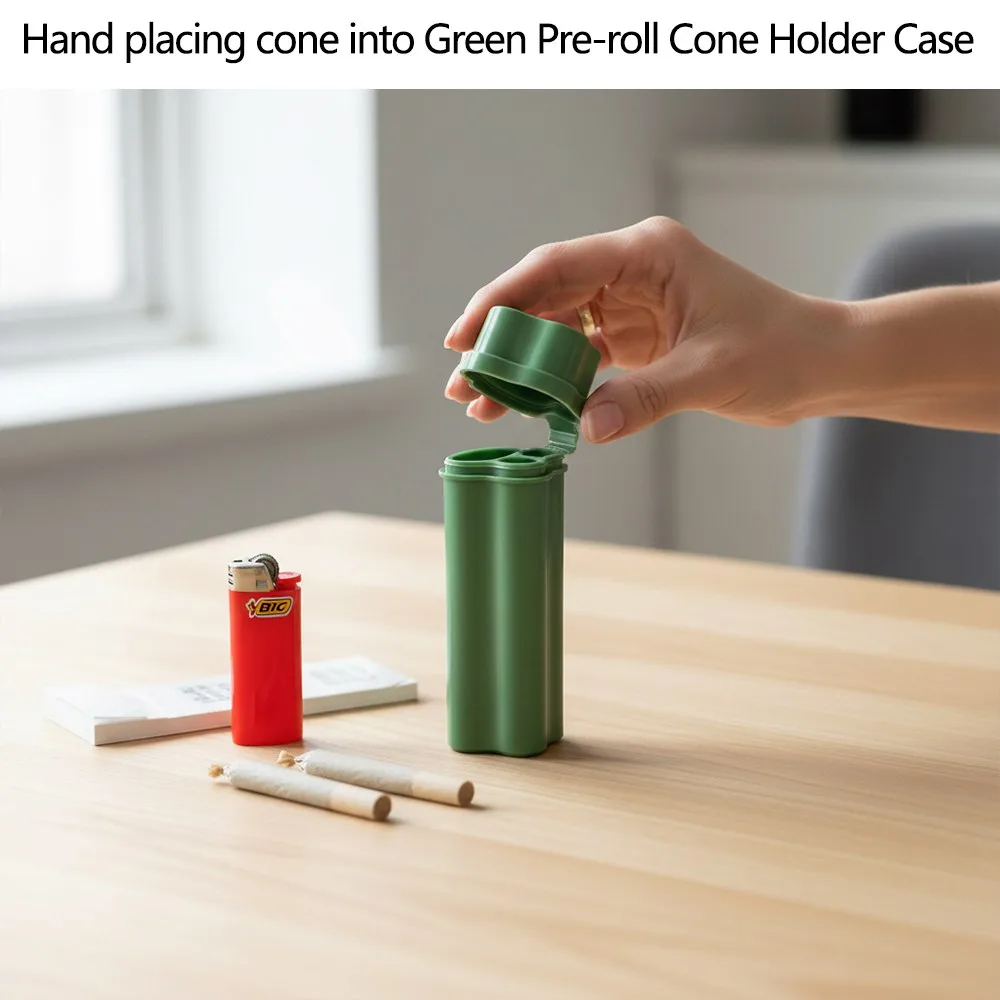
When customers come to us for a custom plastic cigarette case, the first question is always: should we use PP plastic material or ABS plastic material? If you are searching for a cigarette case, a cigarette box, or a portable cigarette case, the material you choose affects hinge life, drop resistance, printing quality, cold-weather performance, mold cost, and the feel in your hand.
Some buyers also search for cigarette case stainless steel because they want a metal option. Stainless steel cases are durable and premium, but they are heavier, colder to the touch, and much more expensive to customize. For most custom projects, plastic injection molding offers a better balance of cost, design freedom, and lightweight pocket carry. That is why we focus on PP plastics and ABS in this guide.
We are an injection molding factory. We work plastic injection molding every day. We have produced many sample cigarette cases, cigarette boxes, and portable cigarette cases using PP, ABS, PC, and PP+TPE overmolding. In this guide, we explain the real differences between PP and ABS, why our factory usually chooses PP plastic material for flip-top cigarette cases, and how injection molding technology changes when you switch from PP to ABS.
Before we compare PP and ABS in detail, let us explain why our own portable cigarette case uses PP plastic material.
A cigarette case is not a display item. It goes into a pocket, gets squeezed, dropped, opened and closed dozens of times a day. The hinge is the weakest point in many cheap designs. With PP, the hinge flexes instead of cracking. A well-designed PP living hinge can survive about one million bending cycles. That is the main reason we choose PP for our flip-top cigarette and lighter case.
Our PP cigarette box also holds a standard lighter in a dedicated slot, so you carry both in one compact unit. The PP shell is tough, lightweight, and cost-effective. Yes, PP needs plasma treatment before printing, but we accept that extra step because the final product survives real daily use. If the hinge fails, the cigarette case becomes useless. PP gives us the durability we need.
| Feature | PP Plastic Material | ABS Plastic Material |
|---|---|---|
| Best for | Flip-top cigarette case, snap hinge, pocket use | Premium printed cigarette box, smooth surface |
| Flexibility | Flexible, tough, survives repeated bending | Stiffer, less flexible |
| Cold weather | Good toughness in cold | Can become brittle in freezing cold |
| Printing | Needs plasma or flame treatment | Easy silk screen, pad printing, painting |
| Surface | Semi-matte, slightly slippery | Smooth, glossy, premium look |
| Mold shrinkage | High, about 1.5%–2.5% | Low, about 0.4%–0.7% |
| Injection molding | Higher shrink allowance, lower pressure | Lower shrink allowance, stable dimensions |
| Cost | Usually lower | Usually medium |
| Our factory choice | PP for most cigarette cases | ABS only for warm indoor printed boxes |
This table is the short answer. The longer answer matters because a cigarette and lighter case is not a display-only product.
What Is PP? Is PP Good for a Cigarette Case?
PP stands for polypropylene. Is PP a good plastic for a cigarette case? Yes, especially for a flip-top cigarette box or a cigarette and lighter case. PP plastics are semi-crystalline thermoplastics known for toughness, flexibility, chemical resistance, and excellent fatigue resistance. In simple terms, PP can bend again and again without snapping. That is why PP is widely used for living hinges, food containers, medicine boxes, and custom plastic cigarette cases.
What Makes PP a Popular Choice for Snap-Fit Lids
PP is flexible and tough. When you repeatedly open and close the flip lid, PP bends instead of snapping. It resists cracking when squeezed inside a pocket or dropped onto hard surfaces. It is also cost-effective. For a cigarette case carried daily, this matters more than a glossy surface.
The Main Downside of PP
PP's surface is naturally slippery. Paint or screen ink does not stick easily unless you use extra surface treatment like plasma. Without treatment, printing can scratch off. If your cigarette box needs a sharp, permanent logo, you must budget for this additional step.
Mold Design Considerations for PP
PP shrinks more as it cools after molding. The typical mold shrinkage rate for PP is 1.5% to 2.5%. When we build the mold for a PP cigarette case, we must make the cavity slightly larger to compensate for this shrinkage. If we ignore shrinkage, the finished cigarette case lid may end up too small and fail to close properly. PP also exhibits the shortest filling time and the lowest injection pressure requirement among common thermoplastics.
Why People Choose ABS for Custom Printed Cases
ABS has a nice smooth surface right out of the mold. It works very well for silk screen printing and painting. No complicated pre-treatment needed. If your product needs a polished high-end look, ABS is a common pick. ABS also has good dimensional stability, so tight-tolerance features on a cigarette box can be easier to control.
The Big Weakness: It Gets Brittle When Cold
ABS is stiffer, but less flexible than PP. In cold conditions, it becomes brittle. If you drop an ABS cigarette case outdoors on a cold day, or keep it in a cold car, the flip hinge or corners may crack. This is the biggest risk for a portable cigarette case sold in cold-climate markets. For a cigarette box used mostly indoors, ABS can work well.
Mold Design Considerations for ABS
ABS shrinkage is much lower than PP. The mold shrink allowance is therefore smaller — typically 0.4% to 0.7%, compared to PP's 1.5% to 2.5%. We do not need to enlarge the mold cavity as much as we do for PP. This makes ABS molds slightly easier to dimension for tight-tolerance features like snap-fit lids.
Polycarbonate (PC): Clear, Strong, But Higher Cost
PC is your option if you want fully transparent cigarette cases. It has excellent impact resistance. But PC costs more than PP or ABS. It also needs to be dried before molding, otherwise tiny bubbles will form inside the clear plastic. PC is not our default recommendation unless transparency is your main requirement.
PP + TPE Overmolding: Soft Non-Slip Grip
Overmolding means we mold a hard PP base first, then add soft TPE rubber onto it in the same mold. The hard PP forms the main cigarette case shell with a durable snap hinge. The TPE creates a soft, non-slip grip area on the lid. TPE bonds well to PP, and it will not peel off easily if the mold and process settings are correct. The tradeoff is that overmolding tooling costs are higher than a standard single-plastic mold.
Real Factory Sample Comparison
We have made test samples in all four materials for cigarette case projects:
These results are why our factory chooses PP for most cigarette cases, cigarette boxes, and portable cigarette cases.
Q: What is PP?
A: PP means polypropylene. It is a tough, flexible plastic used in pp plastics products such as living hinges, food containers, and custom cigarette cases. Is PP good for a cigarette box? Yes, because it can bend many times without breaking. That is why our factory uses PP plastic material for most flip-top cigarette cases.
Q: What is ABS?
A: ABS means acrylonitrile butadiene styrene. It is a stiffer plastic with a smooth, glossy surface. ABS is good for a printed cigarette box or premium cigarette case, but it can become brittle in cold weather. People sometimes compare ABS with cigarette case stainless steel; both look premium, but ABS is lighter and cheaper, while stainless steel is heavier and more durable.
Q: Is PP better than ABS for a cigarette case?
A: For a flip-top cigarette case, PP is usually better. It survives repeated opening and closing, pocket pressure, and drops. ABS looks more premium and prints more easily, but it is less flexible. If your cigarette and lighter case will be used in cold climates, PP is safer.
Q: How do I use a plastic cigarette case?
A: A flip-top cigarette case usually holds cigarettes, pre-rolled cones, or cigars. A portable cigarette case also has a slot for a standard lighter. Open the lid, place your cigarettes in the main compartment, put the lighter in the side slot, and close the snap-fit lid. The PP hinge is designed for thousands of open-close cycles. Avoid leaving an ABS cigarette box in a freezing car for long periods.
Q: Does PP shrink more than ABS in injection molding technology?
A: Yes. PP shrinks about 1.5%–2.5%, while ABS shrinks about 0.4%–0.7%. Our mold maker must enlarge the PP mold cavity more. If ignored, the cigarette case lid may not fit tightly. This is one of the biggest injection molding technology differences between PP and ABS.
Q: Can you print a logo on a PP cigarette box?
A: Yes, but PP needs plasma or flame treatment before printing. Without treatment, ink may scratch off. ABS accepts printing more easily, which is why some brands choose ABS for a premium printed cigarette case.
Q: Can you make a custom cigarette and lighter case?
A: Yes. We can produce a custom portable cigarette case in PP, ABS, PC, or PP+TPE. We can add a lighter slot, custom logo, matte or glossy finish, and different colors. We use injection molding technology and industrial molding standards to keep quality consistent.
Q: What does “work plastic injection molding” mean?
A: It means we work plastic injection molding as our production process. Melted plastic is injected into a steel mold, cools, and forms the cigarette case. We control mold shrinkage, cooling, pressure, and material flow to make each cigarette box consistent.
Q: Why does our factory choose PP for cigarette cases?
A: Because the product itself needs a tough hinge, drop resistance, and pocket durability. PP plastic material gives the best balance of cost, flexibility, and fatigue life. ABS may look better for printing, but PP performs better in real daily use.
If you need a custom plastic cigarette case, a cigarette box, or a portable cigarette case, PP and ABS both have a place. ABS gives you a smooth premium surface and easy printing. PP gives you a durable flip hinge, better cold-weather toughness, and lower cost. For most cigarette case projects, our factory chooses PP plastic material because the product must survive real life in a pocket.
If you want to discuss injection molding technology, mold shrinkage, work plastic injection molding, or industrial molding for your next cigarette case project, contact our factory. We can recommend PP, ABS, PC, or PP+TPE based on how your cigarette box will actually be used.
No account yet?
Create an Account