




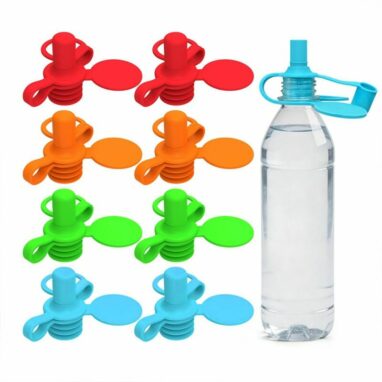
Yes, food-grade silicone is considered safe for contact with food and drinks. It doesn't react with what you cook, it doesn't break down into your food at normal temperatures, and it handles both freezer cold and oven heat. That's why you see it in baking mats, spatulas, baby bottle nipples, ice trays and water bottle parts.
The catch is the words "food grade." Not every silicone product sold online meets that standard, and the difference matters. The rest of this guide shows how to tell them apart.
Silicone is a synthetic rubber made from silicon (which comes from sand), oxygen, carbon and hydrogen. It isn't the same as silicon, the element used in computer chips, and it isn't plastic in the usual sense, although people often lump them together.
"Silicone food grade" means the silicone is made to be safe for touching food, with ingredients and a curing process that meet food contact rules. You'll also see it written as food grade silicone rubber, which is the same material in its solid, flexible form.
Food-grade silicone rubber is usually made one of two ways. Platinum-cured silicone uses a platinum catalyst and leaves almost no by-products behind. Peroxide-cured silicone is cheaper and also widely used, but it needs a longer post-curing step (baking the finished part) to drive off leftover residues. Both can be food safe when made properly. Platinum-cured is the one you'll usually see on baby products and medical items.
No, food-grade silicone isn't toxic. The problem is low-grade silicone, which is a different thing.
Pure silicone is fairly expensive, so some cheaper products mix in fillers such as chalk or other additives to cut costs. These products can feel fine in the hand, but they may smell strange, discolor, turn sticky over time or break down faster in heat. Low-grade silicone is the usual reason people have bad experiences with silicone kitchenware.
If a product is very cheap, has no material information and smells like chemicals when new, treat it with caution.
Yes. Silicone doesn't contain BPA (bisphenol A), and BPA isn't used to make it. BPA shows up mostly in some polycarbonate plastics and in the lining of certain cans. If you're comparing materials for a water bottle, a baby product or a food container, silicone is an easy answer to the BPA question.
One honest note: "BPA free" on a label only tells you about BPA. It doesn't tell you whether the product is food grade, so you still want to check the other points in this guide.
Not always, and it depends on which plastic you mean. "Plastic" covers a lot of materials.
Food-grade silicone and food-grade PP (polypropylene, recycling number 5) are both widely used for food contact and are generally considered safe. Some other plastics, like polycarbonate, can contain BPA, and cheap plastics of unknown type are the ones to be careful with.
Here's how the two compare in everyday use:
So neither one is safer in every case. A well-made product in either material is fine, and a poorly made one in either is not. Quality and testing matter more than the label.
Yes, if they're made of food-grade silicone. Silicone food containers, bags and lunch boxes are popular because they're light, they don't break and they go from the freezer to the microwave without trouble.
What to check before you buy or sell a silicone food container:
Silicone containers also have a few trade-offs. They're soft, so they don't hold their shape as well when full, and they can pick up odors from strong food. Many people use silicone for freezing, baking and storing snacks, and a rigid container for liquids and heavy meals.
Yes, food-grade silicone is microwave safe. It won't melt or warp at normal microwave temperatures, and it has no BPA in it. The silicone itself doesn't heat up much, but the food inside does, so the container can still get hot. Use oven mitts when you take it out.
A few things help:
Yes, in most cases. Food-grade silicone usually handles up to about 220 to 230°C (428 to 450°F), but the rating differs by maker, so read the one printed on your product. Put flexible silicone molds on a baking sheet before they go in, so they don't wobble when you lift them out.
Keep silicone away from the broiler, an open flame and a stovetop burner, since those go well above its rated temperature. And don't cut on it with a knife.
There's no perfect test you can do at home, but these checks help:
Not exactly, and the wording is worth understanding. The FDA doesn't approve individual kitchen products. What it does is set rules for the materials that can touch food. Silicone rubber articles for repeated use fall under 21 CFR 177.2600, so when a maker says a product is "FDA compliant," it means the material meets those rules.
For Europe, silicone is covered by the general EU food contact framework, and in practice many buyers ask for LFGB, the German standard, which is stricter than a basic FDA check. A product with an LFGB test report is generally easier to sell in Germany and the rest of Europe.
If you're sourcing for a store, ask for the report, not just the claim. A good report names the product or material, the standard it was tested against, the test date and the lab that issued it.
Silicone lasts a long time if you treat it right.
Is silicone food safe?
Yes, food-grade silicone is considered safe for contact with food and drinks. It doesn't react with what you cook or break down at normal temperatures.
Is silicone toxic?
Food-grade silicone is non-toxic. However, low-grade silicone mixed with fillers can smell strange, discolor, or break down faster.
Is silicone BPA free?
Yes. Silicone does not contain BPA and BPA is not used in its manufacturing process.
Is silicone microwave and oven safe?
Yes, food-grade silicone handles both microwave heating and oven temperatures up to 220–230°C (428–450°F), depending on the specific product rating.
No account yet?
Create an Account