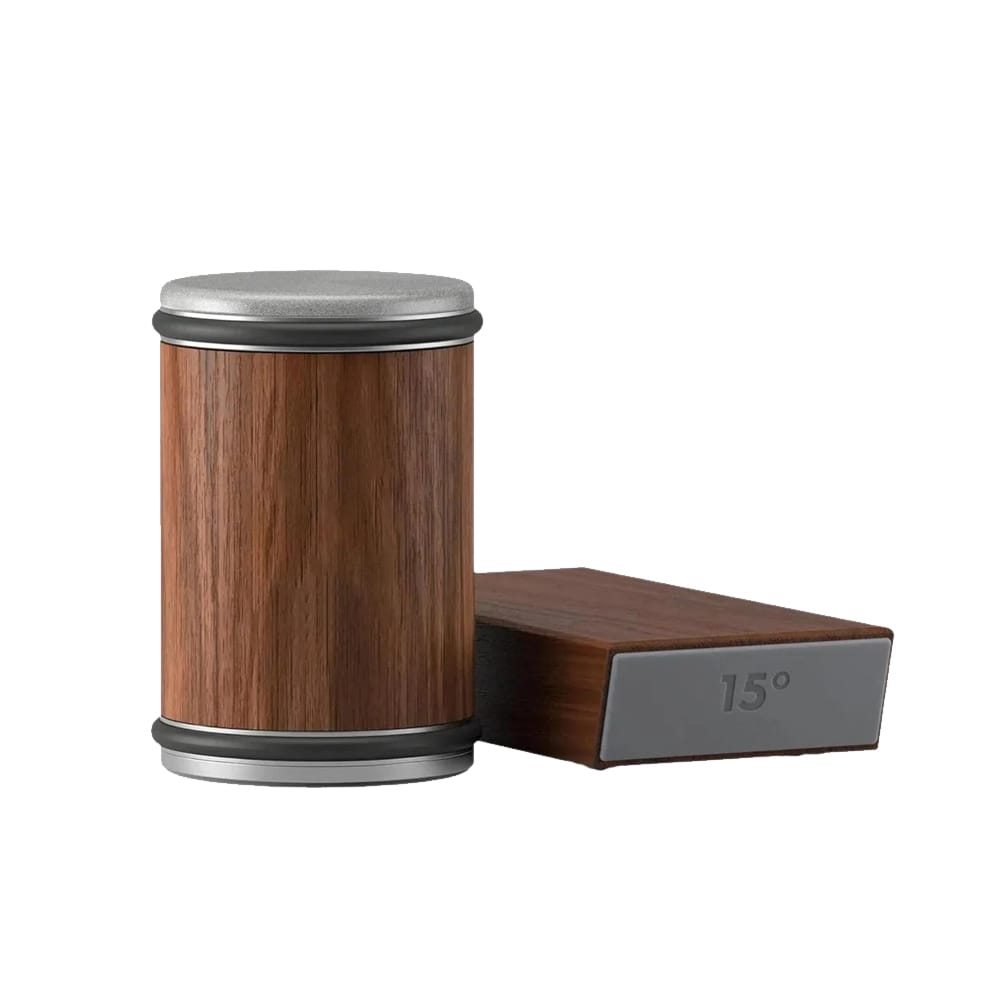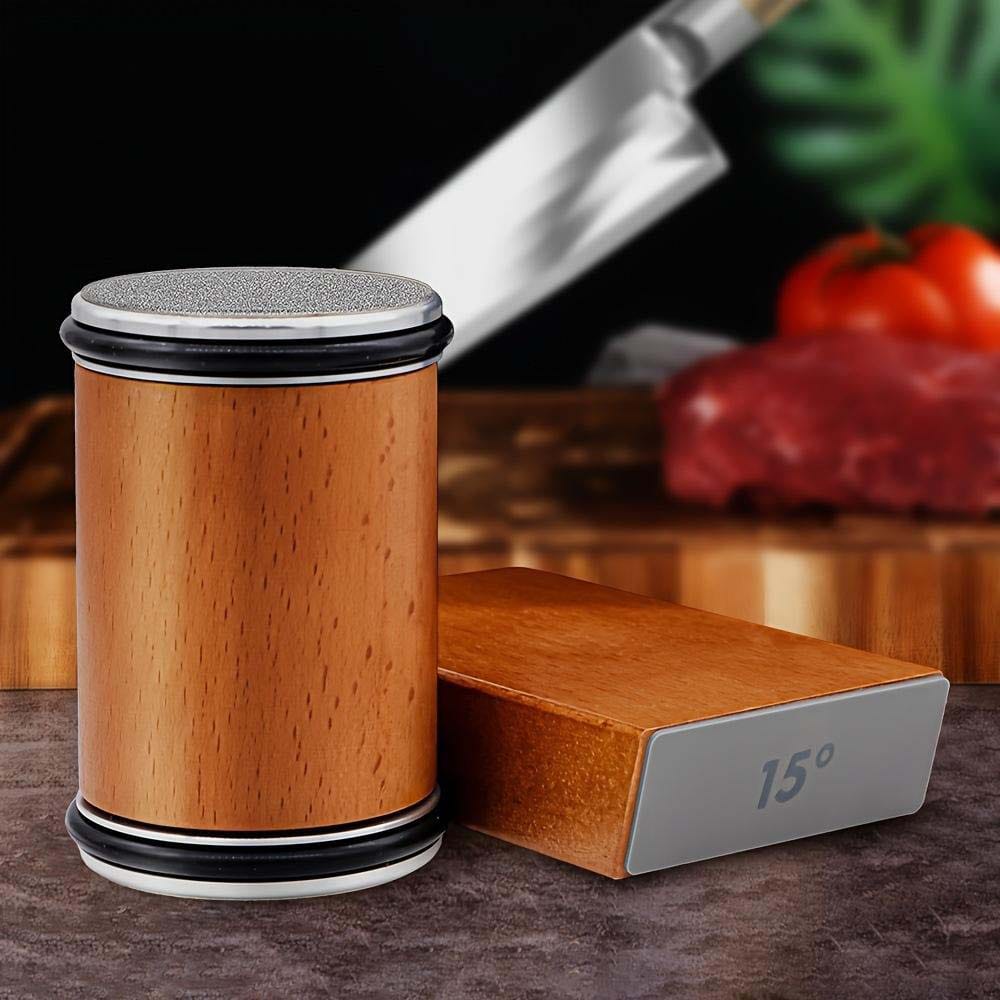

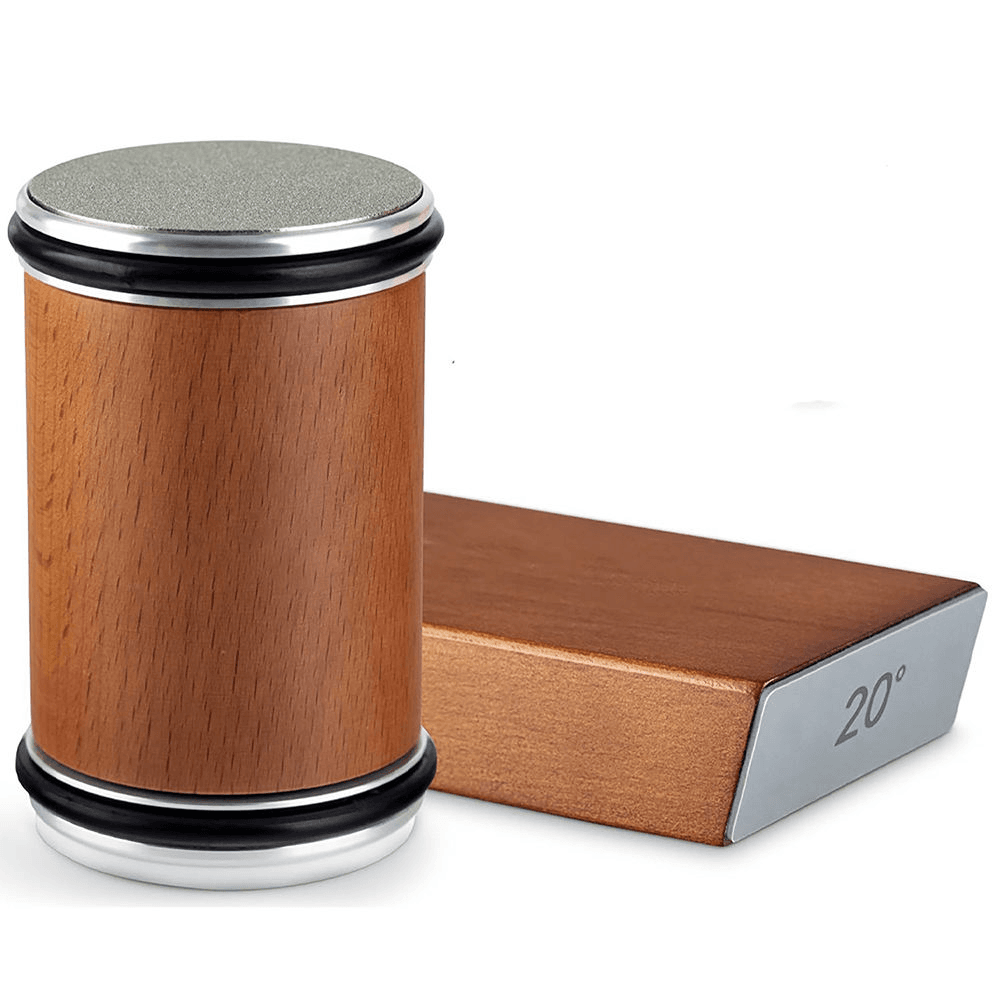
From a manufacturing engineering standpoint, knife sharpening is not about "scraping metal away." It is a controlled material removal process aimed at reconstructing a precise, uniform micro-bevel along the cutting edge. The performance of any sharpening tool is determined by three interdependent factors: angle stability, abrasive material selection, and structural rigidity.
The DAQIDA Rolling Knife Sharpener Kit addresses these factors through a systematic design approach. Unlike traditional pull-through sharpeners that rely on ceramic or carbide V-notches (which often produce ragged, inconsistent edges), this system employs a rolling mechanism paired with a magnetic angle base to achieve repeatable, professional-grade results in a consumer-friendly format.
For global procurement and bulk distribution, exploring our high-performance 👉 Wholesale Rolling Knife Sharpener collections provides brand owners with premium retail-ready options.
This article breaks down the engineering rationale behind each component, from the diamond abrasive composite to the aluminum alloy chassis and the natural marble end caps.
A knife edge is essentially a wedge. The included angle (typically 15°–20° for Western chef's knives, 10°–15° for Japanese blades) determines both sharpness and edge retention. A deviation of just 2°–3° during sharpening can reduce edge retention by up to 50%, as the apex becomes either too thin (prone to rolling) or too thick (poor cutting performance).
| Sharpening Method | Angle Consistency | Skill Required | Risk of Edge Damage |
|---|---|---|---|
| Freehand whetstone | Low (±5°–8°) | Very High | High |
| Pull-through V-notch | Moderate (±3°) | Low | High (uneven carbide tear-out) |
| Electric sharpener (fixed guides) | High (±1°–2°) | Low | Moderate (overheating risk) |
| Magnetic rolling system (this design) | Very High (±1°) | Minimal | Low |
Design Solution: The built-in magnetic base physically locks the knife at the prescribed angle. The roller mechanism moves along the edge, ensuring the abrasive surface maintains a constant spatial relationship with the blade. This removes the human wrist angle as a variable.
Every material in this sharpener was chosen based on specific functional requirements — hardness, toughness, thermal conductivity, wear resistance, and user haptics.
| Component | Material | Key Engineering Property | Functional Justification |
|---|---|---|---|
| Coarse Grinding Disc | Industrial diamond abrasive composite | Hardness (10,000+ HV) | Efficiently removes dull metal and repairs chipped edges on high‑hardness steels (e.g., VG‑10, SG2). |
| Fine Polishing Disc | Fine-grit diamond matrix | Controlled abrasion + surface finish | Removes coarse scratches to create a smooth, durable micro‑edge that resists micro‑chipping. |
| Roller End Caps | Natural marble | Density (2.6–2.8 g/cm³), thermal stability | Adds inertial weight for smoother rolling motion; natural stone provides aesthetic premium feel. |
| Inner Structural Lining | Aluminum alloy (6061 or similar) | High strength‑to‑weight ratio; excellent machinability | Maintains precise alignment between coarse and fine grinding sides; prevents torsional deformation under load. |
| Outer Grip Shell | Solid wood (oak/walnut grade) | Moderate hardness, low thermal conductivity | Provides comfortable, non‑slip grip; wood grain adds visual warmth for kitchen countertop display. |
| Angle Block End Caps | Silicone rubber | Shore A hardness ~50–60, high friction | Absorbs impact if dropped; prevents slipping on wet countertops; protects tabletop surfaces. |
| Parameter | Coarse Diamond Disc | Fine Diamond Disc |
|---|---|---|
| Grit size (mesh) | #200 – #400 | #800 – #1200 |
| Material removal rate | High (≈0.05–0.1 mm per pass) | Low (≈0.01–0.02 mm per pass) |
| Surface finish after use | Visible scratch pattern (Ra 0.8–1.2 μm) | Near‑mirror finish (Ra 0.2–0.4 μm) |
| Typical application | Repairing chipped/dull knives | Honing and final edge refinement |
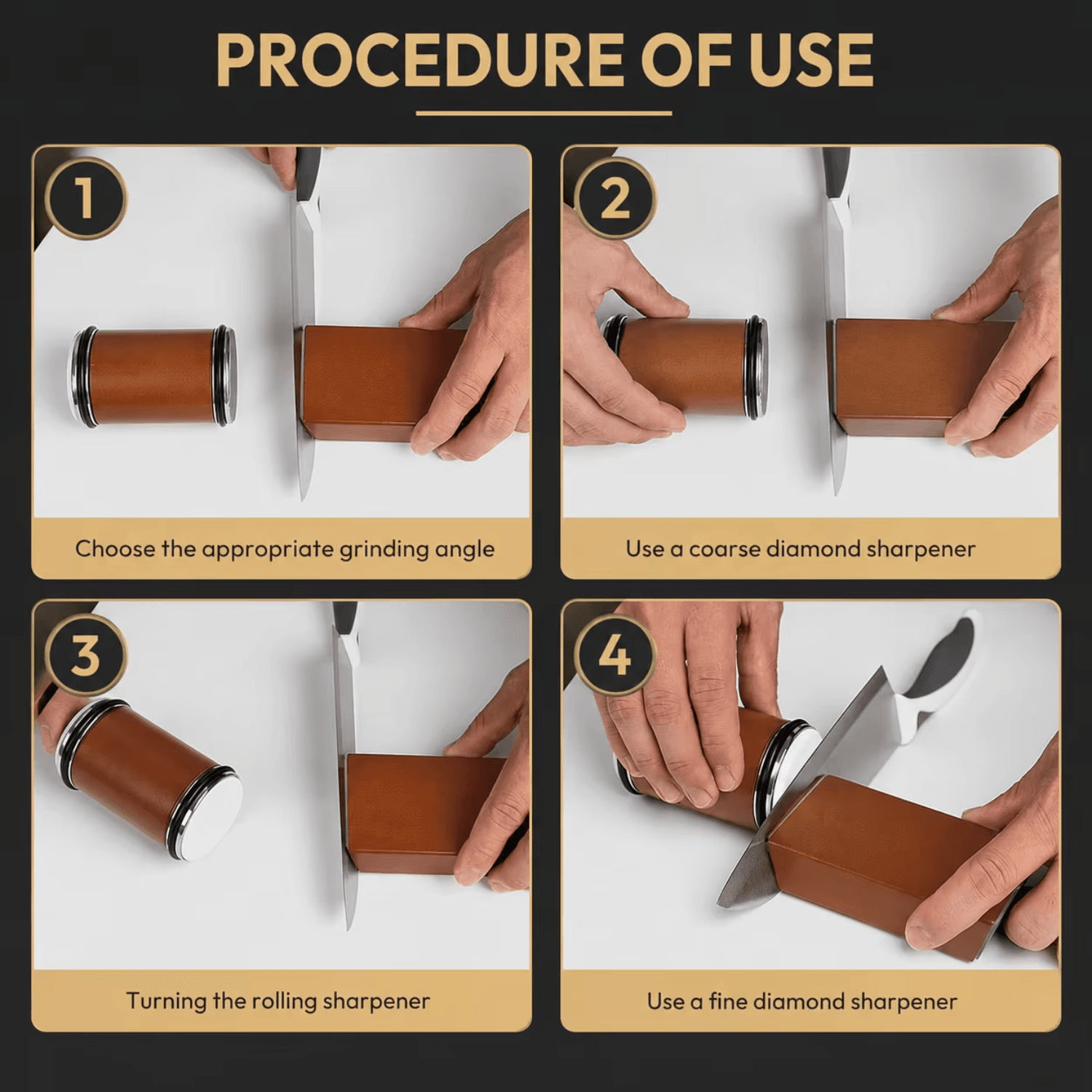
The sharpening process is broken into four controlled phases. Each phase is engineered to avoid the common mistake of skipping grit progression.
| Step | Action | Physical Mechanism | User Benefit |
|---|---|---|---|
| 1. Mounting | Attach blade to magnetic base. Base self‑aligns to preset angle (15° or 20°). | Magnetic force holds blade firmly; base geometry defines the grind angle. | Zero guesswork; perfect angle every time. |
| 2. Coarse Grinding | Roll the sharpener back and forth using the coarse diamond side. | Diamond particles fracture metal surface; removed material is carried away as fine swarf. | Rapidly restores edge profile; eliminates dullness from wear or impact. |
| 3. Fine Polishing | Flip or turn sharpener to the fine‑grit side. Roll along the edge. | Fine diamond smoothens the micro‑serrations; work‑hardens the apex slightly. | Razor‑sharp, smooth edge that cuts cleanly and lasts longer. |
| 4. Cleaning | Wipe blade with a cloth to remove residual metal particles. | Mechanical wiping removes abrasive slurry and loose metal flakes. | Ready for immediate kitchen use. |
Why aluminum alloy, not plastic?
| Property | Aluminum Alloy (6061) | ABS Plastic | Die‑cast Zinc |
|---|---|---|---|
| Modulus of Elasticity (GPa) | 69 | 1.2 – 2.6 | 85 |
| Thermal Conductivity (W/m·K) | 167 | 0.21 | 113 |
| Dimensional Creep over 5 years | Negligible | Moderate | Low |
| Manufacturing Precision | High (CNC machinable) | Moderate (injection molding) | High (die‑casting) |
| Perceived Quality | Premium | Standard | Premium (but heavy) |
For custom engineering builds and lightweight durability, our flagship 👉 Rolling Knife Sharpener – Aluminum model provides optimal structural rigidity for OEM partners.
| Parameter | Specification |
|---|---|
| Product Name | Rolling Knife Sharpener – Aluminum Alloy (OEM Model) |
| Overall Dimensions | 220 × 65 × 55 mm (approx., varies by wood shell thickness) |
| Net Weight | 480 – 520 g (depends on marble cap selection) |
| Material – Body Core | Aluminum alloy (6061‑T6 or equivalent) |
| Material – Outer Shell | Solid natural wood (oak, walnut, or specified equivalent) |
| Material – Grinding Surfaces | Diamond abrasive composite (industrial grade) |
| Material – End Caps | Natural marble + silicone protective covers |
| Angle Preset | 15° / 20° dual‑side (user‑selectable via base orientation) |
| Abrasive Grit – Coarse | #200 – #400 mesh diamond |
| Abrasive Grit – Fine | #800 – #1200 mesh diamond |
| Applicable Knife Types | Chef's knives, paring knives, utility knives, santoku, and most stainless/high‑carbon steel blades |
| Not Suitable For | Serrated knives, ceramic knives, or blades with extreme convex grinds |
| Packaging Options | Customized color box; available for retail or bulk OEM packaging |
| MOQ (OEM) | Negotiable based on customization level |
The product is designed for three distinct market segments, each with specific needs:
| User Segment | Primary Need | Product Appeal |
|---|---|---|
| Home cooks & enthusiasts | Quick, consistent results without professional training | Magnetic angle eliminates practice; rolling action saves time. |
| Kitchen beginners | Safety; no risk of cutting fingers on whetstones | Hands stay clear of blade; minimal physical effort required. |
| E‑commerce sellers & gift buyers | High perceived value; strong visual appeal for listings | Premium materials (wood + marble) create emotional connection; unboxing experience is gift‑ready. |
From a production engineering viewpoint, several factors are critical for batch consistency:
The DAQIDA Rolling Knife Sharpener demonstrates that professional sharpening results do not require professional skills — they require professional engineering. By isolating the key variables (angle, grit progression, and pressure), and delivering them through carefully selected materials, the product achieves:
For wholesale buyers, this product represents a high‑margin, high‑repeat‑purchase kitchen accessory that aligns with the growing consumer demand for premium, functional, and aesthetically pleasing culinary tools. Explore our heavy-duty alternative variants like the 👉 Rolling Knife Sharpener – Stainless Steel Body to expand your product catalog offerings.
| Channel | Details |
|---|---|
| Company | Yiwu Daqida Plastic Products Co., Ltd. |
| Website | www.daqida.com |
| WhatsApp / WeChat | +86 187 5767 2042 |
| [email protected] | |
| Address | Building 1, No. 47 Longxiang Road, Nansanli, Yiwu City, Zhejiang Province, China |
Related technical topics for further reading (suggested search terms):
🏭 DAQIDA Factory Qualification Certificates & Injection Molding Expertise
As a professional direct source factory, DAQIDA masters advanced plastic injection molding processes, DFM optimization, and strict production discipline backed by our official qualification certificates:
• Explore our full manufacturing capabilities via the DAQIDA Product Catalog ➔
Avoid common mass-production pitfalls like shrinkage and warping. Partner with DAQIDA for professional OEM and ODM manufacturing solutions built on precise DFM analysis, stable process control, and rigorous factory quality standards.
No account yet?
Create an Account