

Launching a physical product on Amazon or into retail channels is exhilarating—but the first major crossroads comes long before you list a single SKU. How will you actually make your product? The answer isn’t just about factories and unit costs; it’s about control, speed, branding, and long-term defensibility.
You have three primary manufacturing partnership models: OEM (Original Equipment Manufacturer), ODM (Original Design Manufacturer), and OBM (Original Brand Manufacturer). Each sits on a different axis of design ownership, investment, and risk. Choosing the right one can mean the difference between a thriving brand and a commoditized race to the bottom.
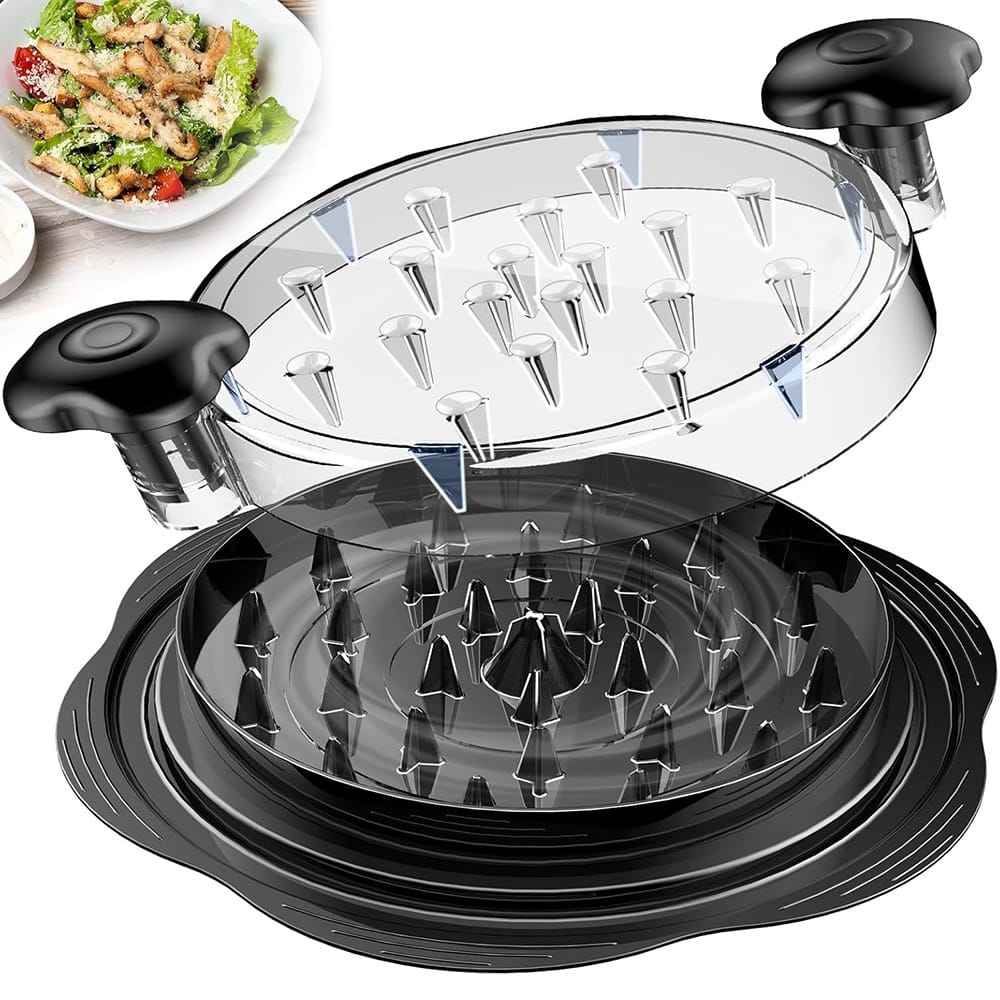
Whether you are sourcing custom plastic components like a Bag Cleaning Ball or scaling consumer entertainment novelties such as a Champagne Gun or Champagne Gun Shooter, understanding these partnership models is essential for your supply chain strategy.
Let’s break down what each model really means, weigh their strengths and weaknesses, and see how they fit into the unique demands of Amazon FBA, DTC e‑commerce, and traditional retail.
In an OEM relationship, you own the product design, specifications, and intellectual property. The manufacturer’s role is purely production—they source components, assemble, and test according to your exact blueprints. Think of Apple and Foxconn: Apple designs every millimeter, Foxconn builds it.
Key characteristic: You supply the engineering drawings, material lists, and quality standards. The factory is a “hands and tools” extension of your team.
Here, the manufacturer owns the design and development. They present you with a catalogue of existing products or semi-customizable platforms. You choose a base model, perhaps tweak colors, packaging, and minor features, then put your brand on it. This is white‑label or private‑label manufacturing at scale.
Key characteristic: The factory does the R&D heavy lifting. You focus on branding, marketing, and distribution.
In this model, the manufacturer designs, produces, and sells products under its own brand name. They are a full-fledged brand that may also offer contract manufacturing on the side. When you buy from an OBM, you are typically a distributor or retailer, not a brand owner. However, in some contexts, OBM is used to describe a brand that does its own manufacturing in-house (e.g., a factory that launches its own consumer brand). For this article, we focus on the latter: you as the brand owner doing your own design and production—i.e., vertical integration from concept to consumer.
Key characteristic: Maximum control, maximum investment, and maximum potential reward.
| Model | Pros | Cons |
|---|---|---|
| OEM | Full IP ownership; product differentiation; quality control; long-term brand equity. | High upfront R&D costs; longer time‑to‑market; requires technical expertise; supplier dependency. |
| ODM | Fast launch; low development cost; minimal risk; scalable with multiple SKUs. | Low differentiation; intense price competition; limited control over design changes; risk of copycats. |
| OBM | Highest margins; direct customer relationship; complete brand narrative; agility in innovation. | Massive capital requirement; supply chain complexity; full responsibility for marketing and fulfillment; high failure risk. |
The e‑commerce and retail landscapes are unforgiving. On Amazon, algorithms reward click‑through and conversion, which hinge on perceived uniqueness and value. In physical retail, shelf space is won by proven sell‑through and brand trust.
OEM allows you to create a product that solves a specific, underserved pain point. With your own design, you can file for patents or utility models, enroll in Amazon Brand Registry, and use Transparency codes to combat counterfeits. This builds a moat against the endless wave of private‑label lookalikes.
ODM is the go‑to for many new sellers because it’s low‑risk. You can test a niche with a generic product, add better packaging, and use PPC to gain traction. However, the flip side is that your listing will compete head‑to‑head with dozens of identical products from other sellers. Price wars erode margins quickly.
OBM is rare on Amazon unless you are a vertically integrated brand like Anker or a heritage manufacturer that launched a direct‑to‑consumer line. It requires deep pockets but, when successful, delivers loyal customers who seek you out, not just a generic keyword.
Retail buyers care about exclusivity and consistent quality. OEM gives you a compelling story—"we designed this from the ground up"—which can justify higher wholesale prices and better shelf placement.
ODM is common in categories like electronics and home goods, where many store brands rely on the same Asian ODM factories. The risk is that your product looks identical to the store’s own brand, so you end up competing on margin, not value.
OBM works best if you already have a recognized brand. Retailers love established demand. But building that demand before approaching retail is a chicken‑and‑egg problem, best solved by a hybrid strategy (start with OEM on DTC, then expand to retail).
Ask yourself these seven questions. Your answers will point to the optimal model.
1. What is your product development budget?
• Under $10,000? ODM is almost your only choice for physical goods (excluding simple modifications).
• $10,000–$50,000? You can consider OEM for simpler products or semi‑custom ODM.
• Over $50,000? OEM becomes viable; OBM if you have 7‑figure funding.
2. How important is differentiation to your strategy?
• If you rely on unique features, superior materials, or patented ergonomics, OEM is non‑negotiable.
• If your strategy is brand storytelling and packaging, but the product itself is standard, ODM can work.
• If you plan to build an ecosystem (like accessories that integrate), OBM gives you the R&D freedom.
3. What is your timeline to first sale?
• ODM can get you samples in 4–6 weeks and production in 8–12 weeks.
• OEM typically requires 3–6 months of engineering, tooling, and testing.
• OBM can take 12+ months just for development, unless you already have a factory.
4. How will you defend against copycats?
• OEM with a design patent or utility patent offers legal protection.
• ODM offers almost no defense—your supplier can sell the same design to anyone.
• OBM offers brand defense, but copycats will still clone your product; you need both IP and brand equity.
5. What is your long‑term vision?
• If you want to exit to a larger brand or PE firm, OEM (with IP) increases valuation.
• If you want a lifestyle business with multiple SKUs, ODM can be profitable and manageable.
• If you aim to become a category leader, OBM is the endgame, but most start with OEM or ODM and transition.
6. Do you have in‑house technical expertise?
• No engineers? ODM.
• A strong product development team? OEM.
• Full vertical integration (design, supply chain, manufacturing, marketing)? OBM.
7. What is your risk tolerance?
• Low risk → ODM.
• Moderate risk → OEM (provided you have done thorough market validation).
• High risk / high reward → OBM.
Few successful brands stick rigidly to one model forever. A common trajectory:
On Amazon, many top sellers use a hybrid: they use ODM for “cash‑cow” basics and OEM for their “hero” product that drives brand recognition. This diversifies risk and allows them to compete on both price and uniqueness.
Scenario A – New Amazon Seller, Home & Kitchen
Budget: $8,000. Goal: launch 3 SKUs within 10 weeks.
→ Choose ODM. Pick a proven silicone kitchen tool from a Taiwanese ODM. Change the colour to a trendy sage green, design premium packaging, and include a recipe ebook. Differentiate through branding, not the product itself. Once one SKU hits 200+ reviews, use profits to fund an OEM custom mould for a unique shape—then file a design patent.
Scenario B – Established Retail Brand, Fitness Equipment
Budget: $150,000. Goal: launch a smart resistance band with an app.
→ Choose OEM. You have engineers and a clear spec. Work with a Chinese OEM that specializes in Bluetooth sensors. Control the firmware, the band’s tensile strength, and the connector design. This allows you to integrate with your own app and create a proprietary ecosystem. Later, consider OBM by acquiring a small injection‑moulding facility to reduce per‑unit cost.
There is no universally “right” model—only the one that aligns with your resources, goals, and appetite for risk.
For most Amazon and retail entrepreneurs, the pragmatic starting point is ODM. But treat it as a stepping stone, not a destination. As your revenue grows, invest in OEM to create real differentiation. And if you ever dream of becoming the next household name, remember that every OBM giant began with a single, well‑made product that someone—somewhere—chose to believe in.
Your next move: Evaluate your current capital, timeline, and team skills. Then, partner with a direct factory like DAQIDA (义乌市大奇大塑料制品有限公司) in Yiwu, China, which specializes in precision injection molding and custom OEM/ODM production. You can explore their manufacturing catalog directly through items like the Bag Cleaning Ball, Champagne Gun, and Champagne Gun Shooter to get a feel for their quality.
To take the next step, connect directly with the DAQIDA engineering and export team to discuss your project specifications, request technical prototypes, or secure factory-direct bulk pricing, and let’s turn your product blueprint into high-volume commercial success.
No account yet?
Create an Account