
Meta Description: Two forks or a chicken shredder tool? I tested both on the same batch of chicken and timed it. See which one comes out on top — and why.
I ran a side-by-side timed test. Same chicken, same batch, same day.
One pound of poached chicken breasts, cooled just enough to handle. Two forks on one side, a chicken shredder tool on the other. Stopwatch ready.
Two forks: 9 minutes and 40 seconds. My right wrist was worn out by the end.
Chicken shredder tool: 1 minute and 15 seconds. That includes loading the chicken into the tool.
It wasn’t even a close race. But speed isn’t everything, so let’s break down both methods honestly.
Using two forks is the default hack. Everybody owns forks, no extra purchase needed.
Hold the chicken steady with one fork, pull and tear with the other. Shredding a single small breast works fine. Tackle a full pound, and it becomes a real workout. Your non-dominant hand cramps from holding the meat tight, while your working wrist aches from repeated pulling. The chicken cools off as you work, and cold chicken doesn’t shred well — it just gets squished.
Texture is another downside. Forks leave inconsistent shreds: long stringy bits, chunky pieces, and even mashed meat mixed together. That’s okay for chicken salad. But for tacos or enchiladas where uniform pieces matter, it’s frustrating.
Cleanup isn’t great either. You’ve got two dirty forks, a cutting board, plus chicken juice spilled all over the counter from wrestling the meat.
Two forks get the job done. But they’re slow, produce uneven shreds, and put strain on your hands.
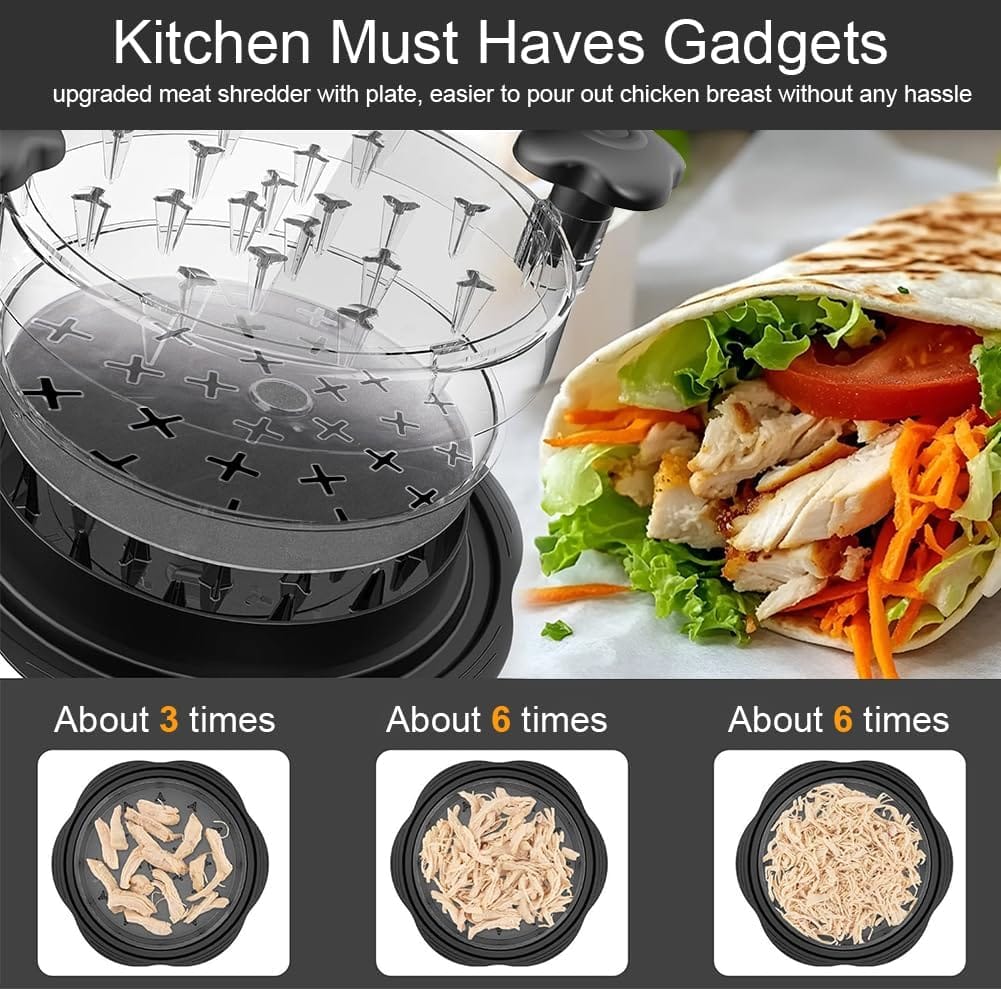
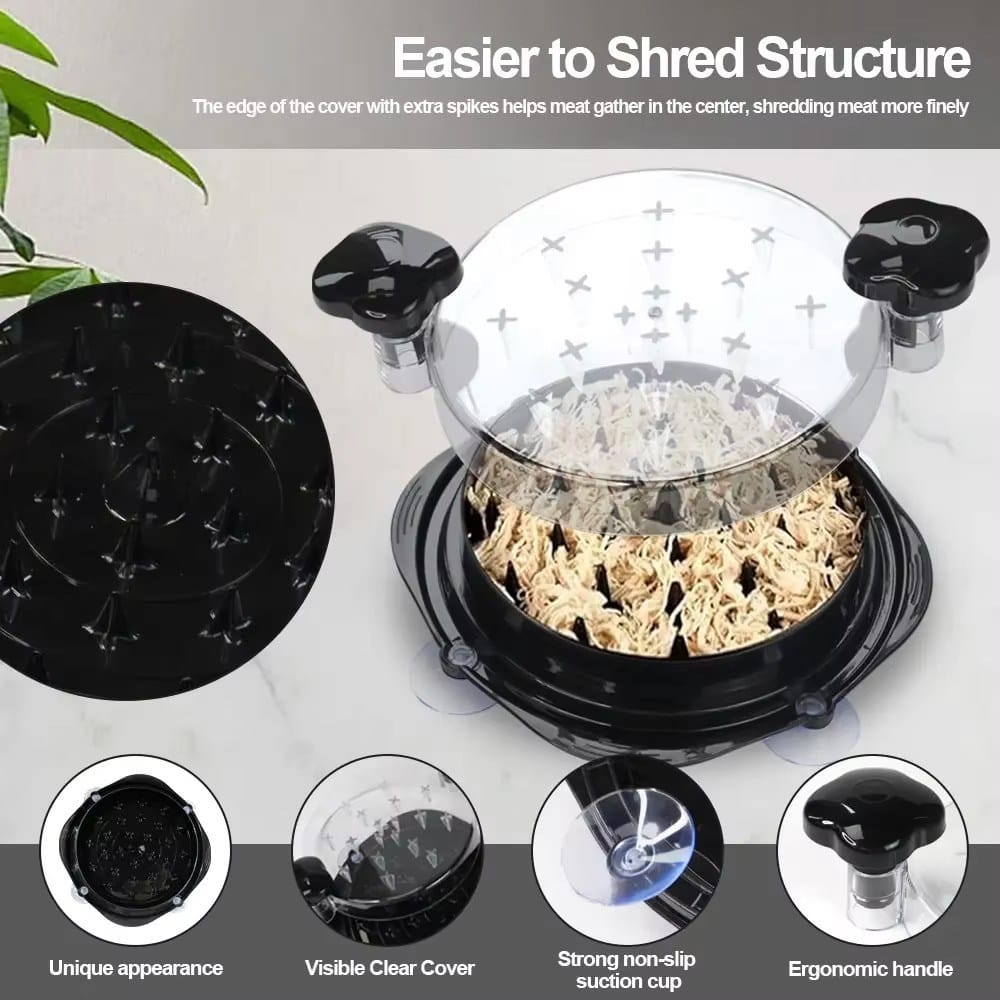
A chicken shredder tool is a container fitted with a spiked lid. Place warm cooked chicken in the base, press the lid down, then twist. The built-in spikes catch and pull apart the meat in one simple motion.
The small design details make all the difference:
| Metric | Two Forks | Chicken Shredder Tool |
|---|---|---|
| Time for 1 lb chicken | ~10 minutes | ~1–2 minutes |
| Shred consistency | Uneven | Consistent |
| Physical effort | High — wrist and hand strain | Low — simple twisting motion |
| Temperature needs | Works best with warm chicken | Works best with warm chicken |
| Cleanup | Two forks + cutting board + counter cleanup | Two separate pieces, dishwasher-safe |
| Counter stability | N/A | Non-slip base stays fixed |
| Storage | Already in your drawer | Takes up cabinet space |
I won’t write off two forks entirely. There are a few scenarios where they’re the better pick.
If you’re only shredding a small portion of chicken for one sandwich, pulling out the shredder and cleaning it afterward is more trouble than it’s worth.
If you’re cooking away from home — a rental, hotel, or friend’s kitchen — forks are almost always available.
And if you genuinely enjoy the slow process, that’s fine. Some people find it calming. It’s not for me, but I get it.
Anytime you need to shred larger amounts of chicken.
Weekly meal prep, a whole roasted chicken, big batches for enchiladas, soups, or freezer meal packs. Whenever you’re working with more than one chicken breast, the shredder wins for speed, consistent texture, and less strain on your hands.
Consistent shreds matter more than most people realize. Even pieces heat evenly, mix smoothly, and sit neatly inside tortillas. Forks leave a random mix of strings and chunks that heat and bite unevenly.
The ergonomic handle paired with a non-slip base means you don’t fight the tool. Press, twist, done. This is a big plus for anyone recovering from childbirth, living with carpal tunnel, or just tired of tedious kitchen work.
For one small serving of chicken, stick with two forks.
For everything else, the chicken shredder tool is dramatically faster — cutting roughly ten minutes of work down to about one. Heavy-duty spikes handle the hard work, the ergonomic handle keeps twisting comfortable, the non-slip base holds steady, and easy cleanup means you’ll actually reach for it instead of dreading the mess.
If you shred chicken more than once a month, it earns its spot in your kitchen cabinet.
No account yet?
Create an Account