




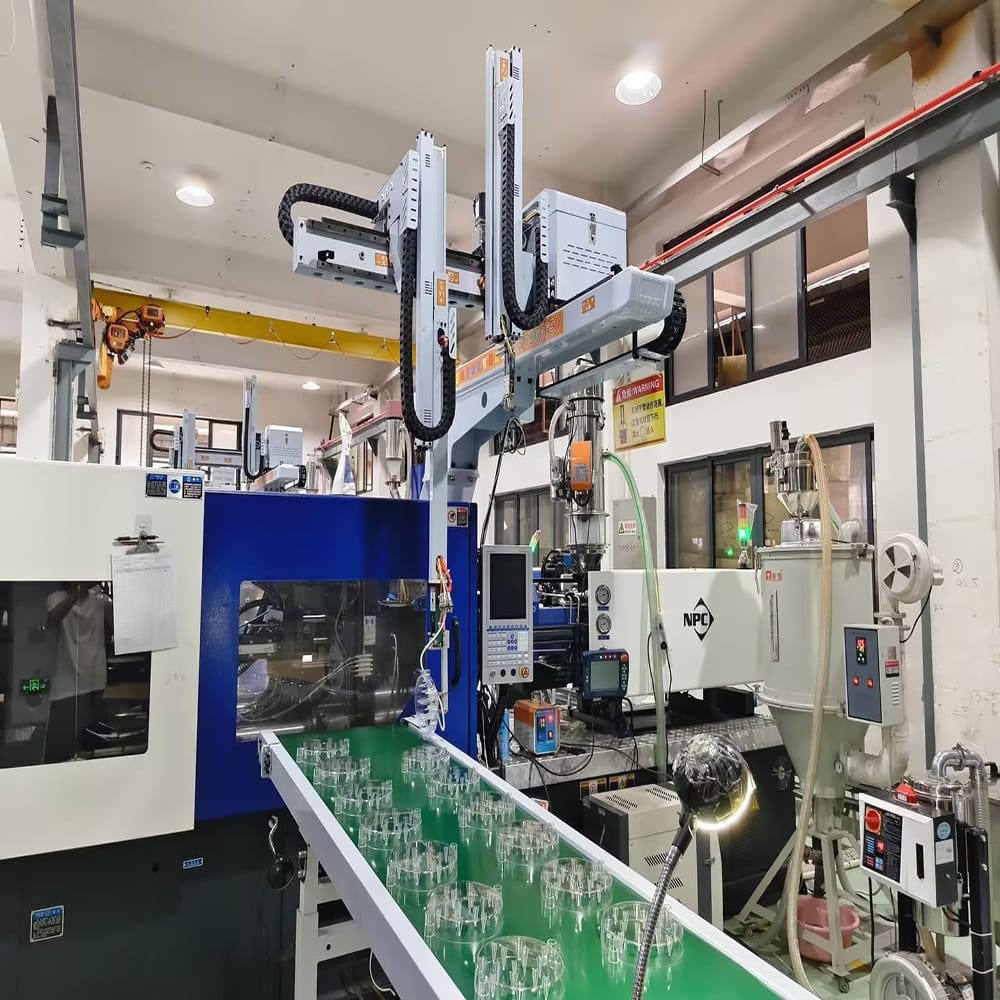
The application of food-grade polymers in kitchenware is undergoing a continuous evolution from general-purpose plastics to high-performance specialty engineering plastics. This article systematically discusses the material selection logic, global regulatory compliance frameworks, and precision molding process requirements for food-grade kitchenware polymers, emphasizing that this field is an integrated synergy of materials science, regulatory compliance, and manufacturing engineering.
Kitchenware directly contacts food, making material safety directly tied to public health. With consumer upgrades and tightening regulations, the engineering application of food-grade polymers has evolved from simple material selection into a systematic engineering discipline covering performance matching, safety compliance, and precision manufacturing. This article outlines these core dimensions across three pillars.
Polymers utilized for kitchenware must comprehensively satisfy several performance criteria: Food Safety—raw materials and additives must comply with regulatory positive lists, ensuring migrants do not endanger human health; Heat Resistance—ability to withstand high-temperature environments such as cooking, microwaving, and steaming; Chemical Resistance—resistance to erosion from oils, acids, alcohols, and detergents; Dimensional Stability and Processability; and Aesthetic Requirements (transparency, color, gloss, etc.).
Selection follows a balance principle of "Performance - Compliance - Cost." High-temperature utensils prioritize PPS, PEEK, PEI, or PPSU; transparent containers utilize PPSU, copolyesters, or transparent PP; handles typically leverage PA or TPE overmolding.
The core standard is GB 4806.7-2023, "Food Contact Plastic Materials and Articles." Key requirements dictate that resins and additives must comply with Appendix A and GB 9685 respectively; overall migration must be $\le 10\text{ mg/dm}^2$ or $\le 60\text{ mg/kg}$; primary aromatic amines migration total must not be detected (detection limit $0.01\text{ mg/kg}$); Bisphenol A migration limits are reduced to $0.05\text{ mg/kg}$ and banned in infant products. Migration tests require selecting simulants (water, acetic acid, ethanol, etc.) and use conditions according to food types.
The FDA lists permitted polymers under 21 CFR Part 177, while Part 178 covers additives. Each polymer features specific chapters (e.g., PP corresponds to 177.1520). Utilizing the GRAS (Generally Recognized as Safe) system, suppliers must provide Certificates of Conformance.
The EU framework enforces a strict positive list system for monomers and additives; overall migration is capped at $\le 10\text{ mg/dm}^2$, with explicit Specific Migration Limits (SML) and group limits (e.g., total primary aromatic amines $\le 0.01\text{ mg/kg}$). Continuous updates, such as the 19th amendment, further refine migration limits for multi-layer materials.
Manufacturing enterprises must strengthen supply chain management by securing raw material declarations of conformity and testing reports, conducting migration testing tailored to actual use conditions, and applying labeling practices under GB 4806.1 to guarantee traceability.
Precision injection molding requires strict control over melt temperature, mold temperature, injection pressure, holding pressure, and cooling time. Processing windows vary widely among materials: PEEK requires barrel temperatures above 200°C; PPSU requires precise thermal control to prevent degradation; TPE injection temperatures hover around 190°C to avoid thermal decomposition. Simulation optimization, such as optimal parameters for PP tableware (melt at 275°C, mold at 80°C, holding pressure for 12 seconds, cooling for 45 seconds), maximizes yield. High-performance materials must undergo thorough drying prior to processing.
Mold cavities must feature high surface gloss to ensure cleanable end products. Proper draft angles and ejection mechanisms must be integrated, utilizing side cores for complex geometries. Nano-release coatings lower stripping force, while optimized gate and runner designs eliminate weld lines and sink marks. Multi-cavity molds elevate efficiency for mass production.
Production environments must regulate temperature, humidity, dust, and microbial levels to prevent cross-contamination. Establishing a full-chain traceability system from raw material intake to finished product dispatch ensures routine migration spot-checking and sustained compliance.
The engineering of food-grade polymers for kitchenware represents a deep synergy among materials, regulations, and manufacturing. Material selection has diversified from commodity plastics toward specialty engineering polymers; compliance centers on migration control across Chinese GB, US FDA, and EU frameworks; and precision injection molding makes scalable production of complex, high-quality articles a reality. Moving forward, bio-based, recyclable materials and low-carbon processes will experience wider adoption, while tightening regulations will continue to drive industry upgrades. Masterfully integrating these three facets remains critical for enterprises building competitive core advantages.
Explore our advanced manufacturing processes, compliance standards, and precision hardware catalogs:
• View our specialized Kitchen Storage & Precision Component Catalog ➔
• Review global material compliance standards via the FDA Official Portal ↗ and ISO Quality Management Frameworks ↗
Are you looking for food-grade, certified polymer injection molding and custom OEM/ODM kitchenware manufacturing solutions? Connect with our engineering and export team today for transparent quotations and sample prototyping.
No account yet?
Create an Account