




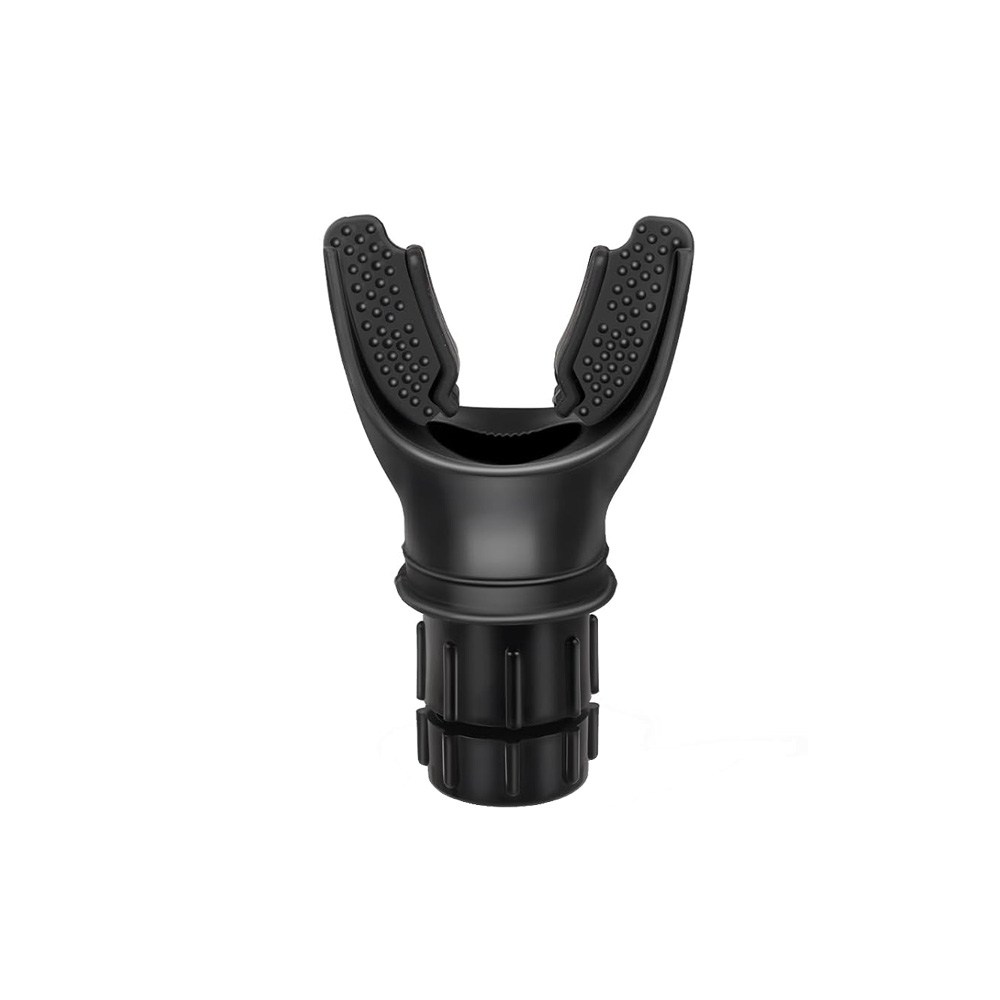
A Breathing Trainer can work when the device mechanism, training protocol, and expected outcome are correctly matched. However, the phrase "better breathing" is too broad to describe a scientifically measurable result.
A resistance-based inspiratory muscle trainer may improve inspiratory muscle strength. A flow-based lung exerciser may help a user practise slow, sustained inhalation. A training mask may increase the effort of breathing during exercise, but it does not reproduce the reduced atmospheric pressure of real altitude.
The key question is therefore not simply, "Do breathing trainers work?" A more useful question is: Which type of Breathing Trainer works for which outcome, in which user, and under what training conditions?
This article explains the differences between respiratory muscle trainers, lung exercisers, and training masks. It also examines the current evidence, appropriate performance measurements, and the product characteristics that professional buyers should evaluate.
Medical notice: A breathing training device is not a substitute for diagnosis, medication, oxygen therapy, prescribed pulmonary rehabilitation, or emergency treatment. People with respiratory or cardiovascular disease, recent surgery, unexplained shortness of breath, chest pain, faintness, or low oxygen saturation should obtain professional guidance before training.
A Breathing Trainer is a handheld or wearable device that changes the mechanical conditions of breathing or provides feedback during a breathing exercise. Depending on its design, it may load the inspiratory muscles, load the expiratory muscles, guide a slow inhalation, or add breathing resistance during physical exercise.
Names such as breathing trainer, lung trainer, breathing exerciser, respiratory muscle trainer, and breathing exercise device are often used interchangeably in online listings. Technically, these products may operate in very different ways. Buyers should therefore identify the mechanism and intended use instead of relying on the product name alone.
The respiratory muscles respond to training according to the same basic principle as other skeletal muscles: an appropriate load, repeated consistently and progressed over time, can produce adaptation. The type of adaptation depends on how the resistance is generated and how the training is performed.
A threshold inspiratory muscle trainer requires the user to generate sufficient inspiratory pressure to open a valve. A flow-resistive device restricts air through an aperture, so the experienced load may change with airflow. An expiratory trainer applies resistance during exhalation. An incentive spirometer or flow-based lung exerciser gives visual feedback during a slow, sustained breath but is not automatically a calibrated strength-training device.
This distinction is important because an improvement in one function should not be used as proof of every possible benefit. Stronger inspiratory muscles do not automatically mean larger lungs, higher blood oxygen, improved spirometry, or better competition performance.
The most consistent outcome reported in respiratory muscle training research is an improvement in maximal inspiratory pressure, usually written as MIP or PImax. MIP is a measure of inspiratory muscle strength; it is not a direct measurement of lung size, oxygen delivery, or athletic performance.
A 2025 systematic review and meta-analysis included 25 studies involving 522 athletes. It reported improvements in respiratory muscle strength, but the authors rated the supporting evidence as very low to low quality. A subsequent systematic review of team-sport athletes also found possible improvements in inspiratory strength and selected performance outcomes, while emphasizing small samples, substantial variation between studies, and low certainty.
These findings support a careful conclusion: respiratory muscle training can improve the function directly trained, but broader outcomes depend on the user, device, resistance, frequency, program duration, adherence, and method of testing.
Research results should also be interpreted according to the comparator. An improvement from baseline does not necessarily prove that a device is superior to normal training, a sham device, or another respiratory training method.
During demanding exercise, respiratory muscles can contribute to fatigue and perceived breathing effort. This provides a plausible reason for athletes to train these muscles. Nevertheless, physiological plausibility does not guarantee a faster race time, higher sprint power, or increased VO2 max.
For an athlete, respiratory muscle training using a dedicated Breathing Trainer should be treated as an adjunct to sport-specific conditioning. A responsible evaluation starts with a baseline, uses a documented training load, records adherence, and repeats the same sport-relevant performance test under similar conditions.
Inspiratory muscle trainers and elevation training masks should not be treated as equivalent. An inspiratory muscle trainer is normally used in dedicated breathing sessions to apply a controlled inspiratory load. An elevation mask usually adds airflow resistance while the athlete exercises. Although a mask may make breathing feel harder, it does not reproduce the reduced barometric pressure of true altitude.
A recent randomized crossover study in trained young men reported lower peak, mean, and repeated-sprint power when an elevation training mask was worn during high-intensity exercise. Perceived exertion was also higher. This does not determine the long-term effect of every mask program, but it demonstrates why a harder-feeling workout should not automatically be described as a more effective workout.
Respiratory muscle training is used in some clinical rehabilitation programs, but suitability and dosage depend on the diagnosis, current symptoms, baseline respiratory muscle strength, and the rest of the treatment plan.
In chronic obstructive pulmonary disease (COPD), recent reviews suggest that adding inspiratory muscle training to pulmonary rehabilitation can improve inspiratory muscle strength, particularly in patients who begin with inspiratory muscle weakness. Findings for walking capacity, breathlessness, quality of life, and spirometry are less consistent across studies.
This is why a clinician may assess MIP, symptoms, oxygen saturation, medication, recent surgery, and functional capacity before selecting a device or training load. The same protocol should not be applied automatically to athletes, healthy users, and people receiving rehabilitation.
Claims that a lung trainer can restore normal lung function, remove inflammation, treat pneumonia, maintain oxygen levels, or accelerate recovery from COVID-19 require condition-specific clinical evidence and appropriate regulatory authorization. A stronger diaphragm cannot remove fluid from the lungs, and a breathing exercise device should never delay medical treatment.
The correct measurement depends on the stated goal. If the goal is inspiratory muscle strength, MIP or PImax is more relevant than a general statement that breathing feels easier. If the goal is sports performance, a repeatable sport-specific test is required. If the device is used in rehabilitation, outcomes should be selected and interpreted by an appropriately qualified professional.
Subjective measures such as perceived breathing effort can still be useful, but they are influenced by motivation, expectations, pacing, and familiarity with the test. Combining an objective result with symptom and adherence records gives a more reliable picture.
Spirometry measurements such as FEV1 and FVC are not interchangeable with respiratory muscle pressure. A user may improve MIP without a meaningful change in FEV1, FVC, or VO2 max. Marketing and research summaries should report these outcomes separately.
The number of resistance settings does not, by itself, demonstrate product quality. A professional assessment should examine how the device creates resistance, whether the load is repeatable, whether valves leak or stick, how the airflow pathway can be cleaned, and whether patient-contact materials are documented.
Instructions are also part of device quality. A useful manual should explain assembly, posture, breathing technique, initial load selection, progression, cleaning, storage, warnings, and conditions for stopping. For regulated markets, the product claims, label, and intended use must be consistent with the applicable authorization.
Commercial buyers sourcing a Breathing Trainer should ask the manufacturer how resistance and valve function are tested during production. Batch-level quality controls, material documentation, traceability, and test methods provide more meaningful evidence than broad claims such as "high quality" or "improves lung capacity."
| Device Category | Primary Mechanism | Main Training Target | Important Limitation |
|---|---|---|---|
| Threshold inspiratory muscle trainer | Valve opens after a defined inspiratory pressure is generated | Inspiratory muscle strength and endurance | Does not automatically improve every measure of lung function |
| Flow-resistive Breathing Trainer | Air passes through an adjustable aperture or resistance pathway | Respiratory muscle loading and breathing control | Experienced resistance may vary with airflow unless validated |
| Expiratory muscle trainer | Adds resistance during exhalation | Expiratory muscle strength | Is not automatically an airway-clearance device |
| Incentive spirometer or flow-based lung exerciser | Provides visual feedback during slow, sustained inhalation | Deep-breathing practice and inhalation goals | Is not necessarily a calibrated strength trainer |
| Elevation training mask | Restricts airflow during exercise | Tolerance to breathing resistance | Does not recreate low barometric pressure or true altitude |
| Intended Outcome | Suitable Product Characteristic | Relevant Measurement | Interpretation Caution |
|---|---|---|---|
| Improve inspiratory muscle strength | Measurable and repeatable inspiratory load | MIP or PImax | Higher MIP does not guarantee higher VO2 max |
| Improve expiratory muscle strength | Controlled expiratory resistance | MEP or PEmax | Not equivalent to improved airway clearance |
| Practise slow, deep inhalation | Clear flow or volume feedback | Inspired volume, technique, and adherence | Feedback training is not necessarily strength training |
| Support sports conditioning | Progressive load and documented protocol | Sport-specific field test or time trial | Laboratory changes may not transfer to competition |
| Add IMT to rehabilitation | Clinician-selected threshold and monitoring | MIP, dyspnea scale, functional test, and quality of life | Suitability varies by diagnosis and baseline weakness |
| Reproduce altitude exposure | Reduced inspired oxygen or actual altitude | Supervised physiological and performance measures | A resistance mask alone does not provide this environment |
| Comparison Point | Inspiratory Muscle Trainer | Elevation Training Mask |
|---|---|---|
| Main resistance phase | Primarily inhalation | Often inhalation and exhalation |
| Typical use | Separate, structured breathing sessions | Worn during physical exercise |
| Load definition | Pressure level or device setting | Aperture or manufacturer-defined setting |
| Direct expected adaptation | Inspiratory muscle strength or endurance | Adaptation to breathing resistance |
| Simulates true altitude | No | No, unless used with a genuine hypoxic system |
| Performance evidence | Depends on athlete, protocol, and test | Acute use may reduce high-intensity power in some settings |
| Evaluation Area | Questions for the Manufacturer | Why It Matters |
|---|---|---|
| Training mechanism | Is the device threshold-based, flow-resistive, volume-feedback, or another design? | Defines what the device can realistically train |
| Resistance range | Is load expressed in pressure, aperture size, or an unverified level number? | Supports appropriate selection and progression |
| Load consistency | Has resistance been measured across realistic breathing flows? | Determines whether dosage is reproducible |
| Valve performance | Are opening pressure, leakage, and repeated cycling tested? | Influences resistance accuracy and user experience |
| Dead space | What is the internal volume of the breathing pathway? | Excessive dead space may affect comfort and ventilation |
| Patient-contact materials | Are material specifications and relevant test reports available? | Supports safety and regulatory assessment |
| Cleaning design | Can components be disassembled, cleaned, and dried completely? | Reduces hygiene and cross-contamination risks |
| Manufacturing controls | Which performance checks are completed for each batch? | Supports consistency between production lots |
| Instructions | Are training, cleaning, warnings, and stop criteria clearly described? | Safe use depends on both hardware and guidance |
| Regulatory status | What is the intended use and authorization in the destination market? | Product claims must match the approved scope |
| Broad Marketing Claim | Why It May Mislead | More Accurate Wording |
|---|---|---|
| "Increases lung capacity" | Lung capacity can refer to several different physiological measurements | "Designed to provide adjustable resistance for respiratory muscle training" |
| "Boosts oxygen levels" | Oxygen saturation depends on ventilation, gas exchange, circulation, and health status | "Supports structured breathing practice; it is not an oxygen-delivery device" |
| "Simulates altitude" | Airflow resistance does not reproduce low atmospheric pressure | "Adds breathing resistance during exercise" |
| "Improves sports performance" | Transfer depends on the athlete, protocol, sport, and performance test | "May improve respiratory muscle strength; performance effects are context-dependent" |
| "Restores lung function after illness" | Recovery depends on the condition, severity, and medical management | "May be used in a professionally supervised rehabilitation plan when appropriate" |
Do breathing trainers really work?
They can improve specific functions when the device, training load, and protocol match the intended outcome. Improvements in inspiratory muscle strength are reported more consistently than improvements in lung function or sports performance.
How long does it take for a breathing trainer to work?
There is no universal timeline. Research protocols vary in resistance, session frequency, program length, and population. Progress should be assessed through a defined plan and repeatable measurements rather than a guaranteed number of days.
Is a breathing trainer the same as an incentive spirometer?
No. A respiratory muscle trainer normally applies resistance to condition breathing muscles. An incentive spirometer primarily provides visual feedback during slow, sustained inhalation. The mechanism and intended use of each product should be checked.
Can a breathing trainer increase lung capacity?
A breathing trainer primarily acts on respiratory muscles or breathing technique. It should not automatically be described as increasing anatomical lung size or every clinical measure of lung capacity.
Do breathing trainers improve VO2 max?
Improvement is not guaranteed. A device may strengthen respiratory muscles without producing a meaningful change in VO2 max. Results depend on the user, training protocol, and concurrent exercise program.
Is an elevation training mask the same as altitude training?
No. A resistance mask changes airflow and breathing effort. True altitude exposure involves lower atmospheric pressure and reduced oxygen availability. These are different physiological conditions.
Can athletes use a lung trainer?
Healthy athletes may use an appropriate device as an addition to normal conditioning. The program should have a defined goal, progressive load, and sport-relevant method of measuring results.
Can breathing trainers be used during rehabilitation?
They may be included in some rehabilitation programs, but the decision and dosage depend on the diagnosis, symptoms, and baseline assessment. Clinical use should be guided by an appropriately qualified professional.
Can a breathing trainer improve blood oxygen levels?
A breathing trainer is not an oxygen-delivery device. Oxygen saturation is affected by ventilation, gas exchange, circulation, and disease status. Low oxygen readings or significant breathing difficulty require medical assessment.
What should buyers check before purchasing a breathing trainer?
Buyers should verify the device mechanism, resistance range, load consistency, valve performance, patient-contact materials, cleaning design, instructions, batch testing, intended use, and regulatory status in the destination market.
No account yet?
Create an Account