



Whether you sell on Amazon, run an online store or are launching your own brand, sooner or later a factory will ask you one question: OEM or ODM? The answer decides your cost, your timeline, and who owns the design.
This guide explains OEMs and ODMs in plain English. We’re DAQIDA, a factory in Yiwu making injection-molded products since 2015, and we do both, so it’s written from the factory side.
OEM stands for original equipment manufacturer. You bring the design, and the factory builds it. You choose the shape, the materials and the specs. The factory makes the mold and runs production.
What defines an OEM project:
ODM stands for original design manufacturer. The factory designs the product first. You pick from the range, add your logo, color and packaging, and place the order.
What defines an ODM project:
Here is how ODM vs. OEM compares. The short version: it comes down to who owns the design.
| Feature | OEM | ODM |
|---|---|---|
| Who owns the design | You | The factory |
| Mold cost | You pay for a new mold | Usually none |
| Customization | Full | Color, logo, packaging, small changes |
| Time to first order | Longer | Shorter |
| MOQ at DAQIDA | 1,000 pcs | 100 pcs in-stock, 1,000 pcs custom color or logo |
| Same product sold by others | No | Possible |
You’ll also hear the term contract manufacturer. The two overlap, and many factories, including us, do both. The words still mean slightly different things.
An OEM makes the product to your design, and it carries your brand. Contract manufacturing is a wider term. The factory takes on production for you, and that can include sourcing parts, assembly, testing and packaging.
Here are the contract manufacturer vs OEM differences in practice:
If you’re comparing contract manufacturing vs OEM differences for a simple injection-molded product, the gap is small. What matters is what’s included in the quote, so ask.
OEM Pros
OEM Cons
ODM Pros
ODM Cons
OEM branding means the product is built around your design and carries only your name. Nobody else sells it.
With an ODM, branding usually means your logo, color and box. The product can be the same one other brands sell. On a crowded listing, small changes help. A new color, a different lid or a textured grip can make your product look like yours.
OEM pricing isn’t one number. It depends on:
The mold is a one-time cost, so it matters most on small orders. That’s one reason many sellers test with an ODM product first.
OEM and ODM aren’t only for big brands. These are the people who usually ask us about them.
Amazon and Online Store Sellers
If you sell on Amazon FBA, Shopify or your own site, ODM is the usual way to start. You pick a ready product, add your logo and box, and test with a small order. Many sellers move to OEM later. For example, practical safety or automotive accessories such as a Seat Belt Adjuster or a Heimlich Anti-Choking Device are frequently sourced by online retailers to test high-demand niches.
First-Time Brand Founders and Startups
Starting a private label business without a design team? An ODM product lets you launch your own brand with a low MOQ and no mold fee. You can focus on branding and marketing instead of engineering.
Established and DTC Brands
A brand that already sells well often wants a product no one else has. That’s where OEM fits. You send the design, we build the mold, and the product stays exclusive to you.
Retailers, Wholesalers and Importers
If you run a store or import goods in bulk, you can order custom-branded products in larger quantities. Your logo goes on the product and the box, and you control the supply. Items like a Shower Wall Hair Catcher are great volume sellers for household goods distributors.
Promotional and Corporate Gift Businesses
Companies that give out branded products need a logo on a useful item. Custom logo and custom color orders on an existing design are a simple fit.
Inventors and Product Designers
Got an idea or a sketch? OEM is the route. Bring a drawing, a sample or a clear brief, and the factory can quote the mold and the first run.
Think about these points:
A Real Example
One of our customers, an Amazon seller, started with a chicken shredder from our existing range. It’s an ODM product, so he tested it with only 50 units.
It didn’t sell in his market. He stopped there and lost very little. The shredder wasn’t a bad product. It sells very well in the US. Regions want different things, and a small test order is the cheapest way to find out.
He then moved to a rolling knife sharpener, which sold much better. This time he customized it with us, and he later reached 100,000 units and an Amazon top-10 bestseller ranking.
Test with ODM, then customize once sales are proven. Many sellers follow this path.
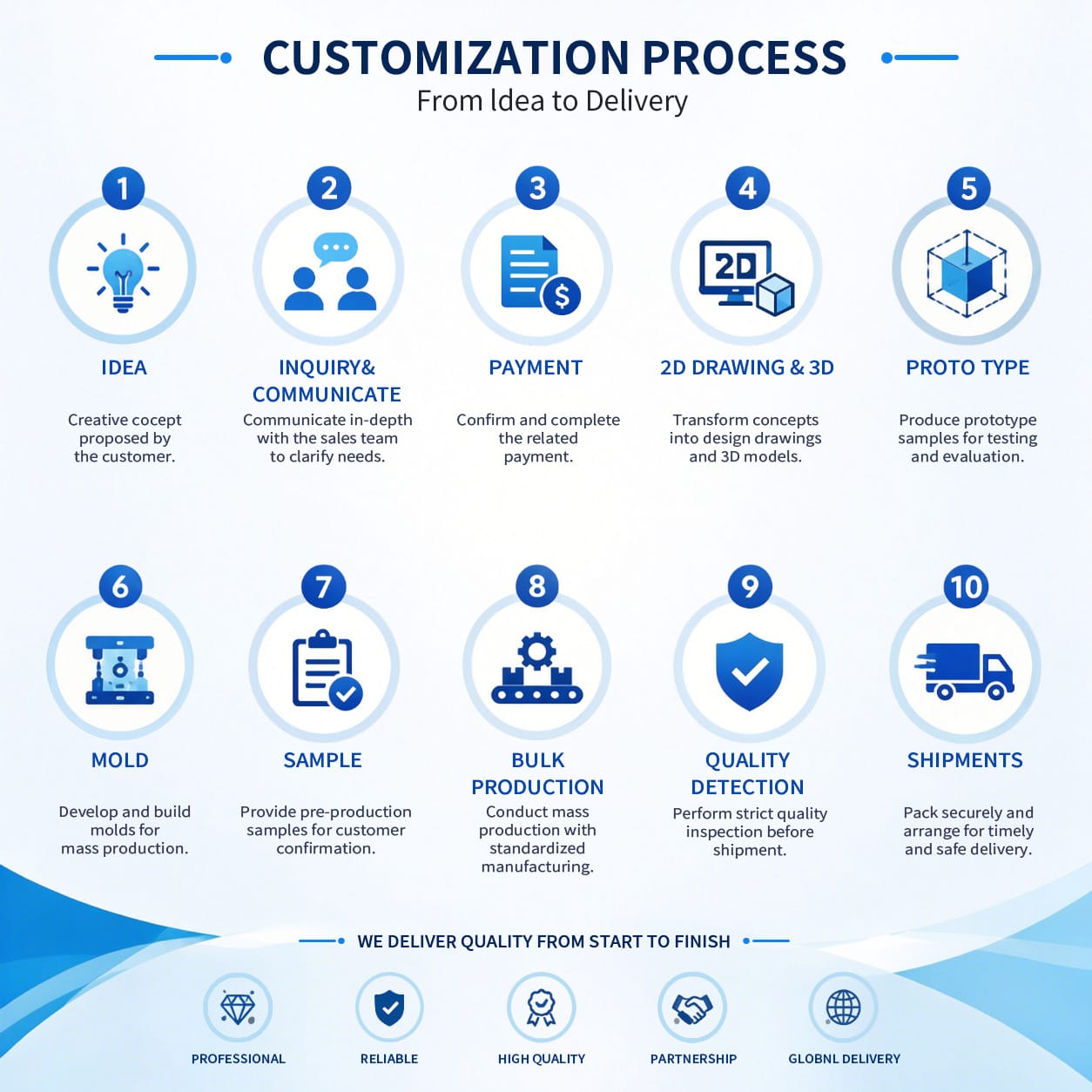
A good OEM and ODM service covers more than production. At DAQIDA we handle:
Our MOQ is 100 pieces for in-stock items and 1,000 pieces for custom and OEM orders. Lead time is typically 7-14 days. Any OEM ODM service provider should give you the same numbers in writing.
Before you sign with an ODM company, ask:
What does ODM mean?
ODM means original design manufacturer. It’s a factory that designs and makes a product, then lets you sell it under your own brand with your logo, color and packaging.
What does OBM stand for?
OBM stands for original brand manufacturer. An OBM designs, makes and sells products under its own brand. Some factories, including ours, are an OBM for their own products and an OEM or ODM partner for yours.
Is a contract manufacturer the same as an OEM?
Not exactly. Both make products for other companies, but a contract manufacturer often handles more of the process, such as parts sourcing, assembly and packaging. An OEM mainly builds the product to your design.
What is the OEM vs custom part manufacturer definition?
A custom part manufacturer makes parts to your drawing and stops there. An OEM factory builds the finished product with your brand on it.
How do I source products to sell on Amazon FBA?
Start with an ODM product and a small test order, so a miss costs little. Once it sells, move to a custom or OEM version. Always get a sample first and check the MOQ, lead time and certificates for your market.
Choosing between OEM and ODM comes down to where you are in your business journey. If you are starting out or testing a new market, an ODM approach lets you move quickly with minimal risk. Once your product-market fit is proven, transitioning to an OEM model helps you build a unique brand with exclusive designs that set you apart from competitors.
No account yet?
Create an Account