




When an upper airway obstruction strikes, seconds mean the difference between life and death. In recent years, any dependable anti choking device (such as plunger-style and syringe-style suction tools) has gained widespread attention in homes, schools, and restaurants as a vital backup line of defense when standard protocols fail.
While consumer anti-choking device reviews and emergency medical guides focus heavily on how these tools perform in a crisis—especially when individuals display classic signs of choking like clutching the throat or turning blue—few look behind the scenes at how they are manufactured. Because these tools are classified as high-stakes medical accessories, their production requires an extraordinary level of precision engineering, medical-grade polymer selection, and rigorous quality control.
Whether a choking rescue device relies on a manual push-pull piston or a syringe mechanism, its entire function hinges on one critical physics principle: instantaneous, high-force negative pressure (vacuum generation) to dislodge an upper airway obstruction.
In an emergency where a dependable device for choking is needed, the margin for error is zero. Manufacturing challenges include:
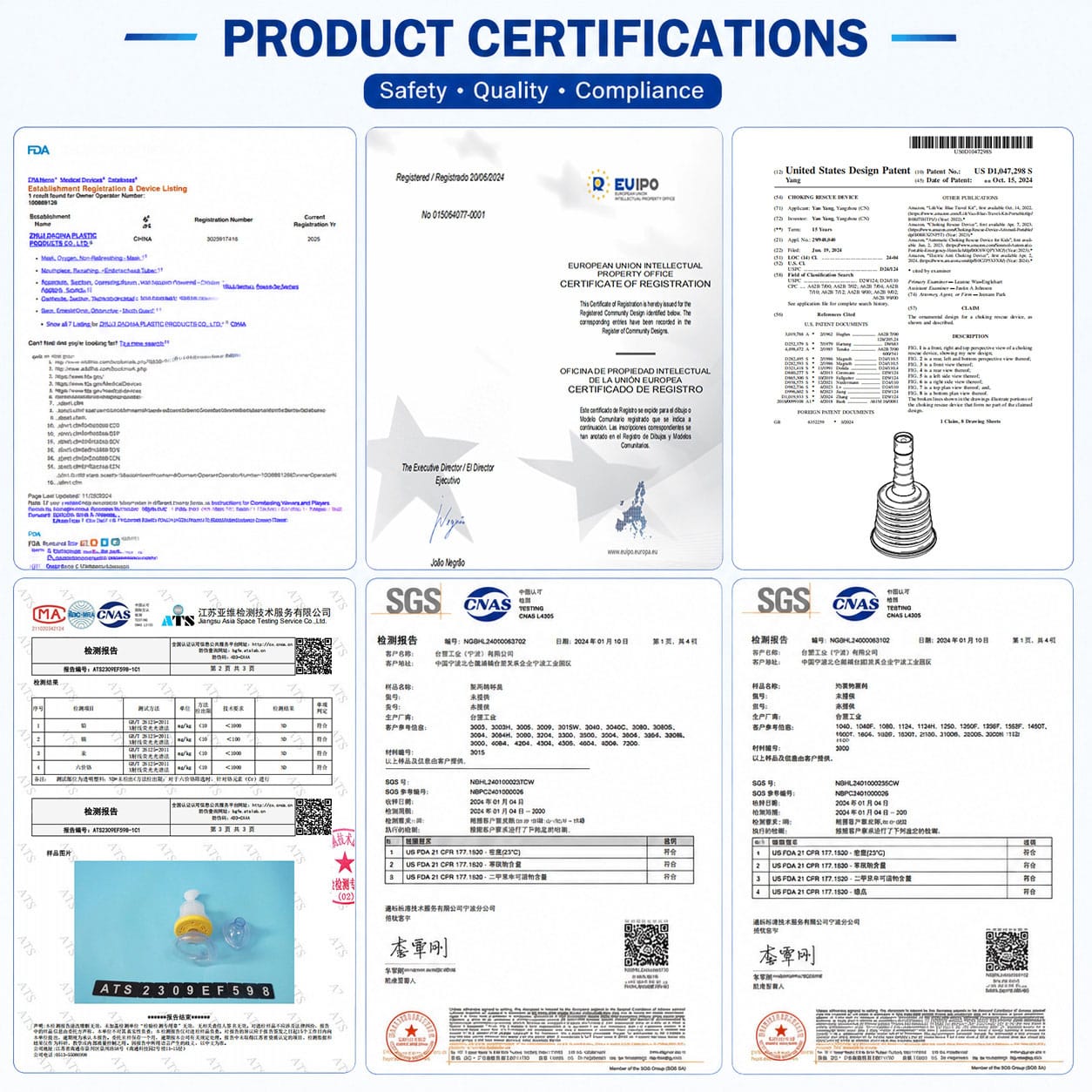
Producing a reliable anti-choke device requires raw materials that meet strict biocompatibility (ISO 10993), RoHS, and REACH standards, ensuring they are completely non-toxic and free of BPA and phthalates.
| Component | Preferred Medical Polymer | Key Performance & Manufacturing Requirements |
|---|---|---|
| Emergency Face Masks | Medical-Grade Silicone / TPE (Thermoplastic Elastomer) | Exceptional flexibility and skin-friendly texture to form an airtight seal over varied facial structures, bone contours, or slight facial hair. |
| Cylinders & Plunger Bodies | Rigid Medical-Grade Polycarbonate (PC) or ABS | High impact strength, dimensional stability under sudden negative pressure, and optical transparency for visual inspection. |
| One-Way Valves | Food/Medical-Grade Silicone | Rapid memory rebound and absolute air-tightness to ensure smooth exhaustion on the push stroke and instant sealing on the pull stroke. |
Manufacturing life-saving plastic hardware for any top-rated choking rescue device set is vastly different from producing standard consumer goods:
Emergency preparedness gear often sits untouched in a kitchen cabinet, glove box, or wall-mounted box for years before an unforeseen choking incident occurs.
Behind every successful anti choking device highlighted in professional anti-choking device reviews is a complex chain of high-precision injection molding, medical-grade material compliance, and meticulous assembly. For brands and distributors looking to scale their product lines, partnering with an experienced source manufacturer equipped with cleanroom standards and strict QA protocols is the ultimate foundation for market success.
No account yet?
Create an Account