Selecting the right thermoplastic for a custom injection‑molded part is rarely a straightforward decision. Three materials dominate the conversation—Polypropylene (PP), Acrylonitrile Butadiene Styrene (ABS), and Polycarbonate (PC). Each offers a distinct balance of mechanical properties, processability, and cost.
This guide cuts through the marketing noise and delivers a side‑by‑side technical comparison to help engineers, procurement managers, and product designers make a confident, application‑driven choice.
Chemistry & Structure: A semi‑crystalline, addition‑polymerized olefin. Its non‑polar, linear structure gives it excellent chemical resistance and low density (0.90–0.91 g/cm³).
Key Properties: Tensile Strength (30–40 MPa), Flexural Modulus (1.2–1.8 GPa), HDT at 0.45 MPa (95–110 °C), Notched Izod Impact (2–6 kJ/m²), Water Absorption 24h (< 0.01 %).
Strengths: Outstanding chemical resistance against acids, bases, solvents, and detergents; lowest density among common engineering thermoplastics; excellent fatigue resistance for living hinges and snap-fits; cost-effective with FDA-compliant grades available.
Weaknesses: Poor unmodified UV resistance; low surface energy making it hard to paint or bond without treatment; narrower service temperature range (max ~100 °C continuous).
Typical Applications: Automotive interior trim, battery cases, consumer packaging, medical syringes, pipette tips, living hinges, and storage containers.
Chemistry & Structure: A graft copolymer of Acrylonitrile (chemical & heat resistance), Butadiene (impact toughness rubber phase), and Styrene (rigidity & gloss). Typical density: 1.04–1.07 g/cm³.
Key Properties: Tensile Strength (40–50 MPa), Flexural Modulus (2.0–2.6 GPa), HDT at 0.45 MPa (85–105 °C), Notched Izod Impact (10–30 kJ/m²), Water Absorption (0.2–0.4 %).
Strengths: Excellent sub-zero impact resistance, high-gloss and paintable/platable surface finish, balanced mechanical performance, wide processing window, and good creep resistance under sustained loads.
Weaknesses: Poor solvent resistance (attacked by acetone and esters), limited UV stability, flammable (UL94 HB), more expensive than PP and less heat-resistant than PC.
Typical Applications: Automotive dashboards, consumer electronics housings, LEGO® bricks, piping, and electroplated chrome-finish parts.
Chemistry & Structure: An amorphous, aromatic polyester derived from bisphenol A (BPA) and phosgene with bulky phenyl rings restricting chain rotation. Density: ~1.20 g/cm³.
Key Properties: Tensile Strength (60–70 MPa), Flexural Modulus (2.2–2.5 GPa), HDT at 0.45 MPa (130–145 °C), Notched Izod Impact (60–90 kJ/m² ductile), Light Transmission (~88% optical grades).
Strengths: Exceptional impact strength (virtually unbreakable), high heat deflection temperature (120+ °C continuous), excellent dimensional stability, inherent flame retardancy, and glass-like optical clarity.
Weaknesses: Susceptible to stress cracking from alkalis and amines, higher cost (2–3x PP), high-temperature processing requirement (280–320 °C), notch-sensitive, and contains BPA.
Typical Applications: Automotive headlamp lenses, electrical enclosures, medical devices, optical lenses, safety goggles, face shields, and reusable water bottles.
| Criterion | PP | ABS | PC |
|---|---|---|---|
| Tensile Strength | ★★☆ | ★★★ | ★★★★ |
| Impact Resistance | ★★☆ | ★★★☆ | ★★★★★ |
| Heat Deflection | ★★☆ | ★★★ | ★★★★★ |
| Chemical Resistance | ★★★★★ | ★★☆ | ★★★ |
| Dimensional Stability | ★★★ | ★★★★ | ★★★★★ |
| Surface Finish / Paintability | ★ | ★★★★★ | ★★★★ |
| Cost (per kg) | $ | $$ | $$$ |
| Transparency | ✗ (translucent) | ✗ (opaque) | ✓ (clear) |
Choose PP when: Parts face aggressive chemicals, weight reduction is critical, living hinges or repeated flexing are required, and cost is the primary constraint.
Choose ABS when: You need a balance of strength, toughness, and surface quality, require painting or plating, and want moderate performance without the PC price tag.
Choose PC when: High impact resistance is non-negotiable, service temperature exceeds 100 °C continuously, optical transparency is required, and dimensional stability is critical.
Always test real-world prototypes under actual use conditions, evaluate filled grades or polymer blends (like PC/ABS or glass-filled PP) to tailor performance, and factor in processing costs since PC's higher melt temperatures and slower cycle times can impact total part costs.
Different industries favor specific materials based on regulatory demands and mechanical requirements: Medical disposables typically rely on PP for chemical resistance and sterilization, automotive interior components leverage ABS for aesthetics, and exterior lenses or safety equipment rely heavily on PC.
No single polymer is universally "best." The optimal material depends entirely on your product's operating environment, mechanical constraints, and total landed cost. Engage your injection molding partner early to review gate design, warp behavior, and material-specific tooling parameters.
🏭 DAQIDA Factory Qualification Certificates & Injection Molding Expertise
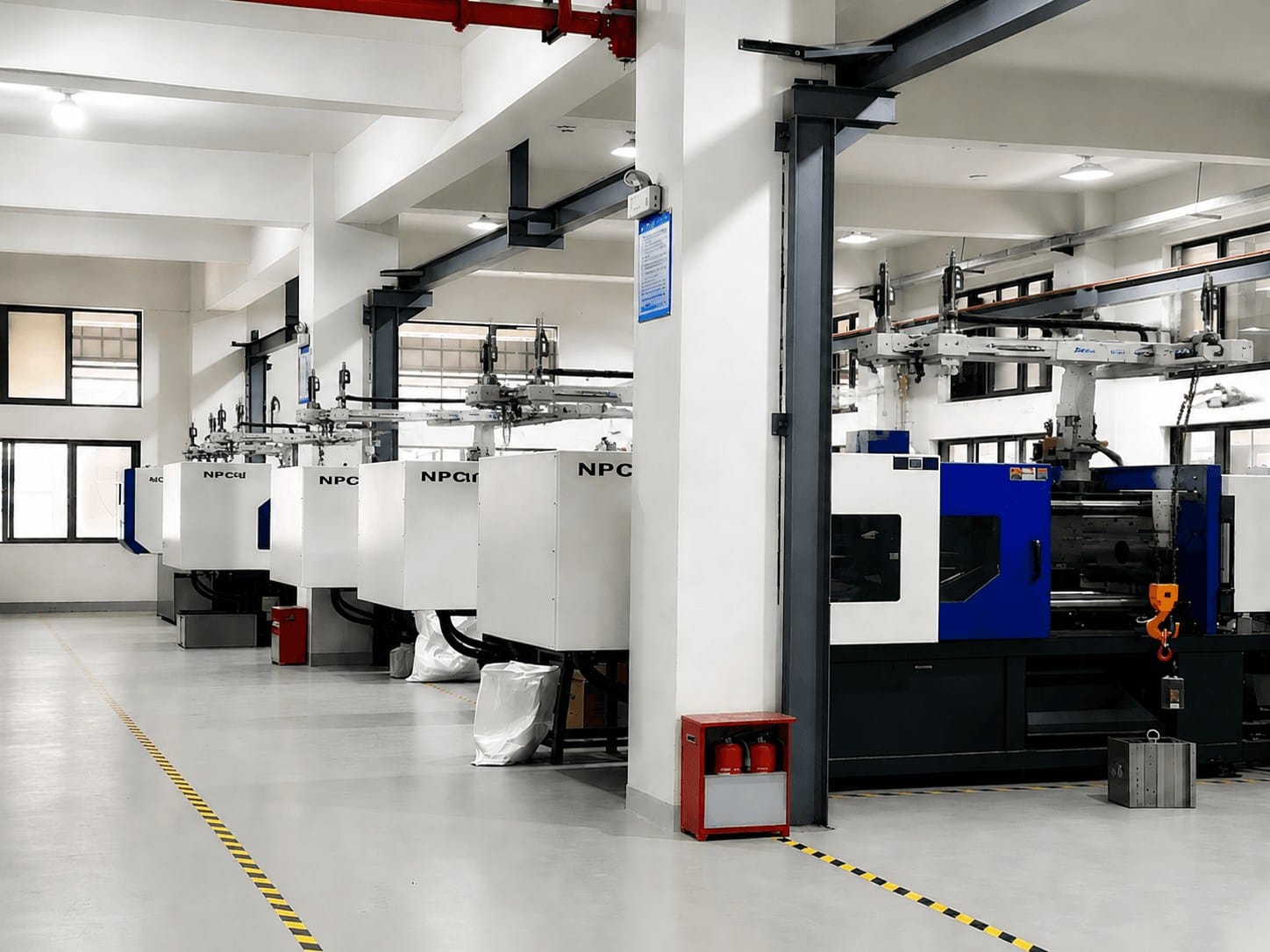
As a professional direct source factory, DAQIDA masters advanced plastic injection molding processes, DFM optimization, and strict production discipline backed by our official qualification certificates:
• Explore our full manufacturing capabilities via the DAQIDA Product Catalog ➔
Avoid common mass-production pitfalls like shrinkage and warping. Partner with DAQIDA for professional OEM and ODM manufacturing solutions built on precise DFM analysis, stable process control, and rigorous factory quality standards.
No account yet?
Create an Account